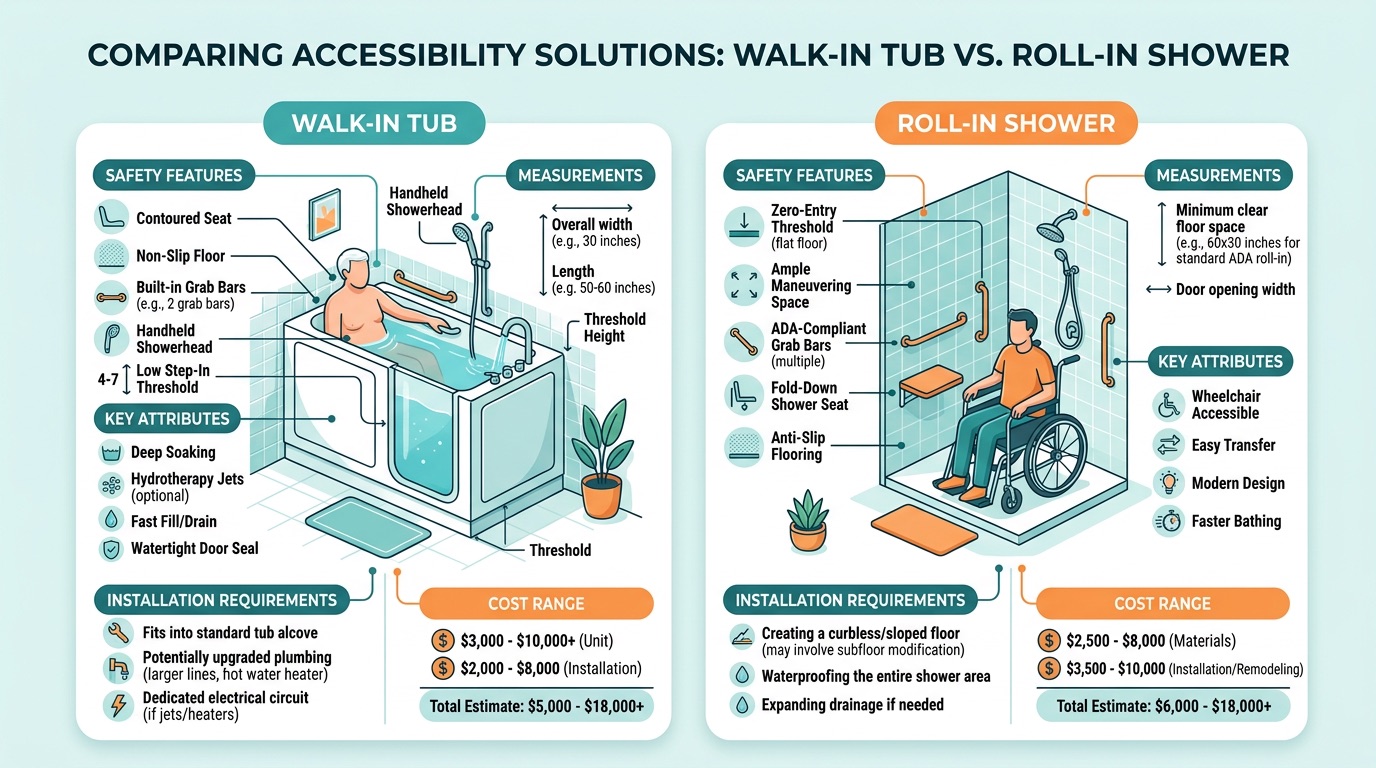
Both walk-in tubs and roll-in showers solve the same core problem: getting in and out of your current bathing setup safely. The right choice depends on your mobility needs, bathroom layout, and budget. Here's what each option offers and who benefits most from each.
About costs and timeline: Modification costs vary by complexity and location. Start with the most essential changes first and plan for professional installation of structural modifications.
1
Budget-Friendly Options First
Transfer bench and handheld showerhead ($50–120).
A transfer bench lets you sit while showering in your current tub. Add a handheld showerhead and you can bathe seated without stepping over the tub wall.
Tub cut-out service ($300–800).
A professional cuts a door-sized opening in your existing tub wall. You step through instead of over. Takes 2–3 hours and works with most standard tubs.
Raised toilet seat and grab bars ($40–200).
If balance is the main concern, grab bars at key points and a raised toilet seat address the most common bathroom fall risks without major construction.
2
Making Your Decision
Choose a walk-in tub if:
• You currently take baths and want to continue. • Soaking helps with pain or mobility issues. • Your bathroom layout accommodates the space requirements. • You have the budget for the specialty fixture and installation.
Choose a roll-in shower if:
• You primarily shower now. • You use or may need mobility aids (walker, wheelchair). • You want the fastest daily bathing routine. • A caregiver assists or may assist with bathing.
Consider the budget options if:
• Your current setup works with minor modifications. • You want to address immediate safety concerns while planning a larger renovation. • Budget constraints make major renovation impractical right now.

3
Getting Started
Key Tips
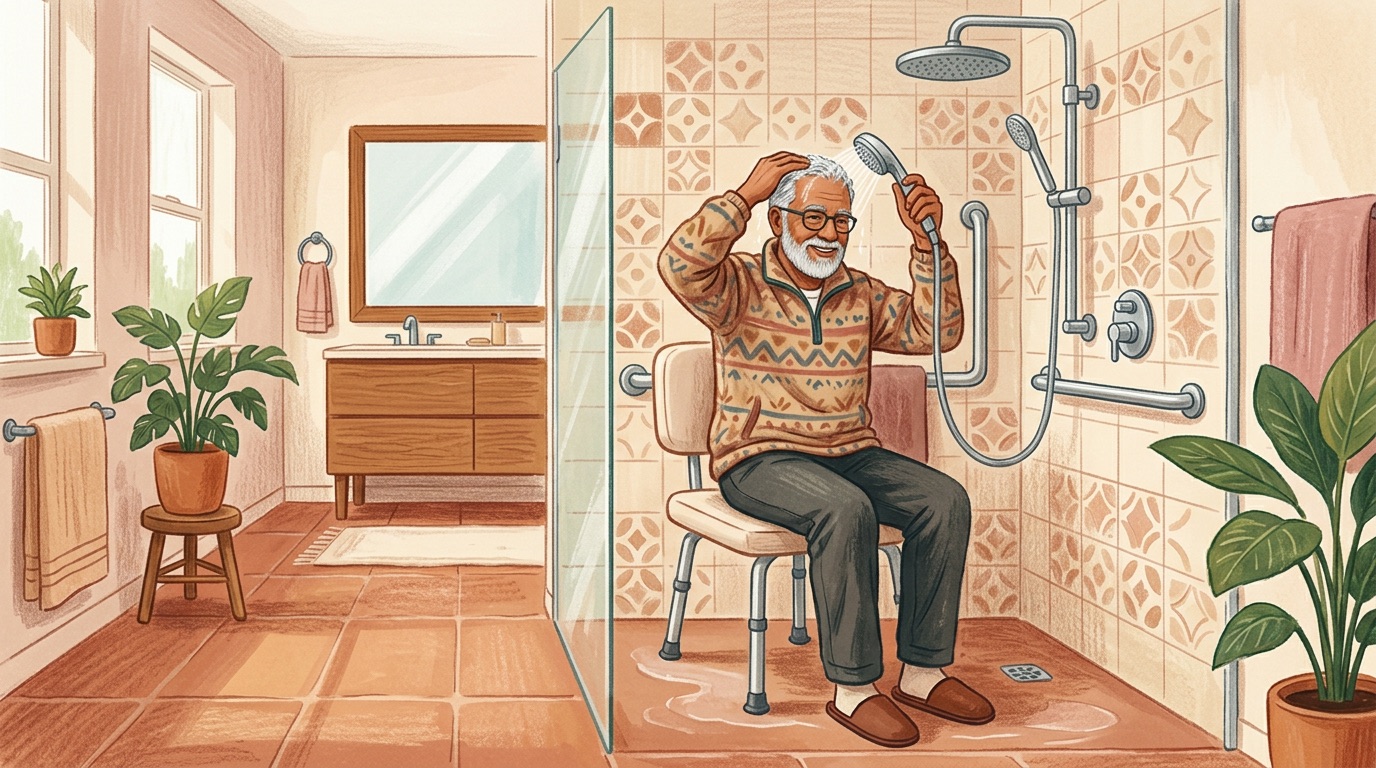
Start with the most important modifications first based on your current needs.
Consider both immediate safety and future accessibility when making changes.
Get multiple quotes from qualified contractors for major modifications.
Check with your insurance about coverage for medically necessary modifications.
Free Resources
- AARP HomeFit Guide for room-by-room assessment tools
- Eldercare Locator to find local Area Agency on Aging resources
- National Institute on Aging home safety information and guides