A complete guide to staying steady and preventing falls
Most falls are preventable, and the fixes are smaller than you think. Balance training is one of the most effective ways to reduce fall risk, and it's something you can start today, right in your living room. You don't need expensive equipment or a gym membership to see real improvement.
Why balance training works: Research shows structured balance training can reduce fall risk by 20-30%. Your balance system relies on three things: inner ear, vision, and feeling in your feet. Balance training helps your brain use these systems better, even when one works imperfectly.
1
Evidence-Based Programs That Work
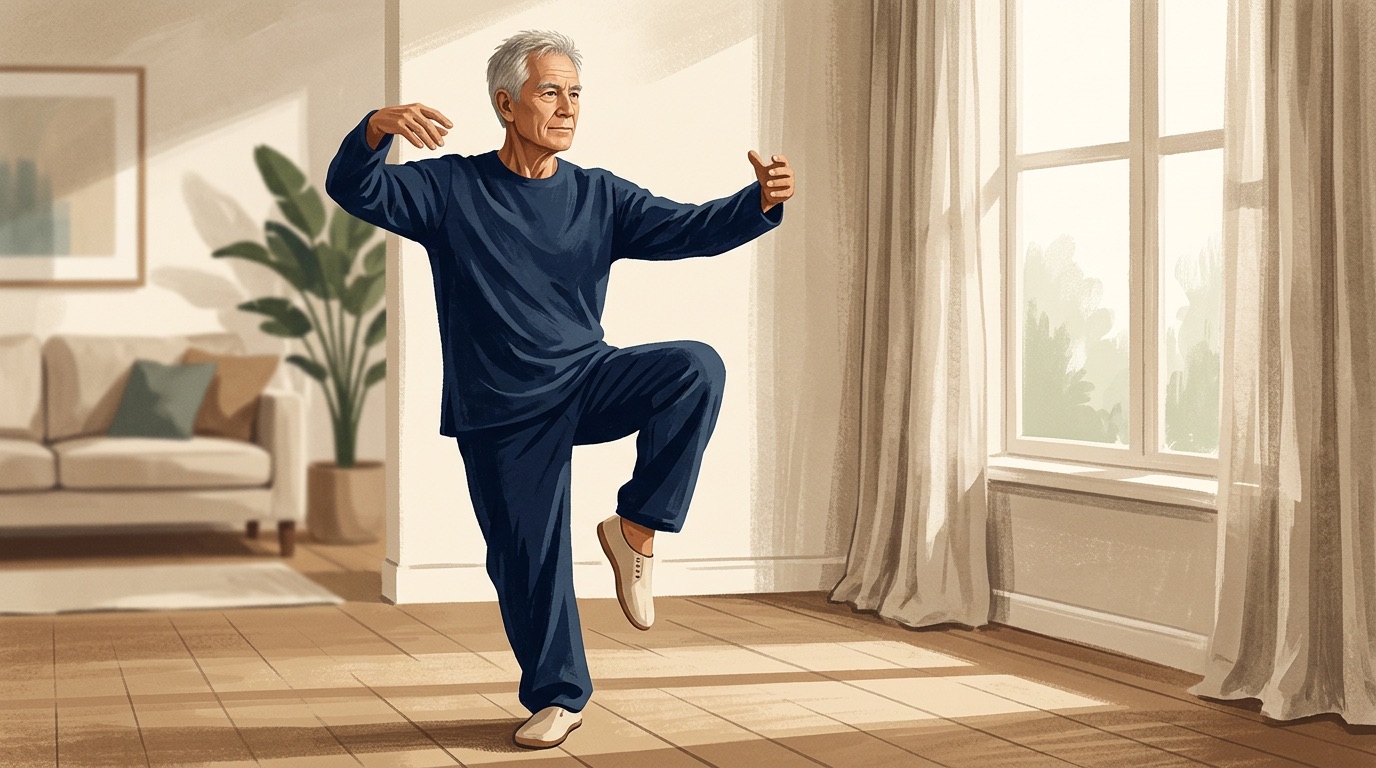
Tai Chi for Balance
Low Impact • Proven Results
Slow, flowing movements that challenge balance while building strength. Multiple studies show it reduces falls in older adults. The slow pace lets you focus on control rather than speed while constantly moving your center of gravity in manageable ways.
Otago Exercise Program
Home-Based • Progressive
Developed by researchers in New Zealand with strong research backing. Combines balance and strength exercises you do at home. Starts simple and gradually adds challenge over 6 months. Available free through the CDC.
CDC STEADI Program
Medical Backing • Practical
Stopping Accidents, Deaths, and Injuries program includes simple exercises you can do at home with minimal equipment. Focuses on movements most related to fall prevention and connects to daily activities.
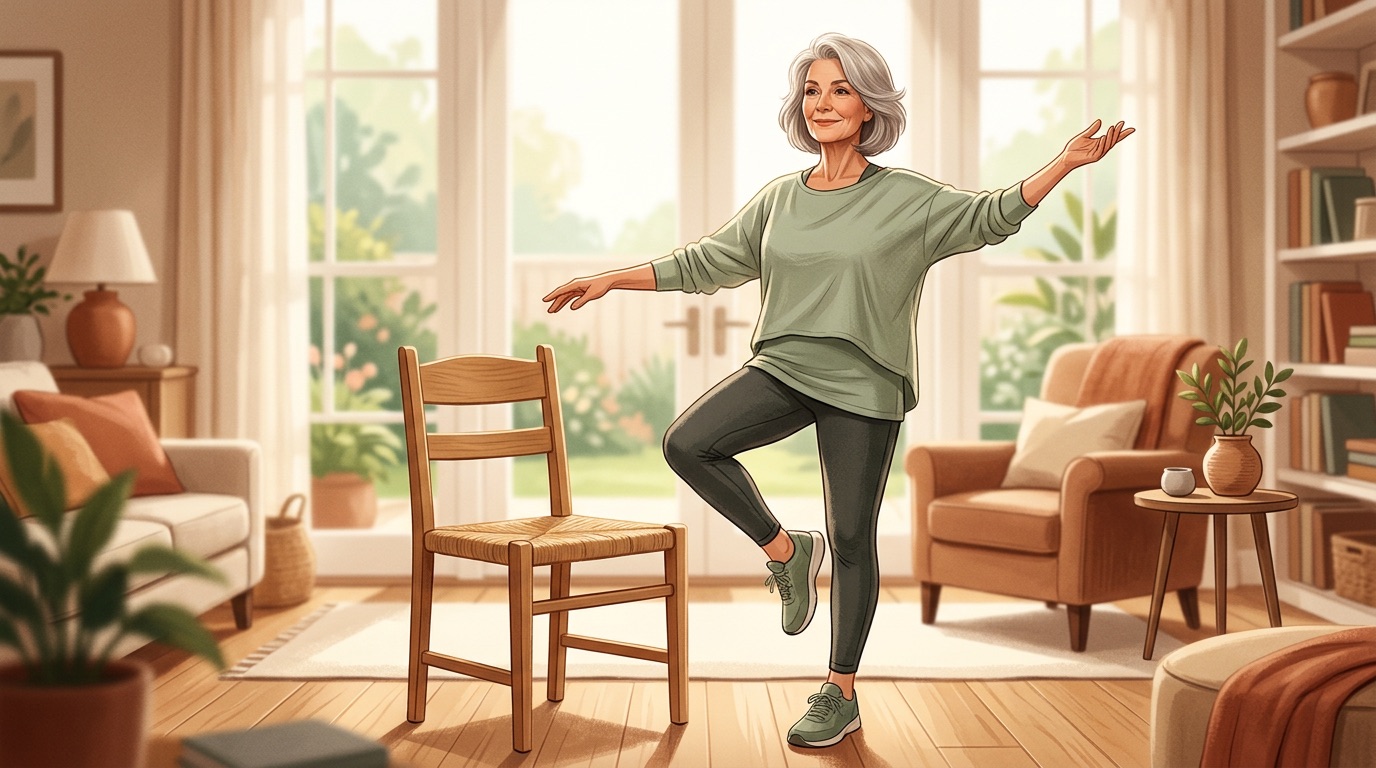
Tai Chi movements for balance improvementProven balance training exercises
2
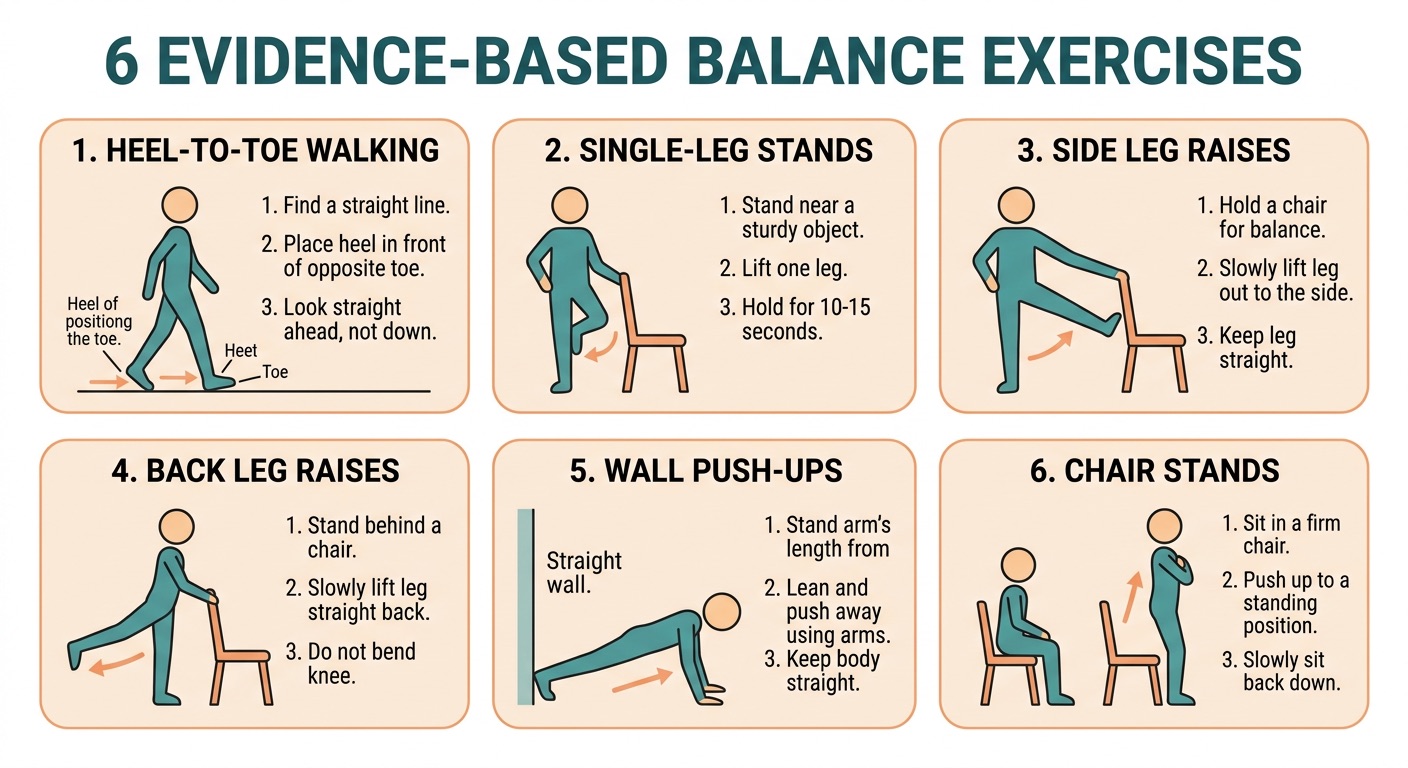
Foundation Exercises (Week 1-2)
Single-leg stands
Beginner • Chair Support
Hold onto a sturdy chair. Lift one foot slightly off the ground and hold for 10 seconds. Work up to 30 seconds, then try with less support from the chair. This builds basic stability.
Heel-to-toe walking
Beginner • Wall Support Available
Walk in a straight line, placing the heel of one foot directly in front of the toes of the other foot. Start with 10 steps, holding a wall for support if needed. Improves dynamic balance.
Sit-to-stand practice
Functional • Daily Living
Practice getting up from a chair without using your hands. If this is difficult, start by using one hand, then progress to using both hands minimally. Builds leg strength and balance together.
Basic balance training exercise routine for seniors
3
Adding Challenge (Week 3-6)
Single-leg stands with head movements
Intermediate • Vestibular Challenge
Once you can stand on one foot for 30 seconds, try turning your head slowly left and right while maintaining balance. This challenges your inner ear system while balancing.
Walking with direction changes
Dynamic • Multi-Directional
Walk forward 10 steps, then backward 10 steps. Add side steps when this feels comfortable. Builds balance confidence in all directions of movement.
Standing on different surfaces
Proprioception • Surface Challenge
Try standing on a thick towel or pillow with support nearby. This challenges the feeling sensors in your feet and improves proprioceptive feedback for better balance.
4
Safety Guidelines and When to Progress
Always have support within reach
Safety First
Do balance exercises near a wall, counter, or sturdy chair. You should be able to grab support quickly if needed. Safety builds confidence for better training.
Start slow and progress gradually
Consistency Over Intensity
Doing easy exercises consistently works better than doing difficult exercises occasionally. Build the habit first, then add challenge. Stop if you feel dizzy or unsteady.
Signs you're ready for more challenge
Progress Markers
You can hold single-leg stands for 30 seconds comfortably, heel-to-toe walking feels steady for 20 steps, you can get up from a chair without hands, and current exercises feel routine rather than challenging.
When to talk to a professional
Medical Consultation
If you've had a fall in the past year, feel unsteady during daily activities, have inner ear problems, vision changes, or take medications affecting balance. Physical therapists can create personalized programs.
Making Balance Training a Habit
Link it to something you already do. Practice single-leg stands while brushing your teeth. Do heel-to-toe walking while waiting for coffee to brew.
Keep it simple. Three exercises done consistently beat ten exercises done occasionally. Pick the ones that feel most relevant to your daily activities.
Track your progress. Note how long you can hold a single-leg stand or how many sit-to-stands you can do. Seeing improvement motivates consistency.
Balance improvements can appear in as little as 4-6 weeks of consistent practice. Regularity builds the foundation, and intensity follows naturally as you progress.
Free Resources
CDC STEADI Program - Free balance exercises and fall prevention materials