Fall Prevention After Hip Replacement: A Complete Guide
Specific strategies that matter most during recovery and beyond
Most falls are preventable, and the fixes are smaller than you think. Hip replacement recovery changes your balance and strength temporarily, but with the right adjustments to your routine and environment, you can move confidently through your home again.
This guide covers the specific fall prevention strategies that matter most during hip replacement recovery and beyond. We walk through home modifications, movement strategies, and practical steps to rebuild your confidence without overdoing it.
1
Understanding Your Changed Balance
Hip replacement surgery affects your balance in predictable ways
The surgical hip takes three to six months to fully integrate, during which your body compensates by shifting weight to your non-surgical side. Your brain also relearns how to coordinate movement with the new joint.
This temporary imbalance is normal and expected
Your physical therapist has given you exercises to address it, but your home environment needs to support this relearning process too.
2
Room-by-Room Fall Prevention
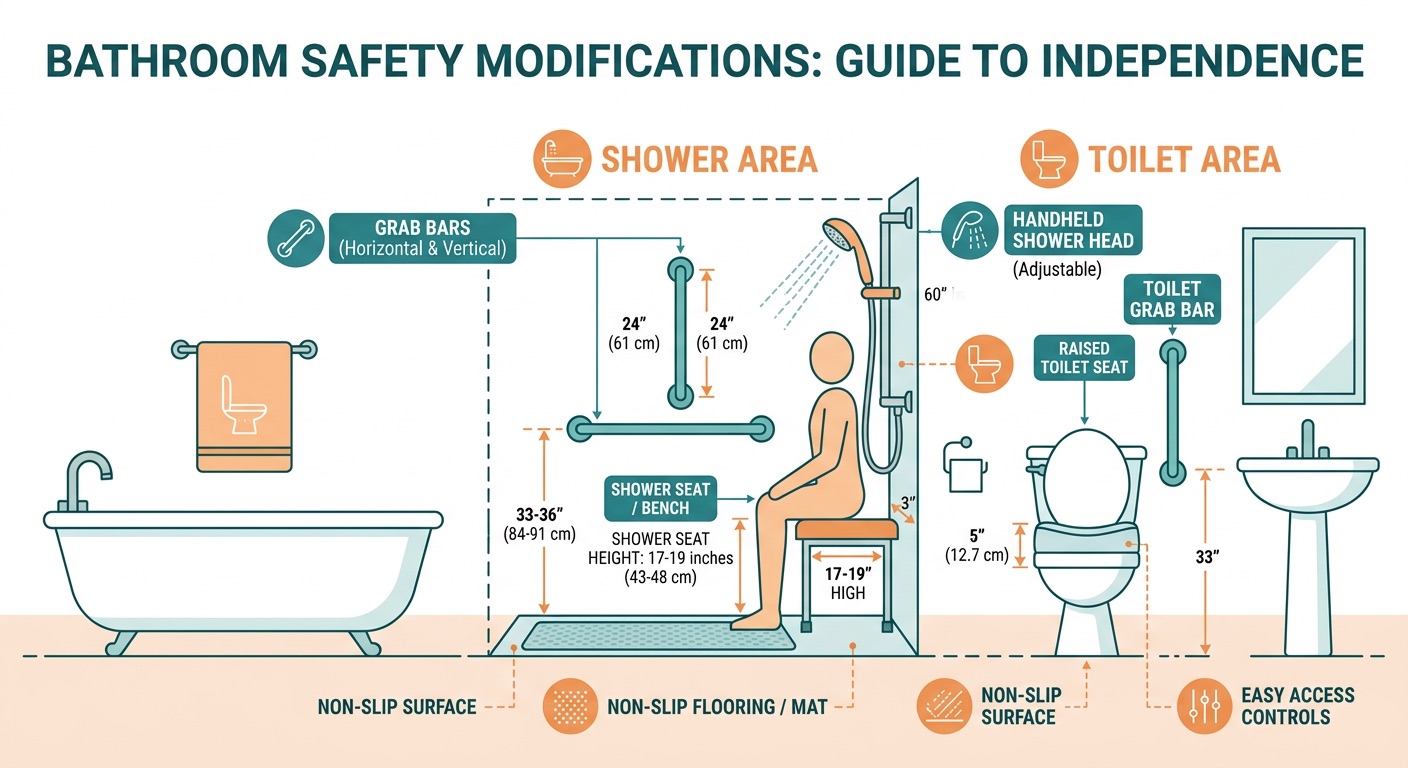
Install grab bars in three bathroom locations
$45–120 total · DIY (drill + stud finder)
Next to the toilet on the wall side rather than the open side, inside the shower at shoulder height, and where you step in and out of the shower. Most bathroom falls happen during transfers.
Add a shower chair or bath bench for seated bathing
$40–100 · Ready to use immediately
Standing in the shower for ten to fifteen minutes requires more balance than most people realize, especially when your eyes are closed to rinse shampoo.
Bathroom modifications for safe recovery
Switch to a handheld showerhead for better control
$25–60 · Basic plumbing skills
You can rinse while sitting, control water direction precisely, and avoid awkward twisting to wash your back or feet.
Place non-slip strips on shower floor for traction
$8–15 · Peel and stick application
Wet surfaces become significantly more dangerous when your balance is still recovering from surgery.
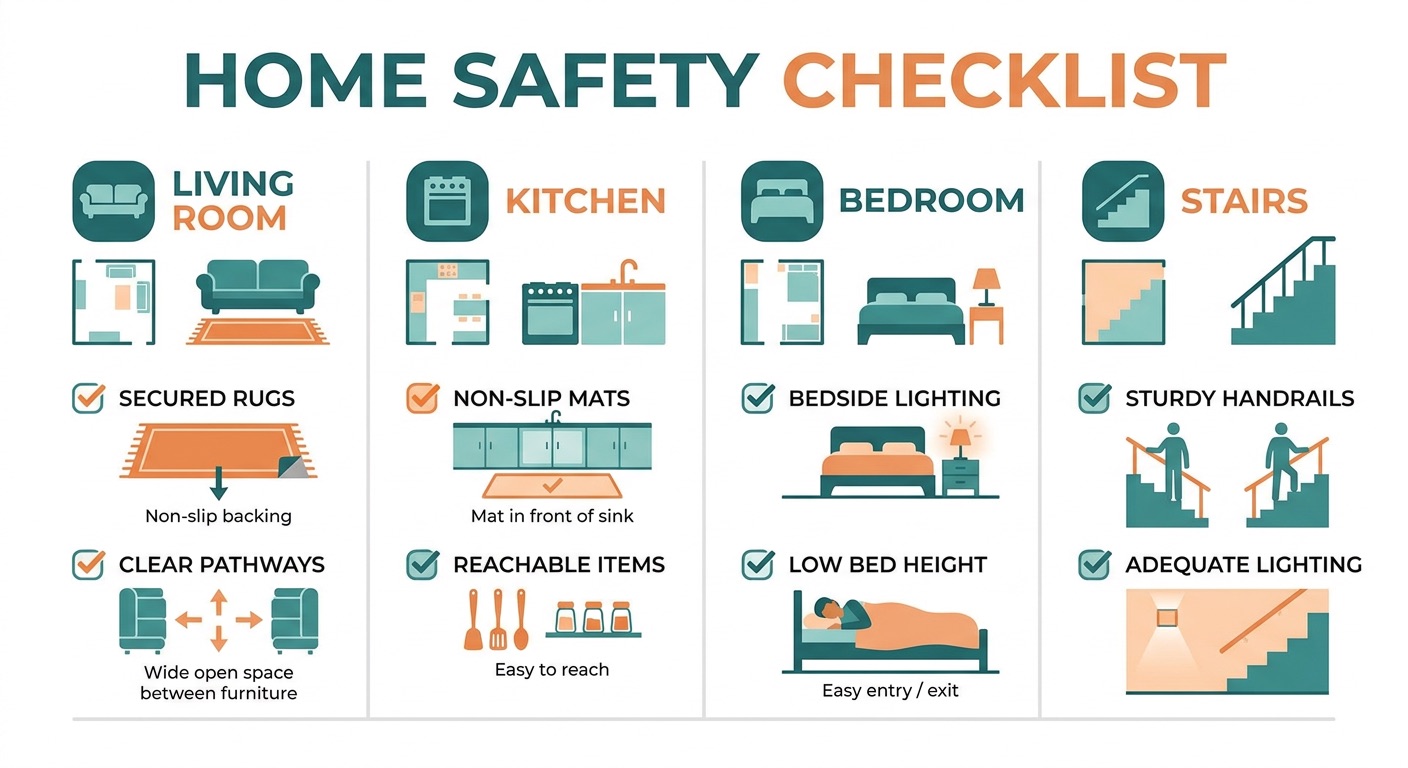
Clear the path between bed and bathroom completely
Free · Immediate safety benefits
Move anything you might bump into during nighttime trips including hampers, shoes, charging cables, and reading materials. Your spatial awareness changes temporarily after surgery.
Install motion-sensor night lights along your walking path
$15–30 for a two-pack · Plug in for immediate use
Place one in the hallway between bedroom and bathroom, and one inside the bathroom near the floor. These turn on automatically when you walk past.
Raise your bed height if your feet cannot touch the floor comfortably
$20–60 for bed risers, or $200–400 for adjustable base
Your bed should be at a height where your feet touch the floor when you sit on the edge, with your knees at roughly ninety degrees.
Install handrails on both sides of stairs for complete support
$30–80 per rail · Mounting to wall studs required
During recovery, you need support going up and down stairs safely. Having rails on both sides means you can lead with your stronger leg and still have something to hold.
Improve lighting throughout the house with brighter bulbs
$20–60 for LED bulbs · Last for years
After sixty, your eyes need roughly three times more light to see the same detail clearly. Swap dim bulbs for bright LED bulbs rated eight hundred plus lumens.
Remove or secure loose rugs that slide or bunch
Free to remove rugs, or up to $30 for rug grippers
Area rugs that slide or have curled edges become trip hazards when your gait is still adjusting. Remove them entirely or secure them with heavy rubber backing.
Reorganize frequently used items to waist-to-shoulder height
Free · Saves significant effort daily
Reaching high or bending low challenges your balance unnecessarily during recovery. Move daily dishes, glasses, and food items to middle shelves and counters.
Use a reacher and grabber tool for high and low items
$15–25 · Ready to use immediately
A lightweight tool with a grip handle lets you retrieve items without stretching or bending dangerously. Keep one in the kitchen and one in the bedroom.
Complete home fall prevention checklist
3
Movement and Strength Strategies
Practice standing on one foot while holding a counter for support
2–3 minutes daily · Free
Start by holding the counter with both hands, then progress to one hand, then fingertips only. Work up to thirty seconds on each foot to rebuild balance confidence.
Walk heel-to-toe along a hallway wall for coordination practice
5 minutes daily · Free
Place one foot directly in front of the other, heel touching toe, while trailing your hand along the wall for support. This improves your body's ability to make small balance corrections automatically.
Safe balance exercises for recovery
Continue your prescribed physical therapy exercises as directed
As scheduled · Usually covered by insurance
Your physical therapist has given you specific exercises to strengthen the muscles around your new hip joint. These exercises directly prevent falls by improving your stability and coordination.
Add resistance band exercises to build strength safely
$10–20 for bands · 15–20 minutes daily
Resistance bands let you strengthen your legs, hips, and core without putting stress on your healing joint. Your physical therapist can show you safe exercises using bands.
Use your assistive device as long as recommended
Usually provided by hospital or covered by insurance
Your walker, cane, or crutches serve important functions beyond the first few weeks of recovery. Use them as long as your surgeon and physical therapist recommend.
Plan your routes through the house before moving between rooms
Free · Prevents many potential falls
Think through your path before moving from room to room carefully. Avoid carrying items that block your view of the floor or prevent you from using handrails.
Take your time with direction changes and turns
Free · Significantly improves safety
Turning around, backing up, or changing direction quickly can challenge your balance unnecessarily. Pause, plant your feet firmly, then turn slowly and deliberately.
4
Managing Fear of Falling
Start with supported practice in safe environments
Free · Builds confidence through repetition
Practice challenging movements while holding onto something stable and secure. Step up onto a low step while holding a handrail firmly. Walk on different surfaces while staying near a wall for support.
Focus on what you can control in your environment and habits
Free · Reduces anxiety about future falls
You can control your environment, your movement speed, and your preparation for activities. Concentrate on these factors rather than worrying about what might happen.
Track your progress to maintain motivation
Free · Maintains motivation throughout recovery
Notice when walking feels easier, when you need less support, or when you automatically make good balance choices. Recovery happens gradually, and recognizing progress helps.
5
Creating Your Action Plan
Week one to two after returning home
Install essential grab bars with bathroom modifications first for immediate safety. Clear pathways and improve lighting throughout your home completely. Practice prescribed physical therapy exercises daily as directed.
Month one to two
Add balance practice to your daily routine for long-term stability. Continue physical therapy exercises and add resistance band work gradually. Assess and modify remaining home hazards throughout all rooms.
Month three to six
Gradually increase activity level as cleared by your healthcare team. Continue strength and balance exercises as long-term habits. Consider additional home modifications for long-term aging in place safely.
Working with Your Healthcare Team
Ask your physical therapist which home exercises you should continue long-term, how to know when it's safe to stop using your assistive device, and what activities you should avoid permanently versus return to safely.
Ask your surgeon about permanent movement restrictions, signs that should prompt you to call immediately, when you can return to driving, and how long before your balance returns to baseline.
Contact your healthcare provider if you experience sudden worsening of balance, new pain affecting walking, a fall that shakes your confidence, or dizziness that seems worse than before surgery.
Fear of falling can become more limiting than the original fall risk. This fear is normal and manageable with supported practice, focus on controllable factors, and tracking your progress over time.