Find the right shower seating for comfort and safety
Sitting while you shower can make the experience more comfortable and confident. The right shower seat gives you stability, lets you take your time, and keeps your bathroom feeling like yours. Here's how to choose between the main options.
About pricing and installation: Prices listed are for the equipment only and represent typical retail costs. Most shower seating requires no installation, just height adjustment. The "DIY" label means basic assembly or positioning that most people can handle without tools or special skills.
1
Basic Shower Chair
Standard adjustable shower chair
$30–60 · Ready to use
A standard shower chair has four legs, a plastic or padded seat, and drainage holes. The legs adjust to different heights, usually between 16–21 inches. Most have rubber tips that grip wet surfaces. Lightweight, easy to move in and out of the shower, fits in most tubs and stalls.
Basic shower chair setup and height adjustment
Best suited for
Most shower setups
People who can step into the tub or shower safely but want to sit once they're inside. Good if you have a standard tub or a shower stall with a curb. You step over the tub edge to sit down, which works well for people with good balance and leg strength.
Consider the limitations
Important to know
You need to step over the tub edge to sit down. Some people find the seat narrow compared to benches. Basic models can feel less stable than wider transfer benches, especially when wet.
2
Transfer Bench
Transfer bench with backrest
$50–120 · Ready to use
A transfer bench spans the tub edge. You sit on the part outside the tub, then slide across to the part inside the tub. No stepping over required. Eliminates the need to step over the tub edge, very stable once positioned, often has a backrest.
Best suited for
Entry challenges
People who have difficulty stepping over the tub edge or need extra stability getting in and out. Essential if balance or leg strength makes tub entry challenging. Handles the most challenging part of shower entry safely.
Space and setup considerations
Plan ahead
Takes up space in the bathroom outside the tub. Requires removing or working around glass shower doors. More expensive and heavier to move than basic chairs. Consider bathroom layout before purchasing.
3
Shower Bench Options
Built-in style shower bench
$40–80 · Ready to use
A shower bench sits against the shower wall and often looks more like bathroom furniture. Some have backs, some don't. Usually wider than a standard chair. Stable, wider seating area, can look more integrated with your bathroom design.
Folding wall-mounted shower seat
$45–90 · Professional installation
Mounts to the shower wall and folds up when not in use. Supports 250–300 pounds when properly installed into studs. Doesn't take up floor space when folded, looks clean and integrated, leaves shower floor clear when not needed.
Corner shower stool
$35–65 · Ready to use
A three-legged stool designed to fit in shower corners. Usually smaller and lower than a full chair. Fits in tight spaces, leaves most of the shower floor open, lightweight and less expensive than full chairs.
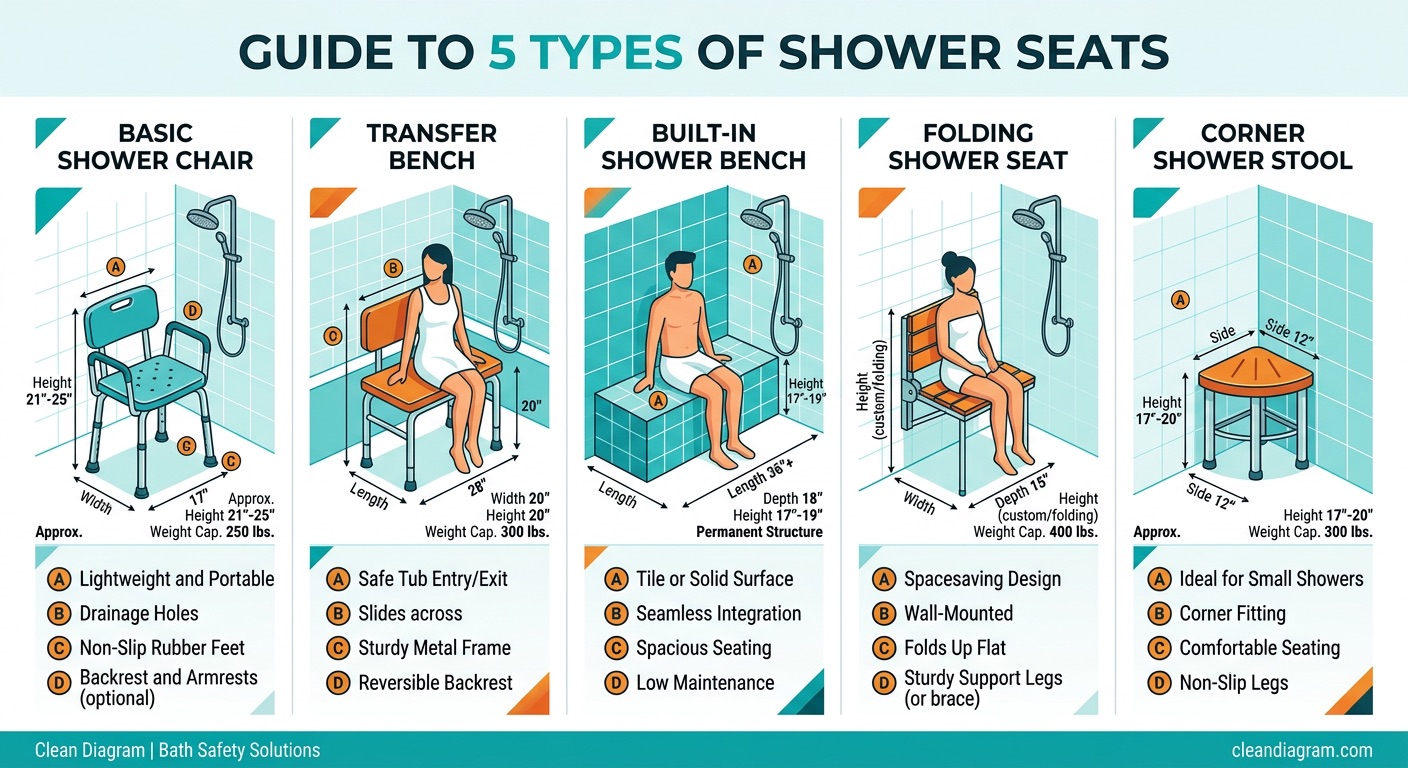
Types of shower seating compared by features and best use cases
4
Important Features to Consider
Height adjustment range
Comfort essential
Look for chairs that adjust between 16–21 inches. Standard toilet height is 15 inches, so 17–19 inches feels familiar for most people. Test the height before your first shower by sitting on the chair outside the shower.
Weight capacity and safety margin
Buy for strength
Most shower chairs support 250–300 pounds. Check the rating and choose one that exceeds your weight by at least 50 pounds. This ensures stability and accounts for the dynamic forces of sitting down and standing up.
Key features to evaluate when selecting shower seating
Seat material and drainage
Daily use factors
Padded seats are more comfortable but take longer to dry. Hard plastic drains faster but can feel cold initially. All seats need holes or channels to let water drain. Poor drainage leads to standing water and longer drying times.
Stability features
Safety first
Rubber leg tips should be replaceable since they wear out over time. Back support is helpful if you plan longer showers or have back issues. Test stability on wet surfaces by letting the shower floor get wet, then checking that the chair doesn't slide.
5
Setup and Daily Use
Position grab bars to work with seating
Coordinate safety features
If you're installing grab bars, plan their placement around where you'll sit. You want to be able to reach them while seated. This gives you leverage for standing up and extra stability while showering.
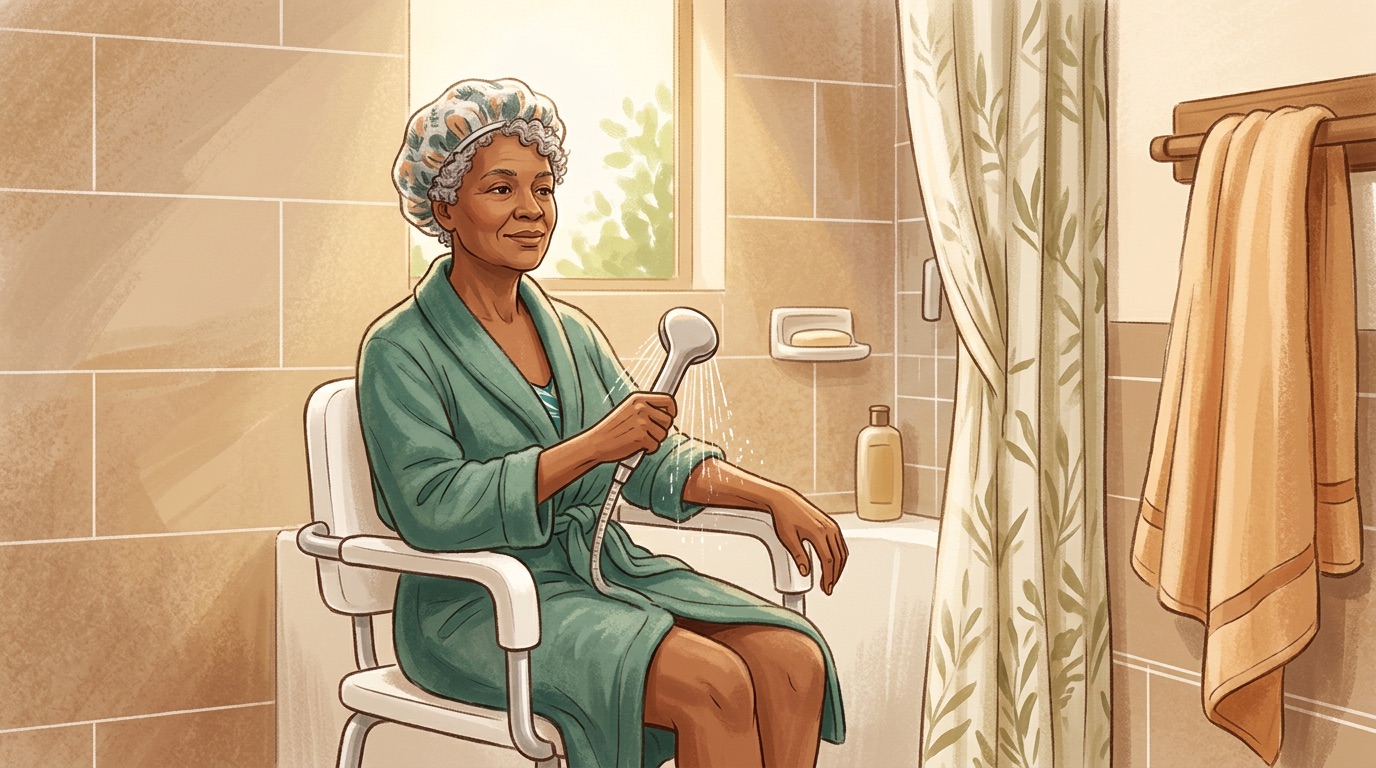
Consider a handheld showerhead
Pairs perfectly
Much easier to rinse when sitting. Most screw onto existing shower arms without tools. You can control water direction and pressure while remaining comfortably seated.
Make the seat comfortable
Small comfort touches
Keep a towel nearby since plastic seats can feel cold initially. A small towel on the seat makes it more comfortable. Position products within arm's reach so you don't have to stretch or stand up to get them.
Making the Right Choice
Start with your shower setup. If you have a standard tub, a transfer bench solves the biggest safety challenge. If you have a walk-in shower, a basic chair or bench gives you the most options.
Consider how often you'll use it. Daily use justifies spending more for comfort features like padding and back support. Occasional use means a basic model will serve you well.
Think about storage and space. If your bathroom is small, a folding wall seat or lightweight chair you can move out makes sense.
All floor-standing options work for renters. Wall-mounted seats require drilling, which most lease agreements don't allow without permission.
Most importantly, choose something you'll actually use. The safest shower seat is the one that makes showering more comfortable for you.
Helpful Resources
AARP HomeFit Guide (free bathroom safety checklist and modification ideas)
Eldercare Locator (local agencies often have equipment loan programs)
CAPS Directory (Certified Aging-in-Place Specialists for bathroom modifications)