Seasonal Fall Hazards: A Guide to Staying Safe Year-Round
Small adjustments for each season keep you confident on your feet
Most falls are preventable, and the fixes are smaller than you think. Each season brings its own challenges, but knowing what to watch for and having a plan makes all the difference. This guide walks through the specific hazards that come with weather changes and gives you practical ways to handle each one.
1
Winter: Ice and Snow Hazards
Prepare your winter gear ready in October
Ice-gripping shoe attachments, a good flashlight, rock salt or sand for your walkways work best when you have them ready the first day you need them, rather than the day after you realize you need them.
Check outdoor lighting before the first freeze
Replace any burned-out bulbs around doorways, steps, and the path to your car. Add motion-sensor lights if dark areas exist between your door and where you park.
Walk your property in late fall to identify problem spots
Note where water pools after rain because these spots will be ice patches in winter. Your front steps, the end of the driveway, and the path to the mailbox deserve special attention.
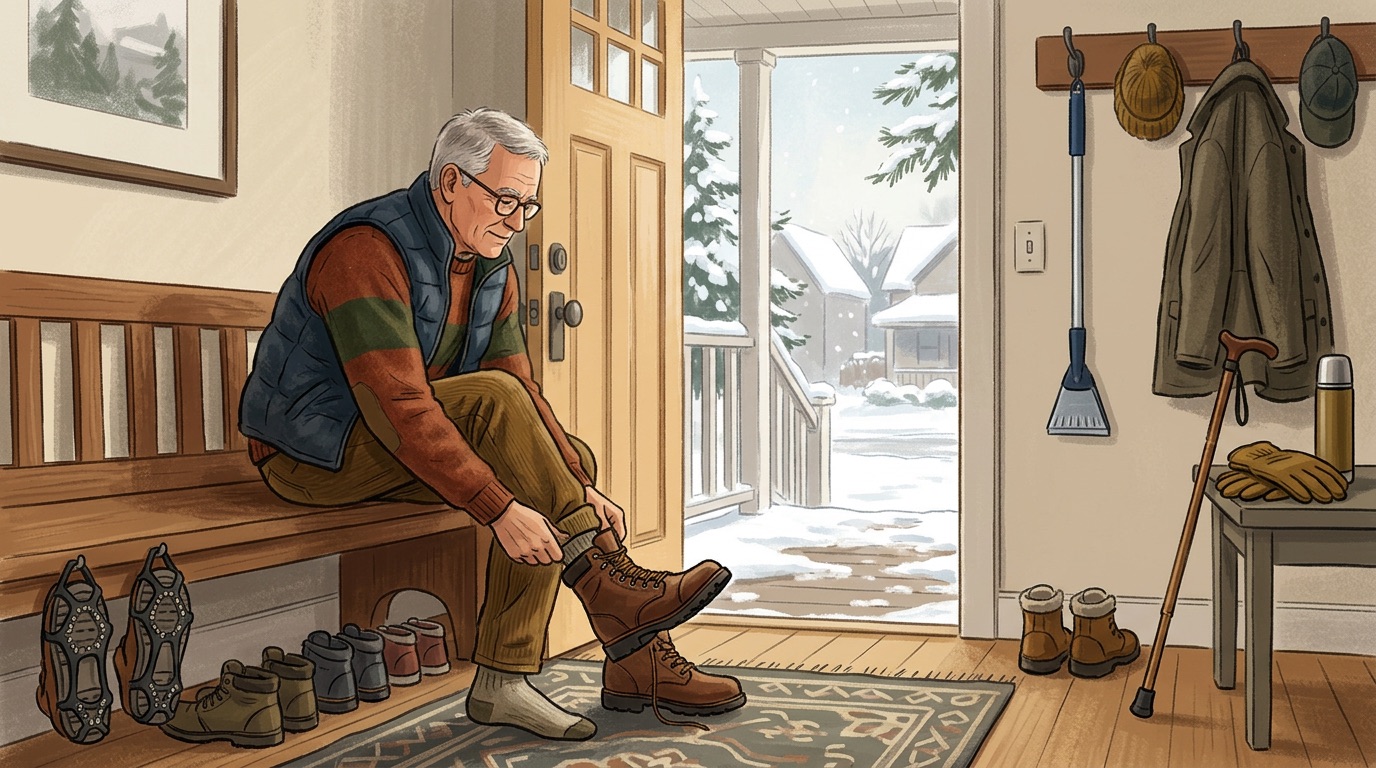
Essential winter preparation items for fall prevention
Use ice-gripping attachments on your shoes
Yaktrax, Microspikes, or similar products that slip over your regular shoes work on ice, packed snow, and wet surfaces effectively. Keep a pair by your door and put them on before you step outside.
Clear snow completely down to the pavement
A thin layer left behind becomes ice overnight quickly. Use rock salt or sand on areas you have cleared to prevent new ice formation.
Take your time on steps
Hold the railing, place your whole foot on each step, and pause between steps. Winter steps demand patience because rushing creates the conditions where most falls happen.
2
Fall: Wet Leaves and Reduced Daylight
Clear leaves from walkways weekly
Wet leaves on concrete or asphalt are as slippery as ice. A layer that looks harmless can cause your foot to slide unexpectedly when you step on it.
Pay attention to gutters and storm drains
Where leaves collect and create standing water pools. This combination means more slippery surfaces and ice formation when temperatures drop below freezing.
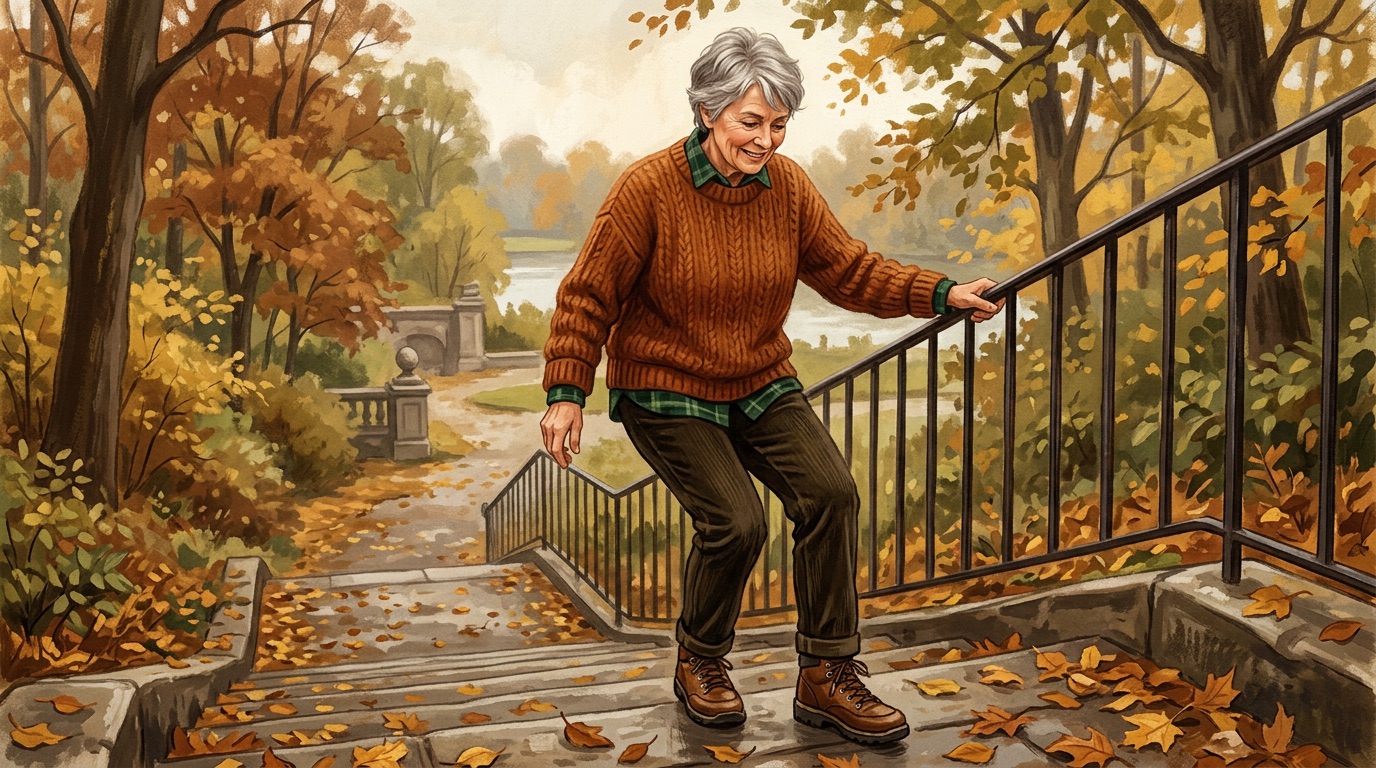
Common autumn hazards: wet leaves and changing light conditions
Watch for hidden hazards under leaves
Wet leaves can cover uneven pavement, small holes, or changes in surface height completely. Walk more slowly in areas with heavy leaf cover until you can see the surface clearly underneath.
Update your lighting routine
Turn on porch lights and pathway lights earlier in the day than summer schedules. If you typically take evening walks, move them to late afternoon while natural light remains strong and visibility is good.
Carry a flashlight for short trips after dark
Small LED flashlights are bright and fit in a pocket easily. Use them even for short trips outside after dark for better visibility.
3
Summer: Heat-Related Dizziness and Dehydration
Recognize heat-related balance issues early
Dizziness when standing up happens more frequently in hot weather as your body works harder to regulate temperature. Feeling unsteady after being outside can occur even if you do not feel overheated.
Plan outdoor activities for cooler parts of the day
Early morning or evening, when temperatures are lower and you're less likely to overheat quickly. Avoid mid-day activities when the sun is strongest.
Stay consistently hydrated
Drink water regularly throughout the day in small amounts. Drinking large amounts at once can cause its own balance issues, so consistent small amounts work better for maintaining steady hydration.
Take breaks in air conditioning or shade
When doing yard work or running errands outside. Ten minutes in a cool environment can reset your body's temperature regulation system effectively.
Be careful with temperature transitions
Moving from very cold air conditioning to hot outdoor air can cause temporary dizziness immediately. Give yourself a moment to adjust before walking or moving quickly.
4
Year-Round Fall Prevention Strategies
Choose shoes with good tread
Smooth-soled shoes are slippery on most surfaces, wet or dry. Look for rubber soles with visible tread patterns that grip various surfaces securely and reliably.
Keep walkways clear of obstacles
Hoses, tools, packages, and newspapers create trip hazards. Anything that creates an obstacle gets moved or put away immediately after delivery or use.
Fix uneven surfaces before they worsen
Loose bricks, cracked concrete, or raised edges of sidewalk sections get worse over time. Small repairs prevent bigger problems from developing into larger hazards.
Stay active in ways you enjoy
Walking, gardening, swimming, or dancing regularly throughout the week. Regular movement maintains the strength and coordination that prevent falls from happening during daily activities.
Practice simple balance exercises daily
Standing on one foot while brushing your teeth, walking heel-to-toe down a hallway, or simple yoga poses. Small amounts of daily practice make a measurable difference in stability and confidence over time.
Getting Started
Begin with the free and simple changes. Walk around your property in different weather conditions to identify problem spots. Note where water pools, where ice forms, and where lighting is poor.
Ice-gripping shoe attachments are the single best investment for winter safety. Buy them in October and keep them by your door. Don't wait until the first ice storm.
Pay attention to how heat affects your balance. If you feel dizzy or unsteady after being outside in summer, that's your body telling you to slow down and cool off.
Most seasonal fall hazards are predictable. Ice forms in the same spots each year. Leaves pile up in familiar places. Heat affects you the same way each summer. Once you know your patterns, you can prepare for them.
Trust your instincts. If a situation feels unsafe, whether it's icy steps or a hot afternoon, listen to that feeling. There's no activity so urgent that it's worth a fall.
Free Resources
AARP HomeFit Guide provides a free online assessment tool that walks through your home room by room to identify fall hazards systematically
Area Agency on Aging exists in every region and offers fall prevention classes, home safety assessments, and connections to local services in your community
CDC's STEADI Program provides evidence-based fall prevention resources for older adults, including balance exercises and risk assessments
National Institute on Aging offers free publications on fall prevention, exercise, and home safety that you can access immediately
Local health departments often provide free or low-cost fall prevention classes, balance programs, and home safety consultations