Night-Time Fall Prevention: Lighting and Clear Pathways
Simple changes that make moving through your home at night as safe as during the day
Most falls happen at home, and many happen at night. Night-time falls are highly preventable with the right lighting and clear pathways. The changes that make the biggest difference cost under $50 and take less than an hour to implement.
A note on vision and age: Your eyes need roughly three times more light after age 60 to see the same detail they could at 40. Add dim lighting to an unfamiliar nighttime environment, and small obstacles become serious hazards. With the right setup, moving through your home at night can feel as safe as during the day.
1
Essential Lighting Upgrades
Motion-sensor night lights
$8-20 for a two-pack · Plug-in, ready to use
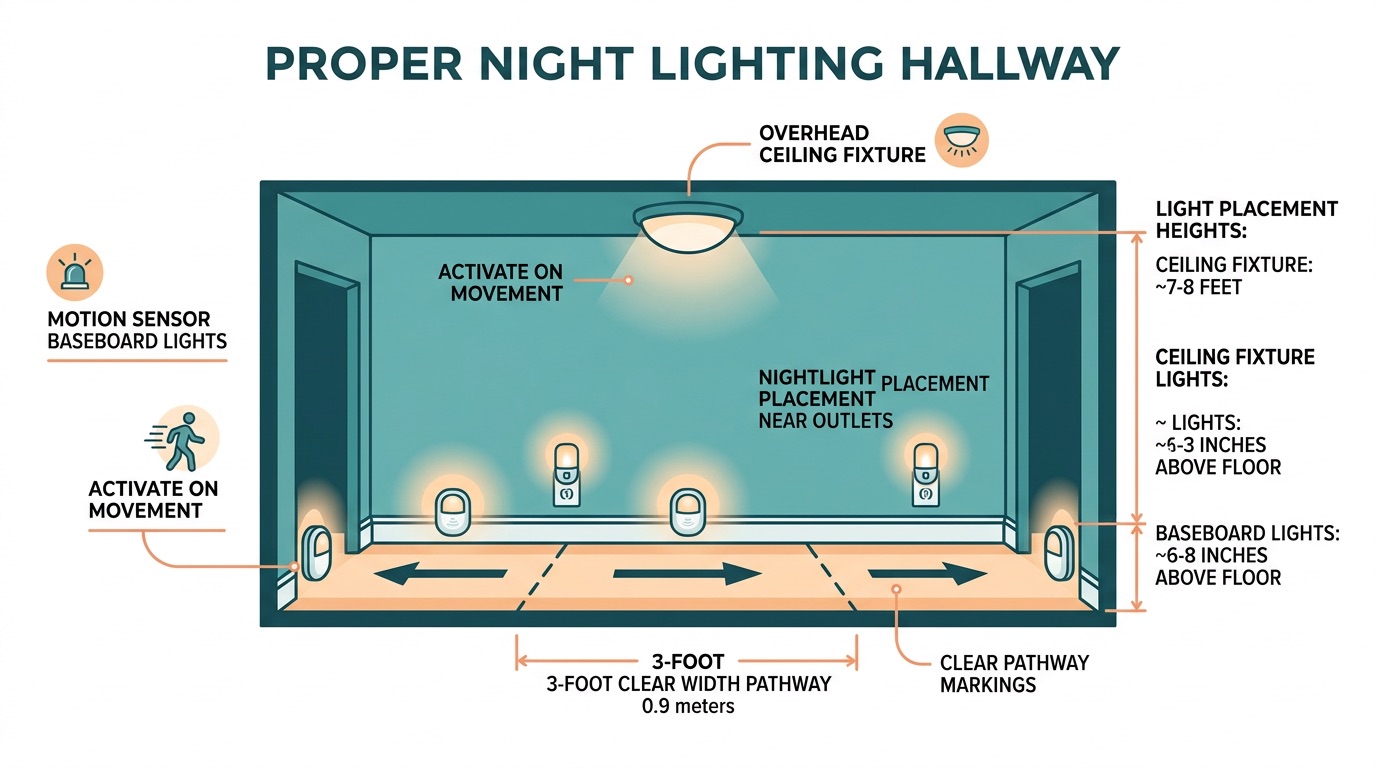
Motion-sensor night lights turn on automatically when you walk past and shut off after you leave. Place one in the hallway between your bedroom and bathroom, and one inside the bathroom near the floor. Look for lights with warm LED bulbs (3000K) for nighttime use.
Brighter bedroom and hallway bulbs
$5-15 per bulb · Beginner installation
Standard bulbs in bedrooms and hallways are often too dim for safe nighttime navigation. Replace existing bulbs with LED bulbs rated at 800 or more lumens. For areas you use during the day, choose daylight temperature bulbs (5000K). For bedside lamps used at night, stick with warm white (3000K).
Bedside lamp within arm's reach
$0-30 · Ready to use
You should be able to turn on a light without getting out of bed. If your current bedside lamp requires reaching or stretching, move it closer or add a second lamp on the other side of the bed. Touch lamps or lamps with large switches are easier to operate in the dark.
Stair lighting at top and bottom
$15-40 for motion-sensor lights · Plug-in or battery-powered
Stairs need light at both the top and bottom, rather than just one end. Motion-sensor lights work well because they activate as you approach from either direction. Battery-powered options work when you lack outlets in the right locations.
Strategic lighting placement for safe nighttime navigation
2
Clear Pathway Strategy
The 3-foot rule
Free · 10 minutes per room
Create a 3-foot clear pathway from your bed to the bathroom, and from the bathroom back to your bedroom. Move anything you might clip with your hip, catch with your foot, or need to step around. This includes hampers, wastebaskets, magazine racks, shoes, and loose rugs.
Remove or replace loose rugs
Free to remove, $15-50 to replace · Beginner
Loose rugs and bath mats that slide are trip hazards, especially in low light. Remove them entirely or replace them with rugs that have heavy rubber backing designed to grip the floor. Area rugs larger than 4x6 feet are generally more stable than small accent rugs.
Secure or remove extension cords
Free to relocate, $5-15 for cord covers · Beginner
Extension cords across walkways are serious trip hazards that require immediate attention. Run cords along walls instead of across paths, or use flat cord covers that tape to the floor. If you regularly use devices that require extension cords in the bedroom, consider having an electrician add outlets.
Keep a flashlight by the bed
$5-20 · Ready to use
Even with good lighting, power outages happen unexpectedly. Keep a flashlight or battery-powered lantern within arm's reach of your bed. LED flashlights with wide beams work better for walking than narrow spotlight beams. Rechargeable flashlights that plug into the wall stay charged automatically.
3
Room-by-Room Night Lighting
Bedroom lighting setup
Complete bedroom safety
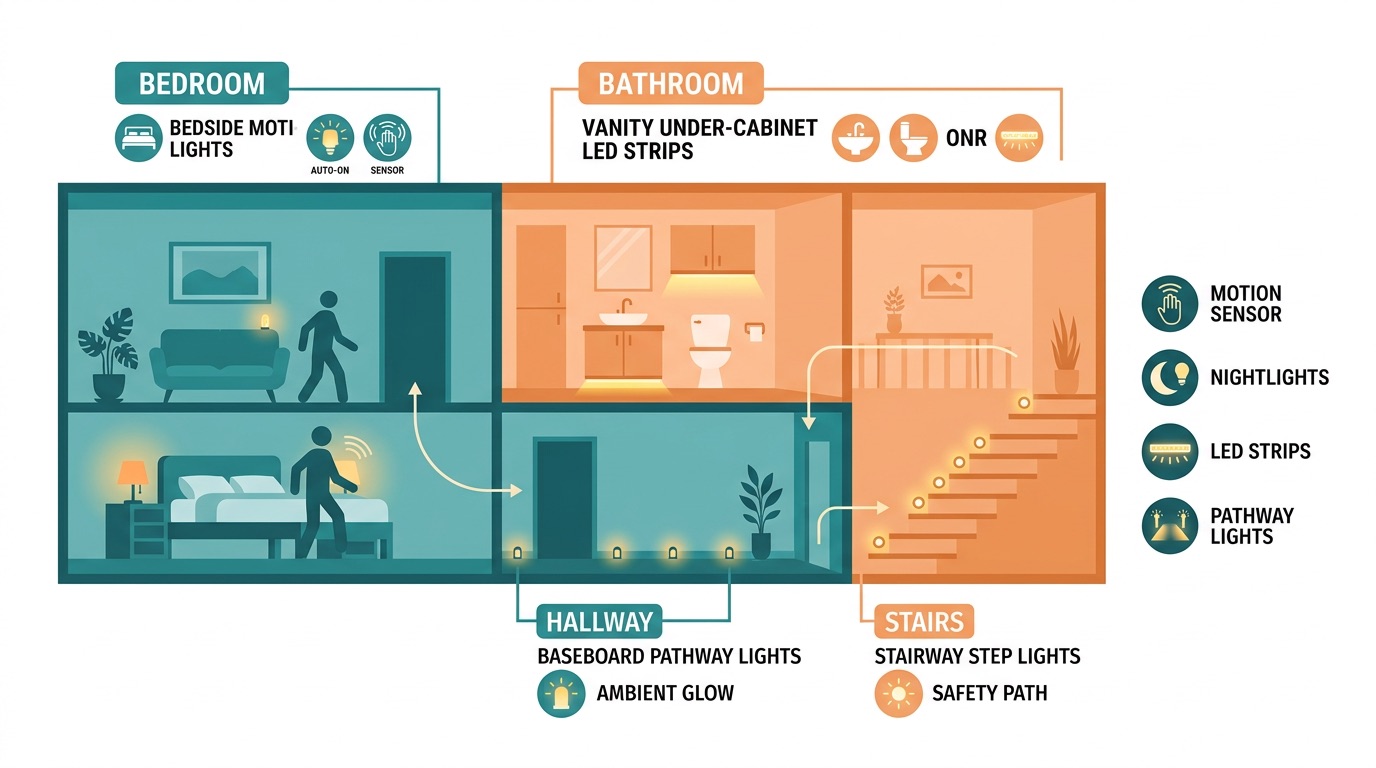
Motion-sensor night light near the door, bedside lamp within arm's reach, clear 3-foot pathway to the door, and flashlight in the bedside drawer. This combination covers all your nighttime needs.
Hallway lighting strategy
Safe passage between rooms
Motion-sensor lights every 10-12 feet, light switches at both ends if the hallway is longer than 10 feet, and clear floors with nothing stored, even temporarily. The goal is continuous, comfortable lighting without harsh overhead brightness.
Bathroom night lighting
The most critical room
Motion-sensor night light near the floor, brighter overhead bulb (800+ lumens), night light that stays on dimly separate from the motion sensor, and clear path from door to toilet. Multiple light sources prevent dangerous shadows.
Kitchen (if you use it at night)
Late-night safety
Under-cabinet lighting that can stay on dimly, motion-sensor light near the entrance, and clear counters so you can navigate easily around objects. Even a quick trip for water should be well-lit.
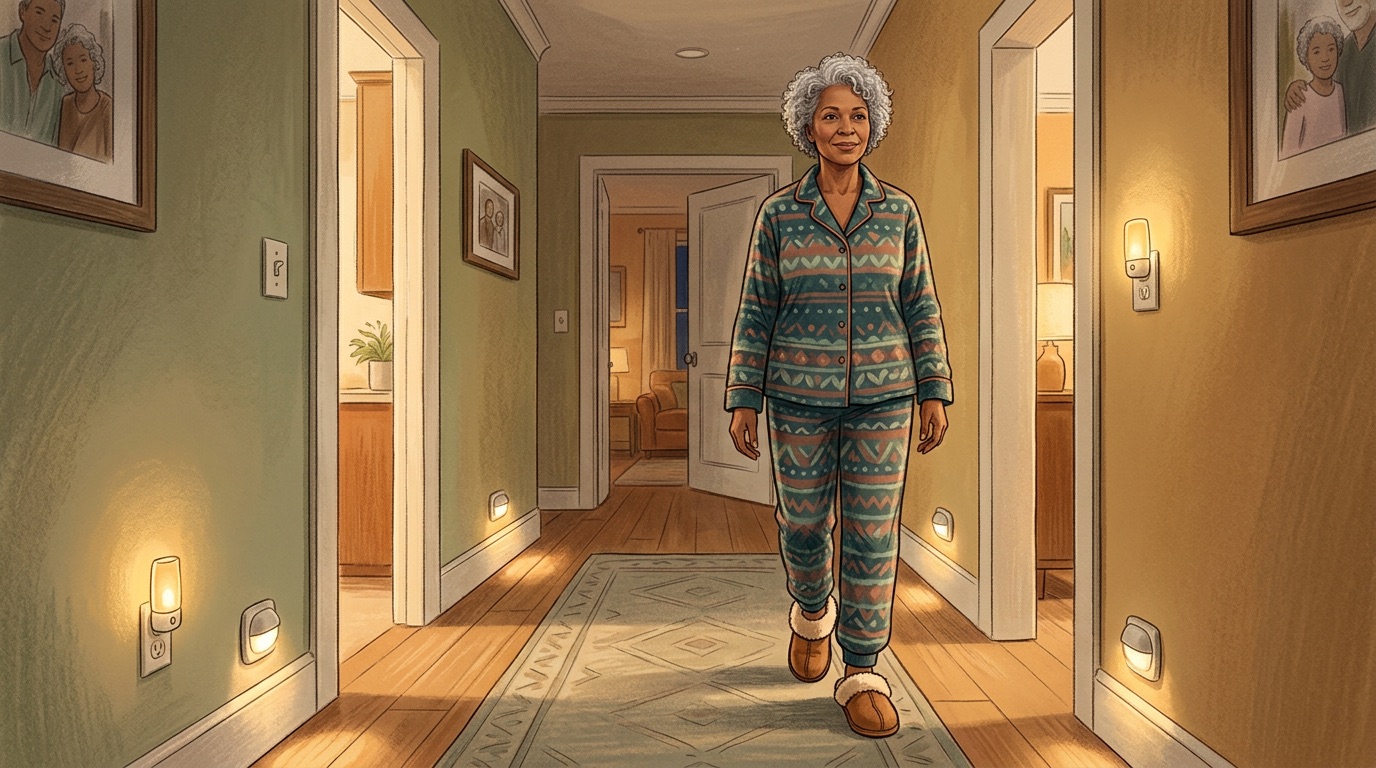
Room-by-room lighting strategy for complete nighttime safetyProper lighting makes nighttime movement feel natural and safe
4
Testing Your Setup
The 2am walk test
Free · 5 minutes
Once you have made lighting and pathway changes, test them thoroughly. Turn off all lights and walk from your bed to the bathroom and back, using only your new lighting setup. The path should feel comfortable and well-lit enough that you move with confidence.
The power outage test
Free · 5 minutes
Turn off the circuit breaker for your bedroom and hallway lights to simulate a real outage. Can you still navigate safely using only your backup lighting such as flashlights and battery-powered lights? This test shows you what happens during an actual power failure.
The guest test
Free · Ask a friend
Have someone unfamiliar with your home try the nighttime route from your bedroom to bathroom. They will notice obstacles and lighting gaps that you might miss because you know your space so well.
5
Advanced Lighting Options
Smart light switches with motion sensors
$25-60 per switch · Intermediate (requires basic electrical work)
Smart switches can be programmed to turn lights on at partial brightness when motion is detected at night, then full brightness during the day. They replace your existing wall switches and work with any bulbs you choose.
LED strip lights under bed frame
$15-30 · Beginner installation
Battery-powered LED strips with motion sensors can be attached under the bed frame to create a gentle light path when you get up. The light stays low and avoids waking a sleeping partner. Look for strips with warm white LEDs and adhesive backing.
Whole-house generator or battery backup
$200-2000+ · Professional installation
If power outages are common in your area, consider backup power options that provide reliable lighting. Portable battery stations can keep essential lights running for hours. Even a basic battery backup for key lights makes a significant safety difference during extended outages.
What to Do This Week
Walk your nighttime route in dim lighting to identify obstacles and dark spots. This simple test shows you exactly where improvements are needed.
Buy motion-sensor night lights for the bedroom-to-bathroom path. These make the biggest immediate difference and cost almost nothing.
Replace dim bulbs in key areas with 800+ lumen LEDs. The difference in visibility is immediate and significant.
Clear the 3-foot pathway between your bed and bathroom. Remove anything you might clip with your hip, catch with your foot, or need to step around.
Test your setup by walking the path with only your new lighting. It should feel comfortable and well-lit enough that you move with confidence.