Fall Prevention for Seniors with Dementia: A Practical Guide
Creating an environment that works with changing abilities
Most falls are preventable, and the fixes are smaller than you think. When dementia is part of the picture, the approach shifts from general safety to creating an environment that works with changing abilities. This guide covers the modifications that make the biggest difference, the warning signs to watch for, and the resources that can help.
Falls become more common as dementia progresses, but they remain preventable. The key is understanding how dementia affects balance, judgment, and spatial awareness, then making targeted changes to reduce risk while preserving independence and dignity.
1
How Dementia Affects Fall Risk
Spatial awareness shifts completely throughout the progression
Depth perception becomes less reliable as the condition advances. Steps, curbs, and even shadows on the floor can become confusing obstacles. What looks like a solid surface might be interpreted as a hole, or an actual step might go unnoticed entirely.
Balance reactions slow down significantly as cognitive processing declines
The automatic adjustments we make dozens of times a day happen more slowly or stop working entirely as dementia progresses. Shifting weight when we lean over and catching ourselves when we stumble happen with noticeable delays that increase with time.
Judgment about safety changes dramatically
Someone might attempt to climb on a chair to reach something high, or try to walk without their usual assistive device. This happens because their assessment of risk has shifted fundamentally, creating new dangerous situations throughout their daily routines.
Medication effects compound the problem significantly
Many people with dementia take multiple medications that interact in complex ways. Blood pressure medications, sleep aids, and anxiety medications can all affect balance and alertness in ways that increase fall risk substantially.
Sundowning affects coordination every evening in predictable patterns
Late afternoon and evening often bring increased confusion and agitation that directly impacts physical stability. Falls happen more frequently during these hours when disorientation peaks and cognitive resources are most depleted.
2
Environmental Modifications That Work
Install motion-sensor lights in hallways and bathrooms
$15–30 for a two-pack · Plug in for immediate use
Plug-in models turn on automatically when someone walks past during nighttime trips. Place one in the hallway between the bedroom and bathroom, and one inside the bathroom near the floor for optimal coverage.
Switch to brighter LED bulbs throughout the house
$20–60 for LED bulbs · Last for years
After 60, eyes need roughly three times more light to see the same detail clearly. Replace dim bulbs with 800+ lumen daylight LEDs with 5000K temperature for maximum visibility. Start with the bathroom, kitchen, and main hallways.
Create a safe, familiar environment
Remove or secure all loose rugs completely
Free to remove, or up to $30 for rug grippers
Throw rugs and bath mats that can slide create dangerous trip hazards throughout the home. Either remove them entirely or replace with mats that have heavy rubber backing that grips the floor securely.
Mark the edges of steps with bright tape
$5–15 for reflective tape
Yellow or white reflective tape on the edge of each step makes them more visible in all lighting conditions. This works for both indoor and outdoor steps and provides immediate visual guidance.
Keep walking paths completely clear of obstacles
Free · Immediate safety benefit
Move furniture, decorative items, and storage boxes away from main walking routes permanently. The path between the bedroom and bathroom should be especially clear for safe nighttime trips.
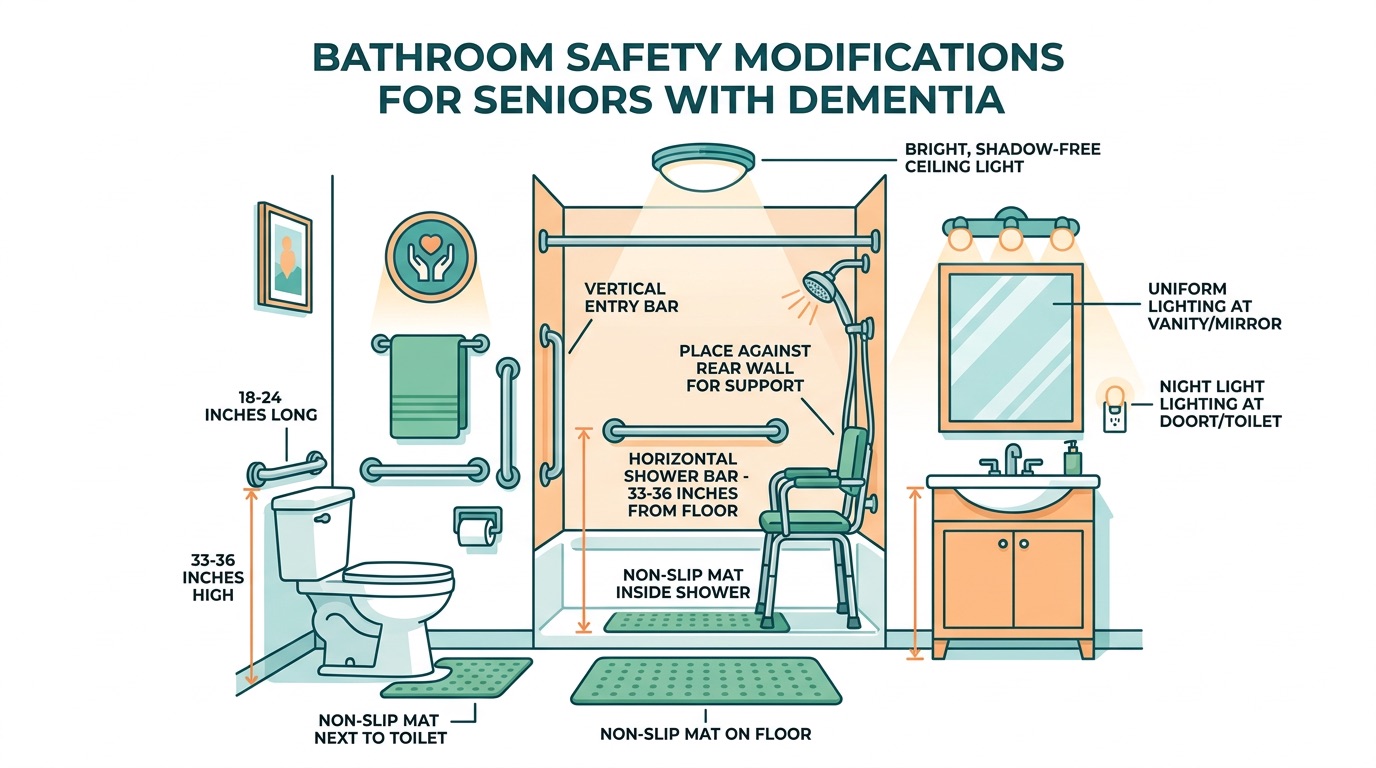
Install grab bars where they provide the most support
$75–150 per bar installed · Professional installation recommended
Place one grab bar next to the toilet and one in the shower where someone steps in and out safely. Professional installation ensures they are mounted into wall studs and can support full body weight during emergencies.
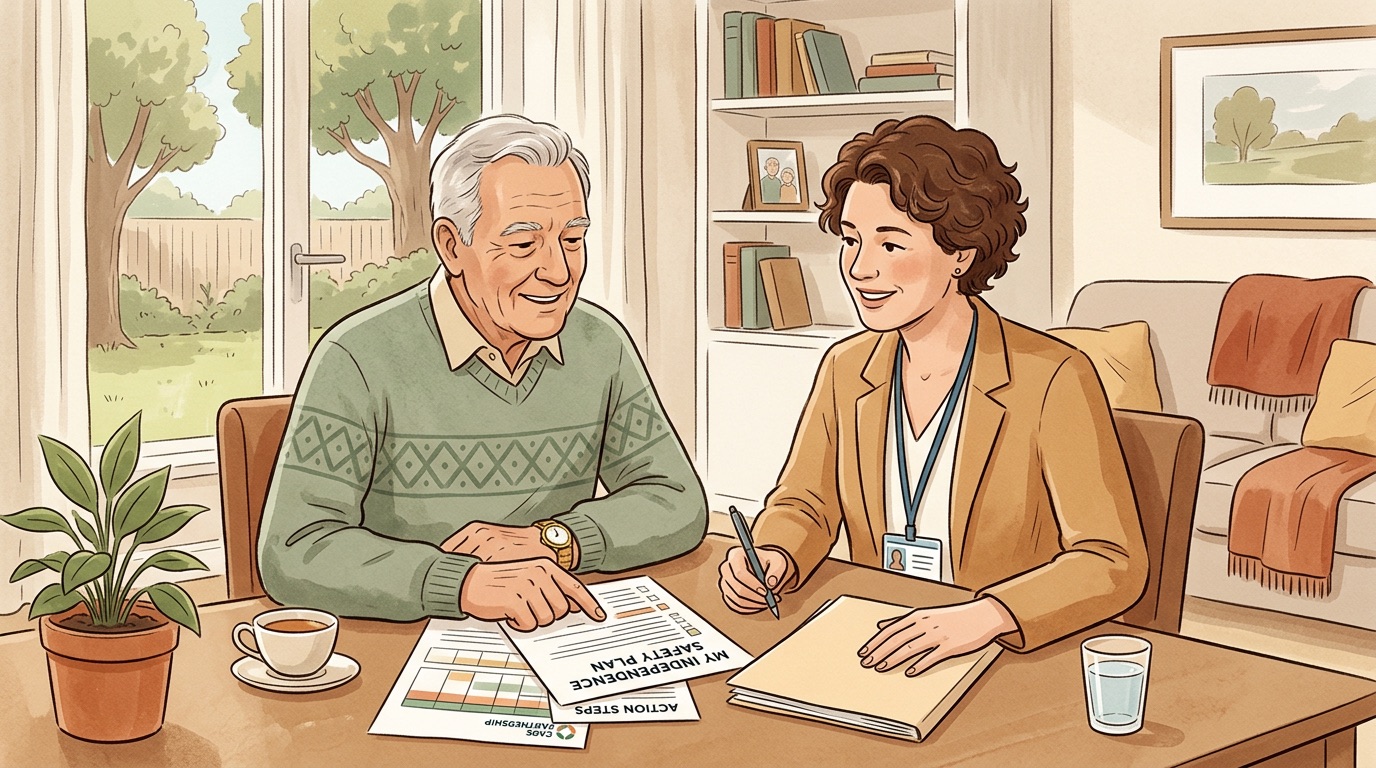
Bathroom modifications for dementia safetyProfessional help provides personalized guidance
Add a shower chair or transfer bench for safe bathing
$40–120 · Ready to use immediately
Standing for 10-15 minutes in a wet space requires more balance than many people realize at first. A shower chair allows for safe, comfortable bathing while reducing fall risk significantly.
Use a raised toilet seat if the standard height feels low
$25–60 · Most models lock onto existing toilet
Standard toilets are 15 inches high which can be challenging for people with mobility limitations. A raised seat adds 2-4 inches and makes sitting down and standing up easier throughout the day.
3
Addressing Specific Dementia-Related Risks
Install door alarms on exterior doors
$10–25 per door · Simple magnetic alarms
Simple magnetic alarms sound when a door opens unexpectedly. They alert family members if someone tries to leave the house at unsafe times during confusion episodes.
Use visual cues to identify safe areas consistently
$5–20 for markers and tape
Bright tape or colored markers can help identify the bathroom door, the bedroom, or the kitchen during confusion episodes. Consistency helps orientation, so use the same color system throughout the house.
Review medications with the doctor every six months
Usually covered by insurance
Ask specifically about fall risk when discussing each prescription and over-the-counter medication. Blood pressure medications, sleep aids, anti-anxiety medications, and pain medications can all affect balance and alertness in dangerous combinations.
Increase lighting before sundown arrives
Free with existing lights
Turn on more lights earlier in the day, before confusion typically increases in the late afternoon. This can help maintain orientation as natural light fades and cognitive resources become more limited.
Establish a consistent evening routine
Free · Reduces agitation
Predictable activities and timing can reduce the agitation that often leads to unsafe behavior during sundown periods. Structure helps maintain cognitive function longer during challenging times.
4
When to Consider Professional Help
Contact an occupational therapist if falls are happening despite changes
If environmental modifications aren't preventing falls, mobility aids are being used incorrectly, or bathroom transfers are becoming unsafe, professional assessment can identify specific needs.
Contact the doctor if falls are increasing in frequency
New symptoms like dizziness, weakness, or confusion beyond baseline dementia symptoms may indicate medical changes that need immediate attention.
Involve the person in decisions when possible
Even with dementia, many people can express preferences about their living space and daily routines. Ask about comfort levels, favorite spots to sit, and daily routines that matter most.
Make changes gradually to avoid overwhelming confusion
Sudden changes to the environment can be disorienting for someone with dementia and may increase anxiety. Introduce new safety features one at a time when possible to allow adjustment periods.
Next Steps for Implementation
Start with one room and one type of modification to avoid overwhelming yourself or the person with dementia. The bathroom is often the best starting area because it combines wet surfaces, hard fixtures, and daily use that create high fall risk.
Document what works well in your specific situation for future reference and healthcare providers. Keep notes about which modifications make the biggest difference in daily comfort and safety levels.
Remember that fall prevention is an ongoing process that requires regular updates as abilities change. As dementia progresses, needs will change and require reassessment of safety measures every six months.
The most important step is the first one you take this week. Choose one modification from this guide and implement it within the next seven days. Most changes are straightforward and affordable with immediate benefits for daily safety and peace of mind.
Free Resources
Area Agency on Aging provides comprehensive home safety services and assessments
AARP HomeFit Guide offers detailed room-by-room guidance with budget considerations