Most falls are preventable, and the fixes are smaller than you think. Building strength and balance works in your living room, using a sturdy chair and a few minutes of your time. No gym membership or complicated equipment needed.
Chair-Based Exercises
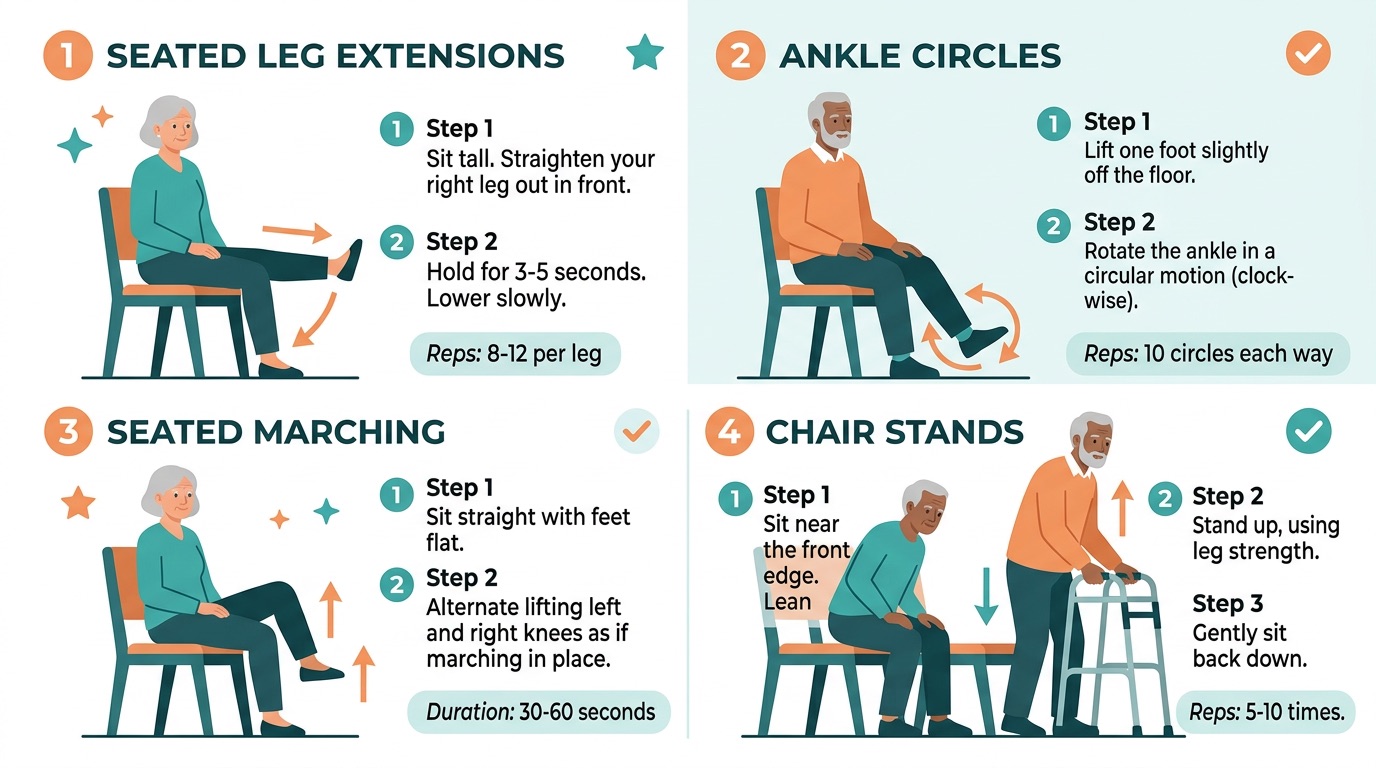
These exercises build strength and improve circulation while seated. Use a sturdy chair without wheels and keep your feet flat on the floor.
- Lift one foot slightly off the ground
- Make slow circles with your ankle, 5 times in each direction
- Flex your foot up toward your shin, hold 3 seconds, point toes down, hold 3 seconds
- Repeat 5 times per foot
- Sit tall with your back against the chair
- Lift one knee as if marching, hold 2 seconds, lower slowly
- Alternate legs for 20 total lifts
- Start with 10 per leg if 20 feels challenging
- Place hands on armrests or seat edges beside your hips
- Push yourself up slightly, as if going to stand, but stop halfway
- Lower back down slowly with control
- Start with 5 reps, work up to 10
- Sit tall with shoulders back, cross arms over your chest
- Slowly turn upper body to the right, hold 3 seconds, return to center
- Turn to the left, hold 3 seconds, return to center
- Repeat 5 times in each direction
Standing Exercises
Hold onto the back of a sturdy chair or kitchen counter for these exercises. The support is there when you need it, but try to use it lightly as you build confidence.
- Stand behind your chair with feet hip-width apart
- Shift weight to your right foot, lift left foot slightly for 5 seconds
- Switch sides and repeat
- Work up to 10 reps per side over several weeks
- Stand next to your chair or counter for support within reach
- Step forward, placing your heel directly in front of your other foot's toes
- Take 10 steps forward, turn carefully, take 10 steps back
- Focus on looking ahead rather than down
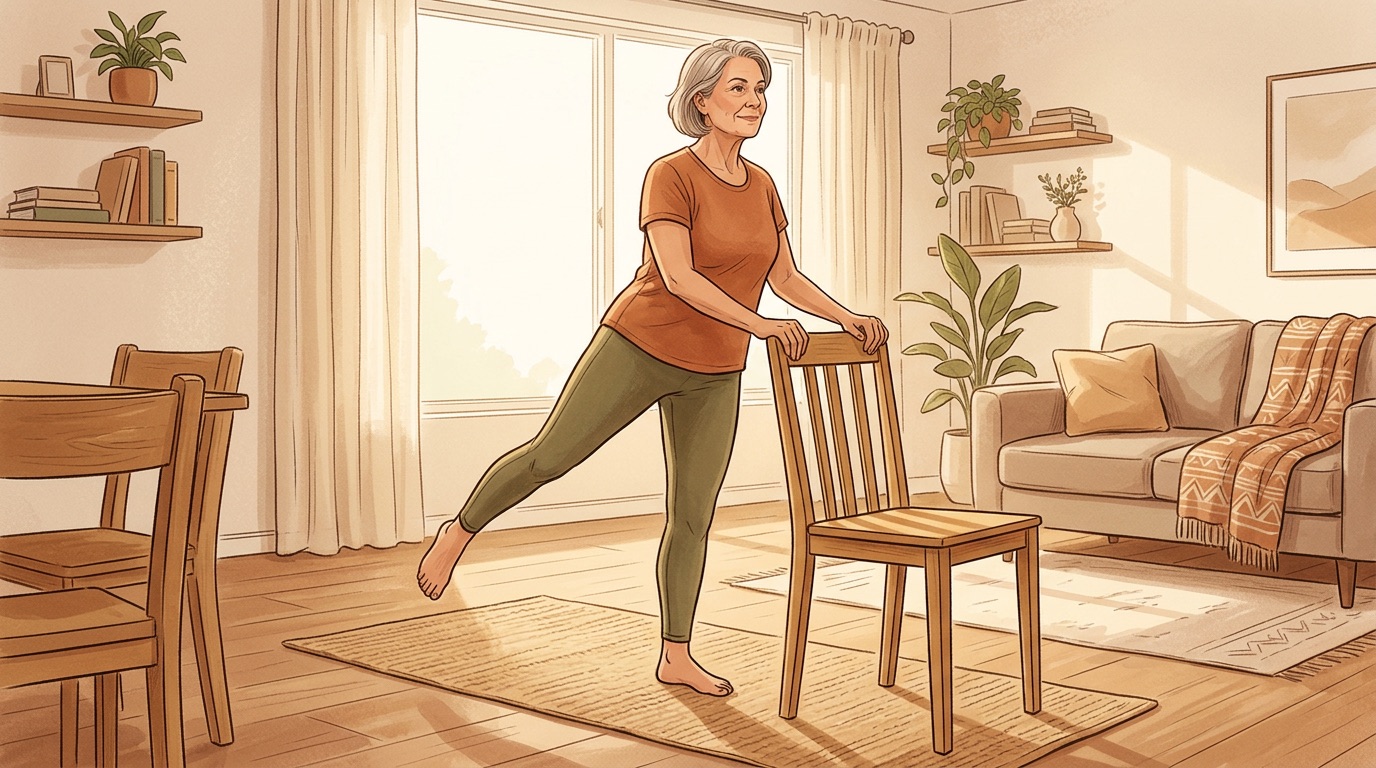
- Hold the chair back lightly with fingertips for balance
- Rise up on your toes as high as comfortable, hold 3 seconds
- Lower slowly
- Start with 10 reps, progress to 15
- Sit near the front edge of a sturdy chair, feet flat on the floor
- Lean slightly forward, push through your heels to stand
- Lower yourself back down slowly with control
- Start with 5 reps, work toward 10
Tai Chi Movements
Tai chi is one of the most studied fall prevention methods, shown to reduce fall risk by up to 50%. These simplified movements borrow from traditional tai chi and focus on the elements that matter most for balance.
- Stand with feet shoulder-width apart, knees slightly bent
- Slowly shift your weight to the right foot, letting your body move naturally
- Hold 5 seconds, then shift to the left foot
- Repeat 10 times, moving slowly and steadily
- Stand with feet shoulder-width apart, arms at your sides
- Slowly raise both arms out to shoulder height
- Lower them slowly with the same controlled movement
- Repeat 10 times while maintaining steady breathing
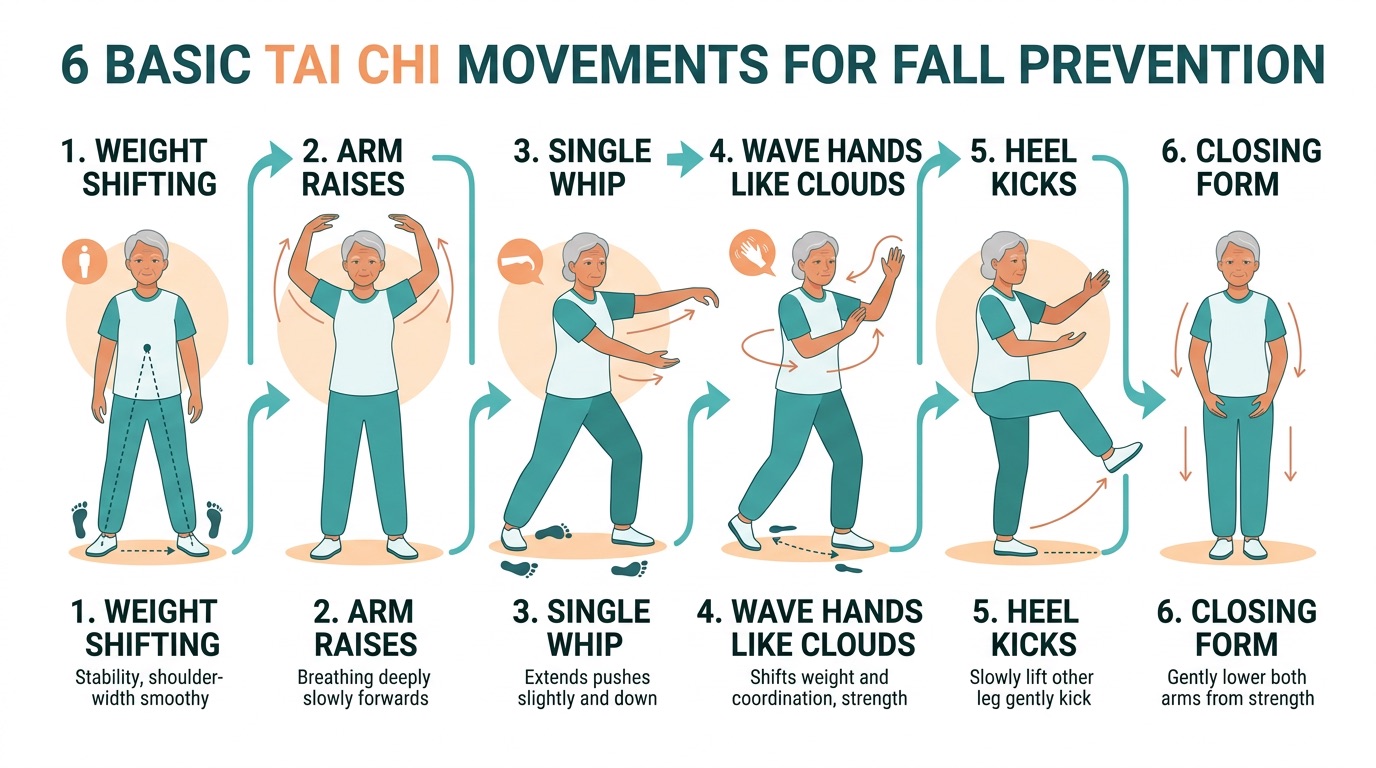
- Stand near a wall or chair for support if needed
- Lift your right knee slightly and balance on your left foot
- Slowly move your arms in small circles
- Hold 10 seconds, switch legs and repeat
Creating Your Routine
- Chair exercises: Ankle circles, seated marching, chair push-ups
- Standing exercises: Weight shifts, calf raises, sit-to-stand
- Tai chi movements: Weight shifting, raising the arms
- You can complete all reps without holding the chair
- The exercises feel automatic rather than requiring intense concentration
- You feel more stable during daily activities like getting dressed
Safety Guidelines
Stop any exercise if you feel dizzy, short of breath, or experience sharp pain. Some muscle fatigue is normal, but sharp pain or dizziness means stop immediately.
Keep your exercise area clear of rugs, cords, or furniture you might trip over. Wear supportive shoes with good grip rather than socks or slippers.
If you have been sedentary recently, start with chair exercises for the first week to give your body time to adapt.
Building balance and strength is an investment in staying independent in your own home. These exercises work because they mirror the movements you use every day.
Free Resources
- National Council on Aging for evidence-based fall prevention programs and local class finders
- CDC STEADI Initiative for healthcare provider resources and patient materials
- Eldercare Locator to find free or low-cost balance classes in your community
- Tai Chi for Health Institute for Dr. Paul Lam's programs designed for older adults
- AARP Healthy Living for free tai chi videos and local program information