Bathroom Lighting for Aging Eyes: A Complete Guide
Brighter, safer, more comfortable lighting solutions
Your bathroom lighting affects everything from how confident you feel getting ready in the morning to how safe you feel moving around at night. After 60, your eyes need roughly three times more light to see the same detail, but most bathrooms were lit for younger eyes. Better lighting is one of the most affordable and impactful changes you can make.
Your pupils get smaller and your lenses thicken over time, which means less light reaches your retina. The contrast between light and shadow becomes harder to distinguish. These changes are gradual and normal, but they mean the lighting that worked at 40 may struggle to work at 70.
1
Immediate Lighting Improvements (Under $50)
Upgrade your bulbs to LED daylight (5000K-6500K)
$5 to 15 per bulb · Beginner
Replace any warm or dim bulbs with daylight-temperature LEDs rated for at least 800 lumens. The higher color temperature makes colors appear more vibrant and details easier to see. This single change often makes the biggest difference in visibility.
Add motion-sensor night lights
$8 to 20 for a two-pack · Ready to use
Place one in the hallway leading to the bathroom and one inside the bathroom near floor level. Look for warm-colored night lights (2700K-3000K) that provide enough light to navigate safely while preserving sleep quality.
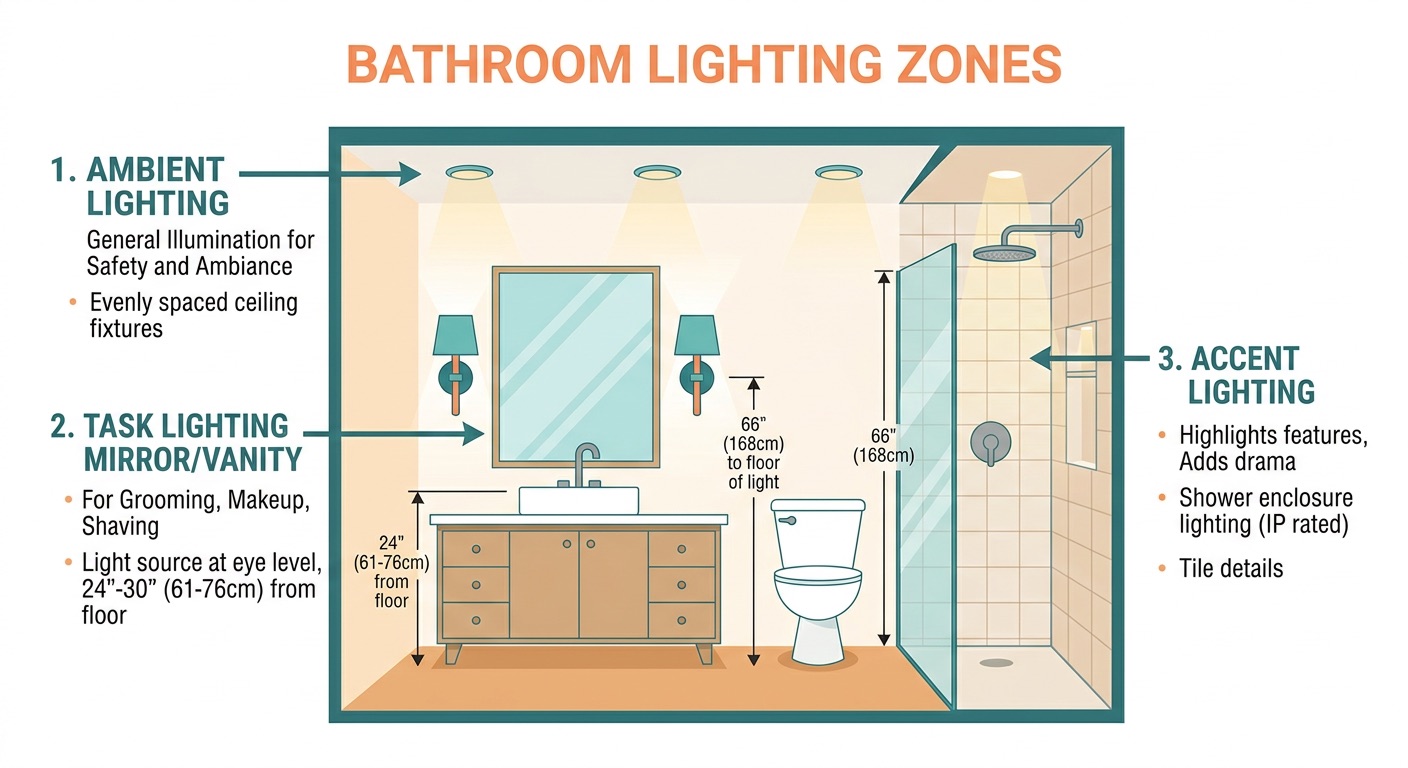
Key lighting zones for aging eyes
Install battery-powered LED strip lights
$15 to 40 · Beginner (adhesive backing)
Battery-powered LED strips stick under the vanity or along the toe-kick area. They provide gentle illumination that helps you see the floor and the edge of fixtures without turning on bright overhead lights.
2
Mirror and Vanity Lighting
Side-mounted sconces eliminate face shadows
$50 to 200 per pair · Professional installation
Lights mounted on either side of the mirror eliminate shadows on your face better than a single light bar above the mirror. Position them at eye level when you're standing at the sink for optimal face illumination.
Proper vanity lighting placement for aging eyes
LED mirror with built-in lighting
$80 to 300 · Beginner for plug-in models
LED mirrors provide even lighting around your reflection and often include features like magnification sections and color temperature adjustment. Plug-in models are straightforward to install and require no electrical work.
Adjustable vanity light bar
$40 to 150 · Professional for hardwired
Choose fixtures that distribute light evenly rather than creating bright spots. Look for light bars that are at least two-thirds the width of your mirror for optimal coverage across your entire reflection.
3
Shower and Tub Lighting
Recessed shower lights for wet locations
$30 to 80 per light · Professional installation
Recessed lights rated for wet locations provide bright, even lighting inside the shower. Position them to avoid casting shadows when you're standing under the water stream.
Waterproof LED light strips
$25 to 60 · Beginner for battery models
LED strips designed for wet areas can be installed along shower niches or under built-in benches. Battery-powered versions avoid the need for electrical work and professional installation costs.
4
Lighting Controls That Make a Difference
Dimmer switches for flexible control
$15 to 40 per switch · Intermediate electrical
Dimmers let you adjust lighting for different times of day and activities. You can use bright light for detailed tasks and softer light for nighttime visits safely. Choose dimmers rated for LED bulbs.
Motion-activated wall switches
$20 to 50 per switch · Intermediate electrical
Motion sensors built into wall switches turn lights on when you enter and off when you leave automatically. These prove particularly useful for middle-of-the-night bathroom visits.
Smart light switches with app control
$25 to 80 per switch · Requires neutral wire
Smart switches let you control lights from your phone or with voice commands. Some can be programmed to automatically dim at certain times or turn on gradually to avoid harsh brightness transitions.
5
Addressing Common Lighting Problems
Shadows around the mirror
Problem: Single overhead fixture
Single light fixture above the mirror creates shadows under your eyes and chin. Add side lighting or replace the overhead fixture with a wider light bar that extends beyond the mirror edges.
Glare from overhead lights
Problem: Uncomfortable eye strain
Bright overhead lights create uncomfortable glare that strains your eyes unnecessarily. Install a dimmer switch or replace the fixture with one that has a diffuser or multiple smaller bulbs.
Dark shower interior
Problem: Blocked overhead light
Shower curtain or door blocks light from overhead fixtures leaving the interior dim and potentially unsafe. Add a dedicated shower light or waterproof LED strips inside the shower area.
Difficult to see at night
Problem: Disrupted sleep vs. safety
Turning on bright lights disrupts sleep but you need some light to navigate safely. Install motion-sensor night lights or toe-kick lighting that provides just enough illumination for safe navigation.
Getting Started
Assess your current lighting by trying to read a medication label at your bathroom mirror under normal lighting conditions. If you need to squint or move closer to the light source, your task lighting needs improvement immediately.
Start with LED bulb upgrades in existing fixtures because this provides the most immediate improvement for the lowest cost and requires no installation skills. Add night lighting for safe navigation once you've improved general lighting.
Most bathrooms need three types of lighting: general (overhead), task (around mirrors), and safety (night lights and toe-kick lighting). Start with what you can do yourself, then consider professional help for hardwired fixtures.
For renters: Focus on plug-in solutions, battery-powered lights, and bulb upgrades that require no permanent changes. LED mirrors, strip lights, and motion sensors work well without modifications.
Free Resources
AARP Home Fit Guide (free home safety checklist including lighting recommendations)
Area Agency on Aging (local agencies often provide free home safety assessments)
CAPS Directory (find contractors experienced in aging-in-place lighting solutions)