Caregiver Burnout Warning Signs: A Recognition Checklist
Spotting the patterns before they become harder to reverse
You're managing a lot. More than most people realize, and probably more than you're admitting to yourself. This checklist helps you recognize the specific signs that caregiving stress has crossed into burnout territory. Most of these signs feel normal when you're living them. That's part of the problem.
A note on difficulty levels: "Immediate" means you can do this today. "This week" means it requires scheduling or a conversation. "Professional help" means bringing in outside support.
1
Physical Signs
You're getting sick more often than usual
Physical health · Immediate recognition
Colds that linger, infections that take longer to clear, or feeling run-down most of the time. Chronic stress suppresses immune function, making you more vulnerable to illness.
Sleep problems that weren't there before
Sleep disruption · Track for one week
Trouble falling asleep, waking up at 3am with racing thoughts, or sleeping but waking up exhausted. Note patterns for one week to identify trends.
You're skipping meals or eating while standing
Nutrition neglect · Immediate recognition
Grabbing crackers instead of lunch, eating your parent's leftovers instead of making yourself food, or realizing at 4pm you haven't eaten since coffee.
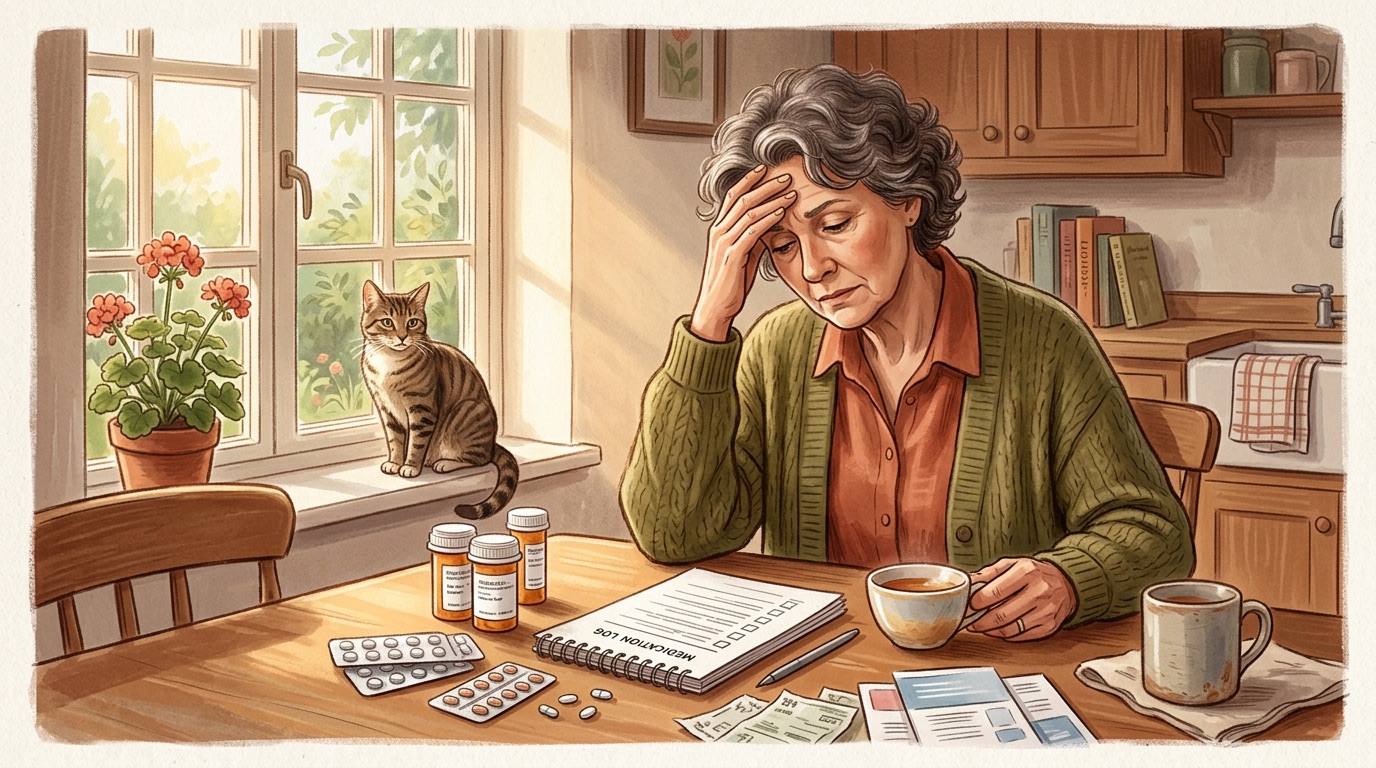
Physical and emotional warning signs of caregiver exhaustion
Back pain, headaches, or jaw tension that's new or worsening
Physical stress · Body awareness
Your body holds stress physically. New aches, especially in your neck, shoulders, or jaw, often show up before emotional burnout becomes obvious.
You've stopped going to your own medical appointments
Healthcare neglect · Immediate assessment
When did you last see your doctor? Get your teeth cleaned? Have an eye exam? Postponing your own healthcare is an early burnout warning.
2
Emotional and Mental Signs
You feel angry or resentful about things that used to feel manageable
Emotional response · Self-awareness
Snapping at your spouse, feeling irritated when your parent asks for help, or resenting siblings who live far away. The irritation feels disproportionate to the situation.
You remember the last time you actually laughed
Joy depletion · Emotional check
Actual laughter, beyond polite smiles. When caregiving takes over, joy often disappears gradually. Its absence is a reliable burnout indicator.
You're making more mistakes at work or forgetting routine things
Cognitive function · Work performance
Missing deadlines you'd normally meet, forgetting passwords you know by heart, or having trouble concentrating during meetings you used to handle easily.
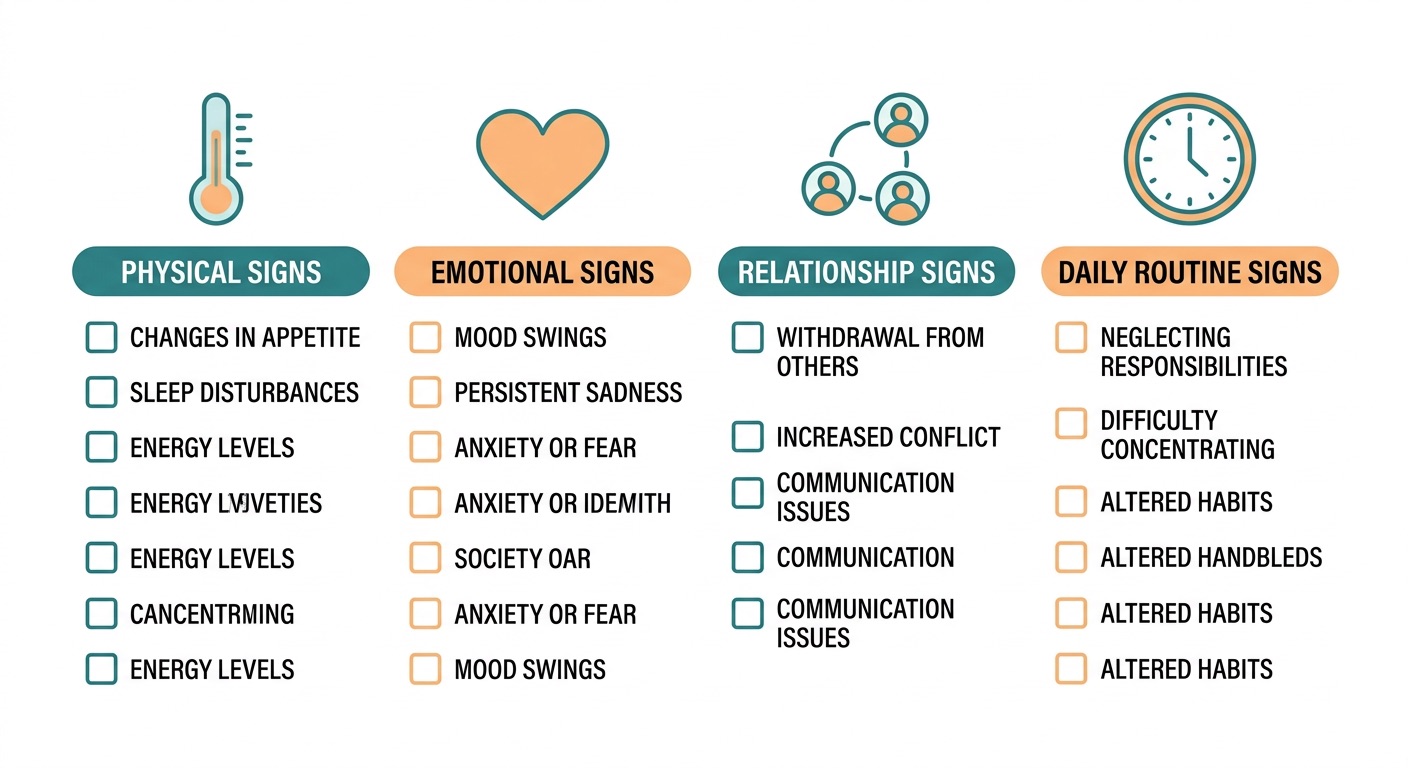
Complete checklist for recognizing caregiver burnout warning signs
You feel guilty when you're doing something for yourself
Guilt response · Self-care barriers
Feeling bad for watching TV, taking a shower, or having dinner with friends. When guilt becomes your default emotion about personal time, burnout is already happening.
You're avoiding phone calls from family or friends
Social withdrawal · Communication patterns
When people ask how you're doing, it feels like too much to explain. You stop picking up or returning calls because you want to avoid talking about caregiving.
3
Relationship and Social Signs
You're having the same argument with your spouse repeatedly
Relationship strain · Communication breakdown
Usually about time, money, or whose responsibility something is. The same conversation keeps happening because the underlying stress remains unaddressed.
You've stopped doing activities you used to enjoy
Interest loss · Social withdrawal
Book club, walking group, weekend projects. When you stop participating in things that used to matter to you, it's often because you feel like you don't deserve the time.
Friends have stopped inviting you to things
Social isolation · Relationship impact
After you've said no enough times, people stop asking. This signals that caregiving has taken over your social identity.
Your relationship with your parent feels different and you struggle to name how
Role confusion · Relationship dynamics
The dynamic has shifted from adult child to caregiver, but there's no roadmap for that transition. Feeling confused about the relationship change is normal and difficult.
You feel like you're the only one who cares
Isolation · Responsibility burden
Your siblings call infrequently, your parent's friends have faded away, the neighbors check in rarely. Whether this is true or perception, feeling alone in the responsibility is exhausting.
4
Daily Life and Routine Signs
Your house is messier than you'd normally accept
Home management · Environmental stress
Laundry piling up, dishes in the sink, mail unopened. When your own living space starts reflecting the chaos you feel, it's a concrete sign that you're stretched too thin.
You're spending money on convenience in ways you wouldn't normally
Financial patterns · Coping mechanisms
Takeout instead of cooking, paying for services you'd usually do yourself, or buying duplicates because you lose track of things. Track these expenses for one week.
You remember the last time you did something just for yourself
Personal time · Self-care deficiency
Something beyond self-care in the bubble bath sense, but something you chose to do because you wanted to. A book, a walk, a phone call with a friend.
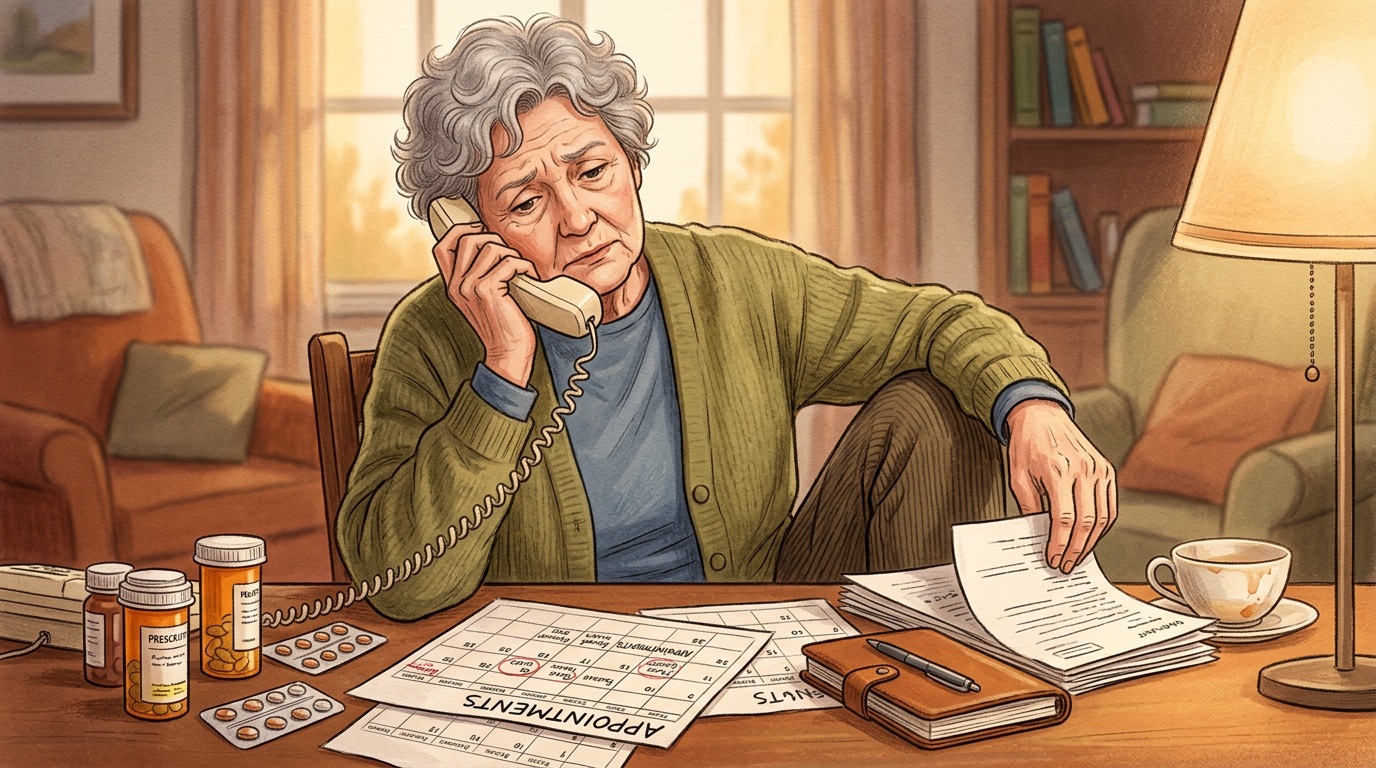
How caregiver burnout manifests across physical, emotional, and social areas
You're staying up late because it's the only quiet time you have
Sleep sacrifice · Personal space
Even when you're exhausted, you delay going to bed because those late hours are the only time that feels like yours.
You feel anxious when you're away from your phone
Technology anxiety · Hypervigilance
Constantly checking for calls or texts from your parent, the facility, or healthcare providers. Your phone has become a source of stress rather than connection.
When Multiple Boxes Are Checked
3-5 boxes: You're dealing with normal caregiving stress, but it's worth addressing before it gets harder to manage.
6-10 boxes: You're moving into burnout territory. This is the time to make changes, before things get worse.
11+ boxes: You're in burnout. This is a predictable response to an unsustainable situation. Getting help becomes essential.
What This Recognition Means
The point of recognizing burnout is information gathering. When you know what you're dealing with, you can make different choices. You chose to care, and you can choose how to respond to the challenges that come with it.
Burnout isn't a character flaw. It's what happens when the demands consistently exceed your resources. The solution isn't to become a better person, it's to change the balance between demands and support.
Many of these warning signs feel like personal failings when you're experiencing them. They're not. They're predictable responses to carrying more than one person should carry alone.