A step-by-step guide for exhausted caregivers who need a break
You're not failing. Needing a break from caregiving doesn't make you selfish or weak. It makes you human. Respite care gives you time away while ensuring your parent gets proper supervision and care. This guide walks you through every type of respite care available and exactly how to find it in your area.
Know before you start: Respite care ranges from a neighbor checking in for two hours to professional overnight care to week-long stays at specialized facilities. The key is matching what you need with what's available and what you can afford.
1
Identify What Type of Respite Care You Need
How many hours do you need?
Time Planning
2 hours for errands, 8 hours for a full day, overnight, or multiple days. Be specific about your minimum needs and your ideal situation.
What level of care does your parent need?
Care Assessment
Companionship, help with meals, medication reminders, assistance with bathing or toileting, or medical supervision. This determines which services you can use.
What's your realistic budget?
Financial Planning
Free programs, under $20/hour, insurance-covered only, or willing to pay market rate. Knowing your limits helps narrow the options quickly.
Planning your respite care needs and options
2
Contact Your Area Agency on Aging
Call the Eldercare Locator
First Contact
Call 1-800-677-1116 and provide your zip code. They'll connect you to your local Area Agency on Aging, which coordinates services for older adults in every county.
Ask for specific programs
Program Research
Request information about respite care programs, sliding-scale fee programs, volunteer companion programs, adult day programs, and emergency respite services in your area.
Take detailed notes
Information Management
Write down program names, contact numbers, and eligibility requirements. This information becomes your roadmap for the next steps.
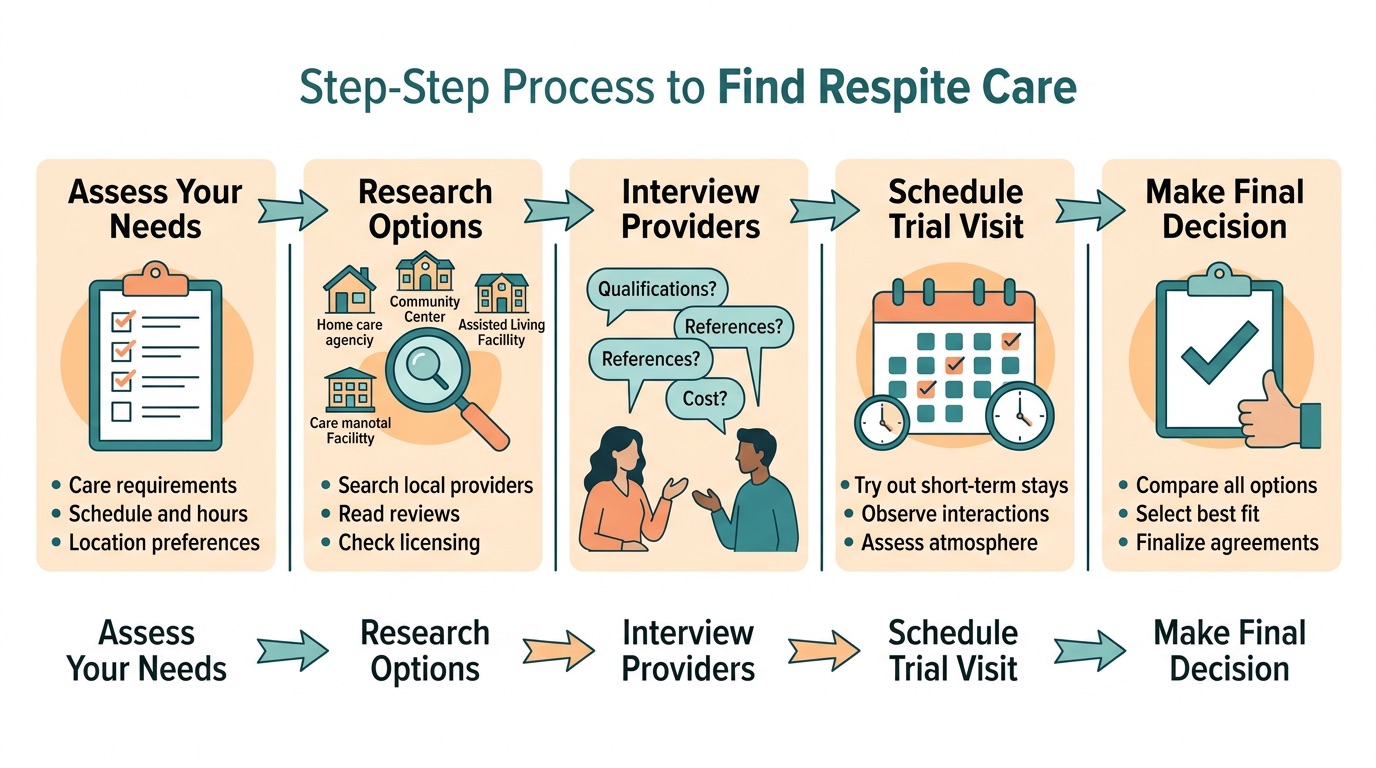
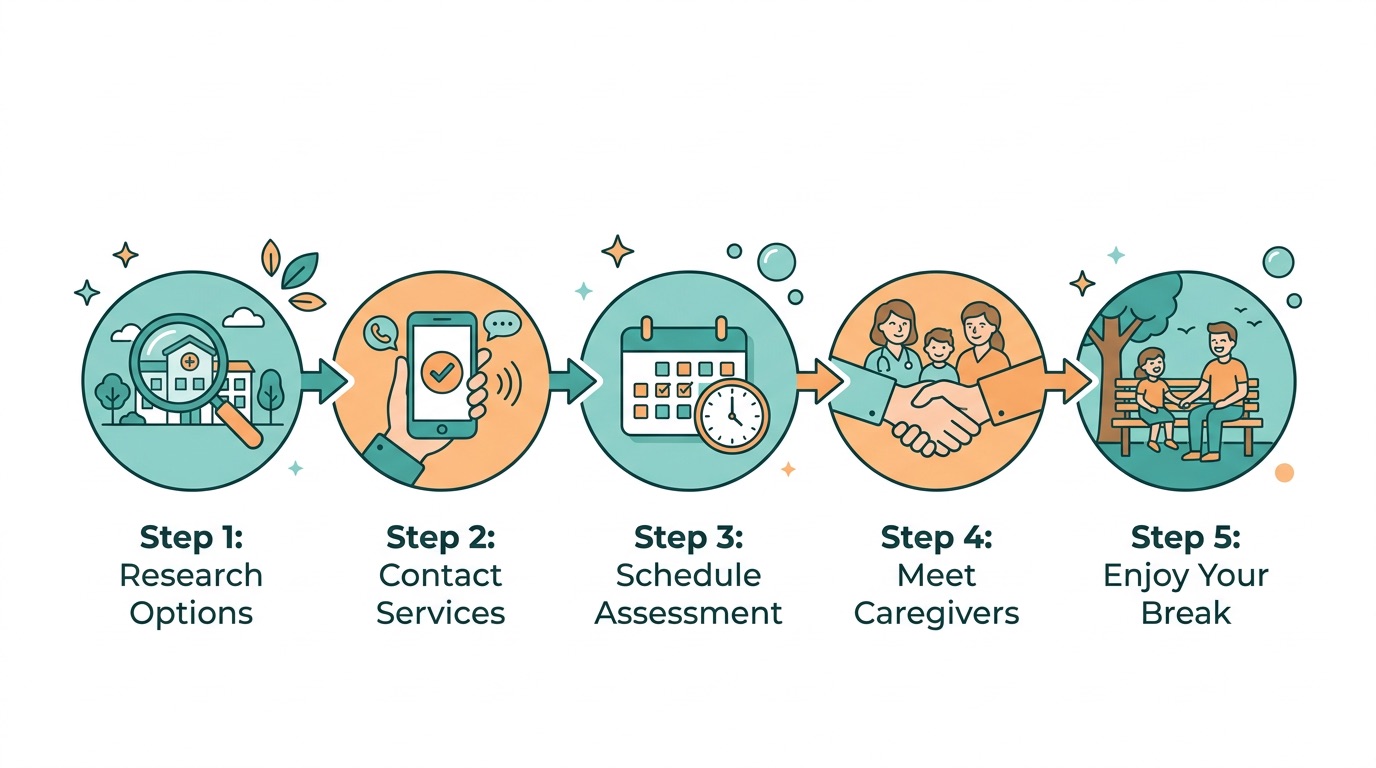
Step-by-step process for finding respite care
3
Check Insurance Coverage
Medicare coverage inquiry
Government Insurance
Call the number on your parent's Medicare card. Ask about coverage for adult day programs and home health aide services. Medicare covers some respite care if it's deemed medically necessary.
Medicaid benefits research
State Programs
If your parent qualifies for Medicaid, respite care coverage varies by state. Call your state Medicaid office to ask about respite benefits and approved providers.
Private insurance verification
Commercial Coverage
Call the customer service number on the insurance card. Ask specifically about coverage for home health services, adult day programs, and respite care benefits.
Veterans benefits check
Military Benefits
If your parent is a veteran, call 1-877-222-8387 to ask about respite care benefits through the VA. These benefits are often overlooked but can be substantial.
4
Research Adult Day Programs
Find programs in your area
Location Research
Search online for "adult day programs near [your city]" or ask your Area Agency on Aging for a list. Adult day programs provide supervised care during daytime hours, typically 6-10 hours per day.
Visit programs in person
Quality Assessment
Look for clean, safe facilities, appropriate staff-to-participant ratios, activities that match your parent's interests and abilities, and trained staff who can handle your parent's specific needs.
Ask about logistics
Practical Details
Find out about transportation services, meal provision, and what happens if your parent has a medical emergency. These details matter when you're actually using the service.
Complete respite care research and application process
5
Find Home-Based Respite Care
Companion care agencies
Non-Medical Support
Search for "companion care" or "home care" in your area. These provide non-medical supervision and light assistance like meal preparation and companionship.
Home health agencies
Medical Support
If your parent needs medical supervision, search for "home health care" agencies. These employ licensed nurses and certified nursing assistants who can handle medical needs.
Private caregivers
Individual Providers
Check Care.com, Caregivers.com, or Sittercity.com for individual caregivers. Always check references and run background checks before hiring.
Faith community volunteers
Community Support
Contact local churches, synagogues, or mosques. Many have volunteer programs that provide companion care for congregation members and community members.
6
Explore Overnight and Extended Respite Options
Respite care facilities
Short-Term Stays
Some assisted living communities and nursing homes offer short-term stays specifically for respite care. Search for "respite care facilities" in your area.
Adult foster care
Home Settings
Some states license adult foster care homes that provide short-term respite stays in a home setting. This can feel less institutional than facility care.
Assisted living trial stays
Trial Programs
Some assisted living communities offer week-long trial stays that function as respite care. This also gives you a chance to evaluate long-term care options.
Common Mistakes to Avoid
Don't wait until you're completely burned out to seek help. Start looking for respite care before you desperately need it. The process takes time, and you'll make better decisions when you're not in crisis mode.
Don't assume you can't afford it. Many programs offer sliding-scale fees or are covered by insurance. Apply before ruling out options based on cost.
Always check references and run background checks for private caregivers. Verify that agencies are licensed and insured in your state. Trust your instincts.
Start small and build up. Begin with short respite periods (2-3 hours) to see how your parent responds. Schedule your first respite session for a specific task like grocery shopping rather than just "time off."
Free Resources
Eldercare Locator - Call 1-800-677-1116 or visit online to find local services