How to care for them without losing yourself in the process
You are not failing if you cannot do everything. You are not selfish if you need limits. Setting boundaries with an aging parent is one of the hardest parts of caregiving, and it is also one of the most necessary. This guide walks through the specific boundaries that matter most, how to set them without guilt, and what to do when they get tested.
Why boundaries matter: Without boundaries, caregiving becomes a 24-hour job that never ends. With boundaries, it becomes something you can sustain without losing yourself in the process.
1
Communication Boundaries: When and How Often
Establish specific check-in times
Routine Contact
"I will call you every Tuesday and Friday at 7pm, and I am available for emergencies anytime. For routine matters, I will get back to you within 24 hours." Your parent knows when to expect contact, and you get predictable windows.
Define what counts as an emergency
Emergency Protocol
Be specific about medical emergencies, safety concerns, or urgent matters that warrant immediate calls versus routine questions that can wait for regular contact times.
Handle pushback with empathy but firmness
Boundary Enforcement
When they say "But what if I need you?" respond: "You can always call. For true emergencies, I will answer right away. For everything else, I will call you back during our regular times."
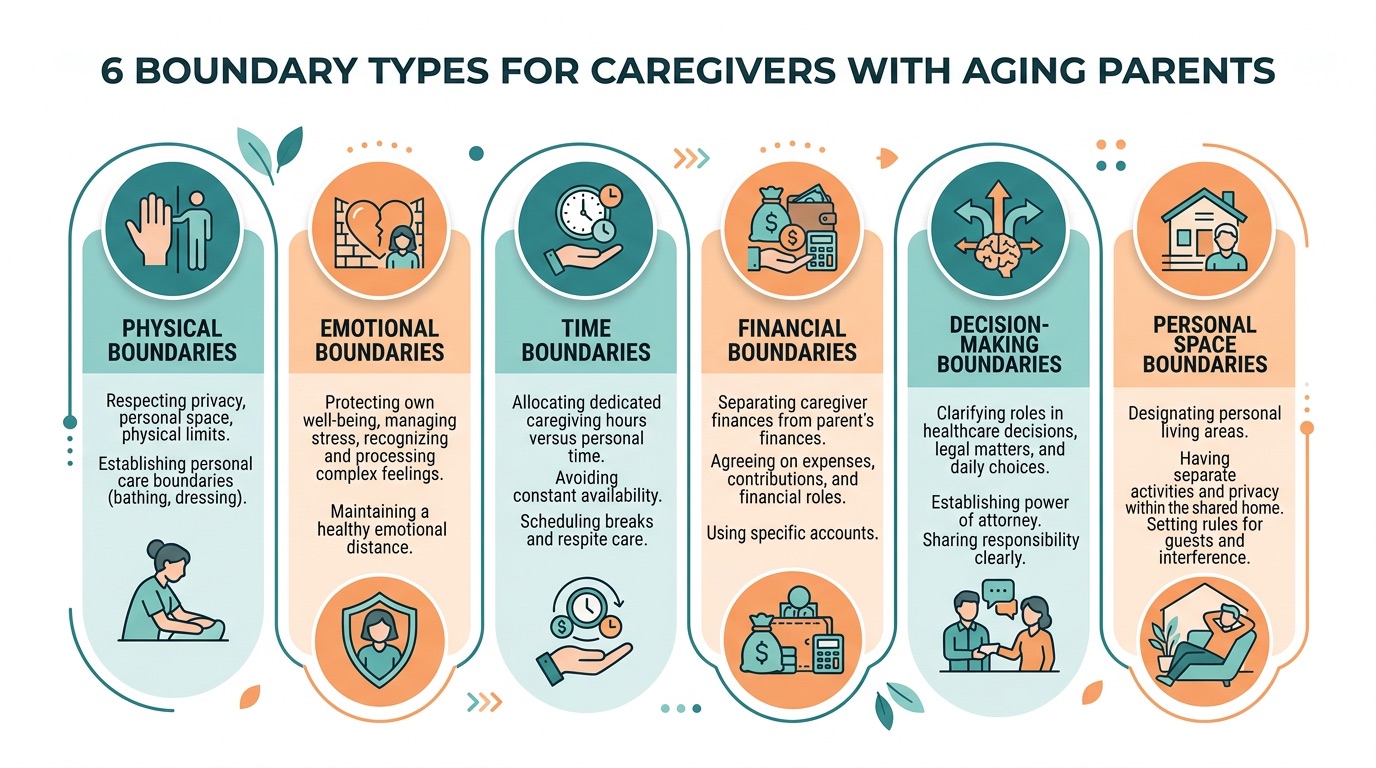
Having difficult boundary conversations with aging parentsThe six boundaries that make the biggest difference
2
Decision-Making Boundaries
Clarify which decisions are yours to make
Role Definition
"I will help you research options and drive you to appointments. The final decision about whether to move to assisted living is yours to make." Prevents taking on responsibility for choices that belong to your parent.
Know when to involve professionals
Safety Concerns
If their decisions put them in danger, you may need to involve their doctor, a social worker, or adult protective services. This is getting professional help when the situation is beyond what you can handle alone.
Support without controlling
Healthy Support
Offer information and assistance while respecting their autonomy. You can disagree with their choices without taking responsibility for managing the consequences.
3
Financial and Time Boundaries
Separate your financial well-being from theirs
Financial Protection
Handle emergency expenses only with a clear repayment plan. Keep your name off their loans. If you manage their finances, keep detailed records and involve other family members in major decisions.
Set specific availability hours
Schedule Management
"I can help with grocery shopping on Saturday mornings and doctor appointments on weekday afternoons with 48 hours notice. Sunday is family time and I am available only for emergencies."
Protect work hours
Professional Boundaries
Be explicit about work hours: "I cannot take calls between 9am and 5pm Monday through Friday unless it is a medical emergency." Stick to this boundary consistently.
Planning and implementing healthy caregiver boundaries
4
Sibling and Emotional Boundaries
Refuse to be the default caregiver
Equal Responsibility
Create specific division of responsibilities. One sibling handles medical appointments, another manages finances, a third coordinates home maintenance. Everyone contributes according to their abilities.
Handle non-participating siblings
Family Dynamics
Document what you are doing and the time it takes. Send monthly updates to all siblings. If they will not help with tasks, they cannot criticize your decisions.
Support without fixing everything
Emotional Boundaries
Listen when they are frustrated about aging. Acknowledge their loneliness without visiting every day to fix it. Support their emotional well-being without being responsible for it.
Recognize manipulation attempts
Guilt Management
"I guess I will just sit here alone" or "You care more about your job than me" are attempts to make you feel guilty for having limits. Your response: "I care about you, and I will see you on Thursday like we planned."
How to Set Boundaries Without Starting a Fight
Start with empathy, then state the boundary: "I know this is frustrating for you. I want to help, and I also need to be able to do this in a way that works for both of us."
Be specific about what you will do instead of what you won't do. "I will check in with you every Tuesday and Friday evening" works better than "I cannot be available all the time."
Expect testing. Your parent will probably test the boundary within the first week. This is normal behavior. Stick to what you said you would do.
Remember that boundaries help your parent too. When you are not burned out and resentful, you are a better caregiver. When they know what to expect from you, they can make other plans for the gaps.