Aging in Place: Making Your Apartment or Condo Work Better as You Age
Smart modifications that require no permission from landlords or HOAs
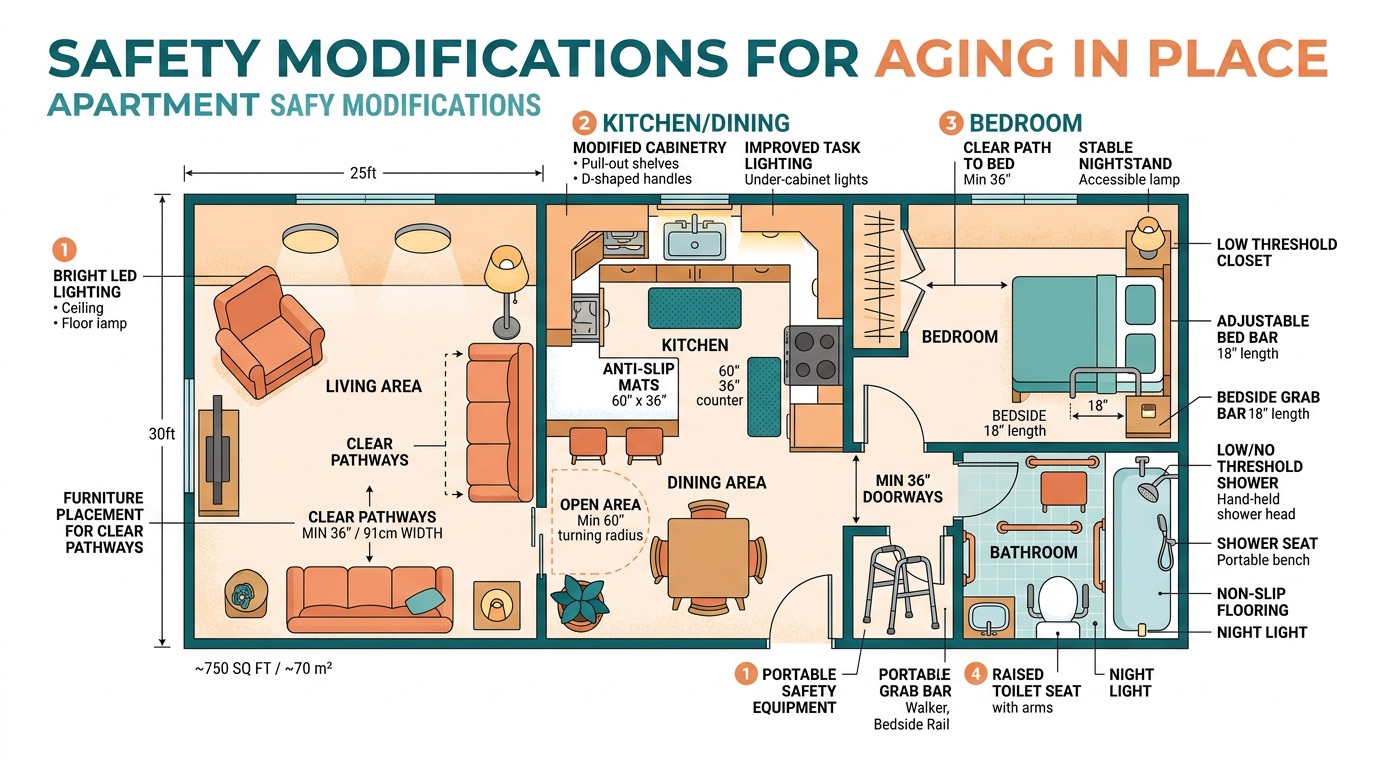
Living in an apartment or condo allows you to age comfortably at home when you make smart modifications. Most changes that deliver the biggest impact are portable, affordable, and require no permission from landlords or HOAs. This guide walks through every room with practical changes you can make, starting with the simplest and most budget-friendly options.
Working within constraints: The key difference from single-family home modifications is working within existing constraints. You cannot usually install permanent grab bars or replace fixtures, but you can make your space significantly safer and more comfortable with the right approach.
1
High-Impact, Low-Cost Changes
Upgrade to bright LED bulbs in every room
$5–15 per room
After 60, your eyes need roughly three times more light to see the same detail. Swap dim bulbs for 800+ lumen LEDs in 5000K daylight temperature. These last 10-15 years and make an immediate difference.
Clear all pathways, especially bedroom to bathroom
Free
Walk this essential nighttime route and move anything you might clip with your hip or foot. Remove furniture corners that stick out, decorative floor items, and loose rugs that slide when stepped on.
Install motion-sensor night lights for automatic safety
$8–20 for two-pack
Place one in the hallway between bedroom and bathroom, and one inside the bathroom near the floor. They turn on when you walk past and shut off when you leave the area.
Essential apartment safety modifications that require no landlord permission
2
Bathroom: Your Most Critical Safety Zone
Add non-slip strips to tub or shower floor
$5–12 · Beginner
Peel-and-stick textured strips provide traction on slippery surfaces. They last about a year and cover most standard tubs.
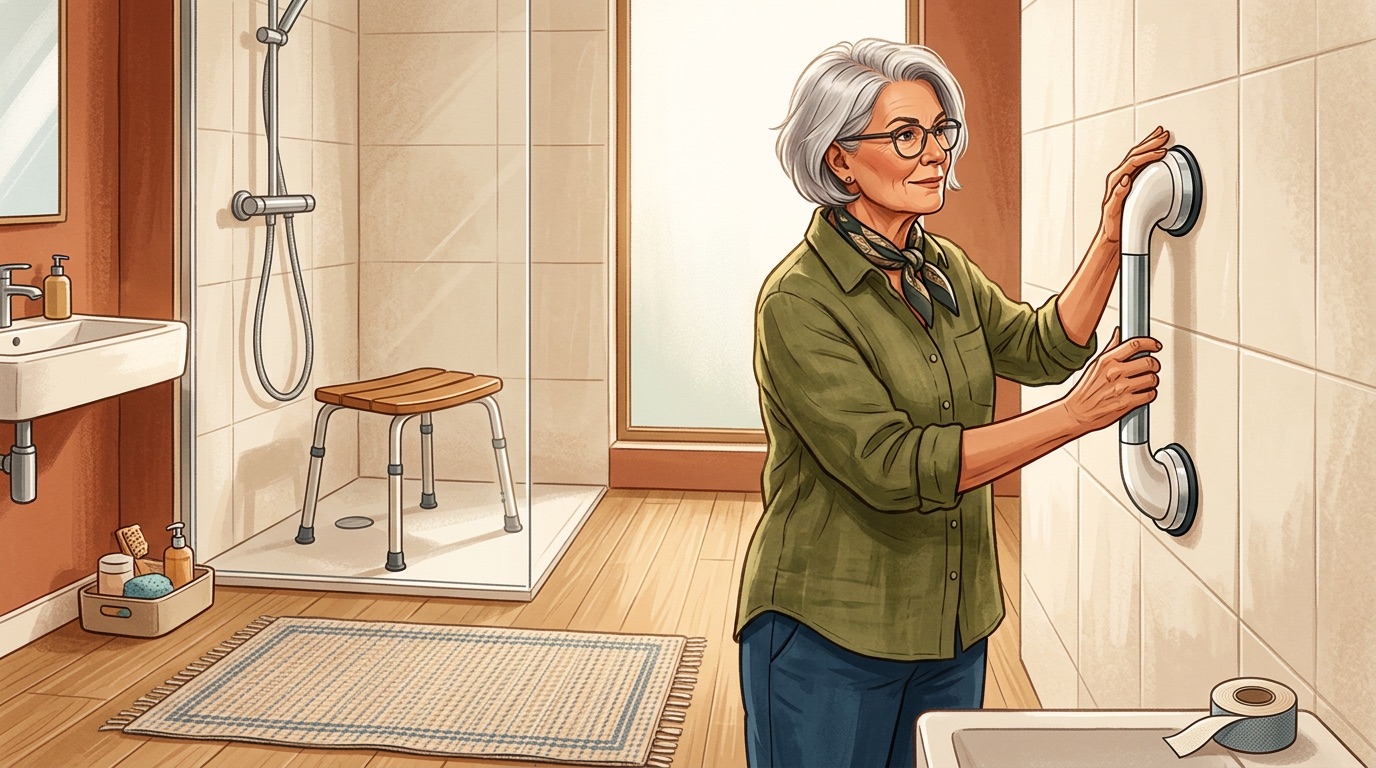
Install suction-cup grab bars
$25–45 each
Industrial-strength suction models hold 250+ pounds when properly installed on smooth tile or fiberglass surfaces. No drilling required. Test the hold strength before relying on them for support.
Add a raised toilet seat for easier transfers
$25–60 · Tool-free installation
Adds 2-4 inches of height and locks onto most standard toilets without tools. Makes sitting and standing much easier on knees and hips.
Switch to a handheld showerhead
$20–60 · DIY (wrench needed)
Replaces existing fixture by unscrewing the old head. Allows you to direct water flow and sit while showering with no permanent changes to plumbing.
Use a shower chair or bath stool
$30–120
Lightweight aluminum or plastic seats allow safe sitting while bathing. Reduces fatigue and fall risk during longer showers.
Portable bathroom safety solutions that work in rental properties
3
Kitchen: Adapting Your Workspace
Move daily-use items to waist-to-shoulder height
Free
Dishes, glasses, and frequently used ingredients belong in the easiest-to-reach cabinets. This eliminates dangerous reaching and reduces daily strain.
Clear countertops of rarely used appliances
Free
More workspace reduces the need to reach over things or work in cramped conditions that can cause spills or cuts. Store weekly-or-less items elsewhere.
Relocate heavy items to lower shelves
Free
Cast iron pans, large mixing bowls, and bulk items belong in base cabinets or pantry floor level where you can lift them safely without overhead reaching.
Add a rolling cart for extra workspace
$40–80
Provides moveable prep surface that can roll close to the stove or sink as needed. Especially useful in smaller kitchens with limited counter space.
Install reachers and ergonomic tools
$15–50 for complete set
Long-handled reachers eliminate the need for step stools. Lever-style can openers, jar grips, and easy-grip utensils reduce hand strain from arthritis.
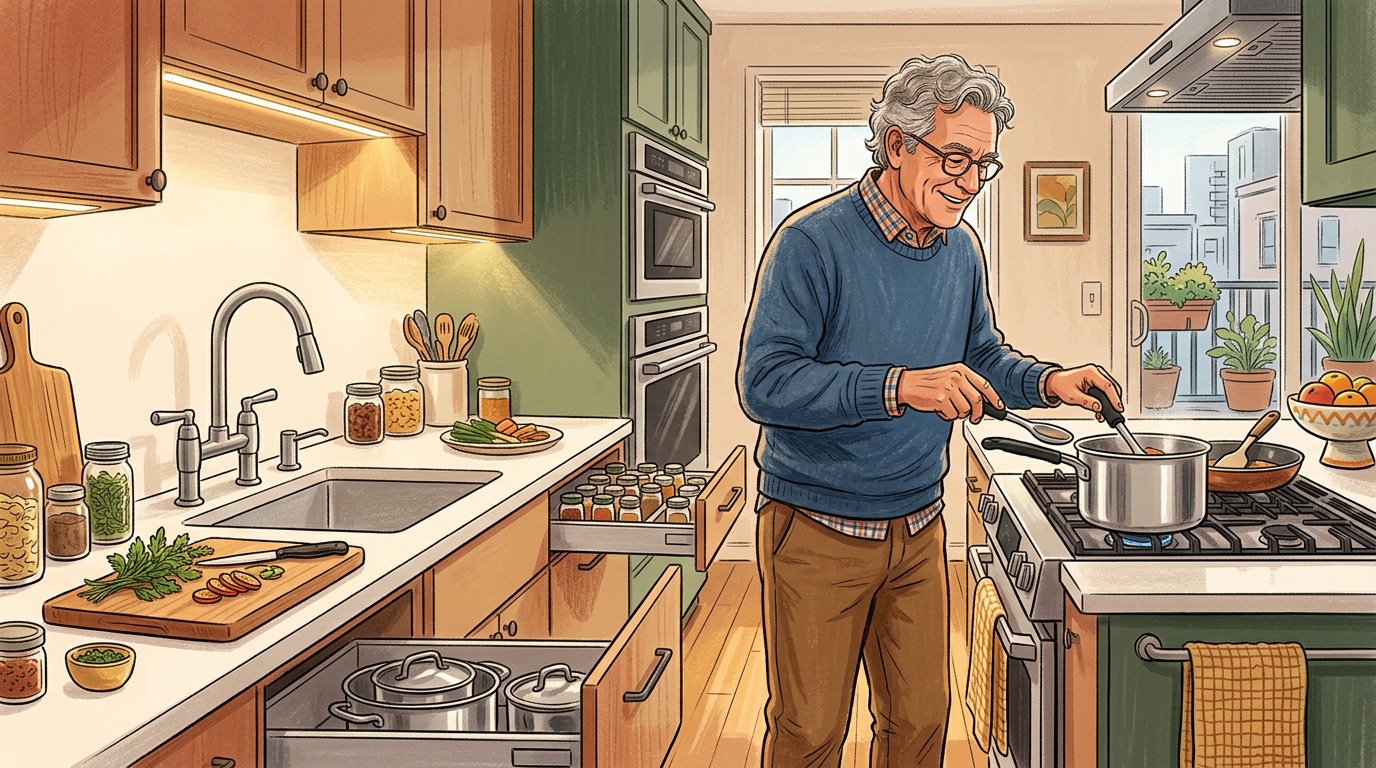
Add under-cabinet LED strip lights
$15–30
Battery-powered strips stick under cabinets to illuminate workspace. Eliminates shadows on countertops that make food prep more difficult.
Smart kitchen adaptations that don't require permanent changes
4
Living Areas: Preventing Falls and Improving Comfort
Position your most-used chair strategically
Free
Place it with good lighting for reading and a clear path to the bathroom for nighttime safety. This simple arrangement prevents many common accidents.
Remove or secure loose throw rugs
Free to remove, or $15–30 for non-slip replacement
Loose mats create trip hazards when they slide underfoot. Either remove them entirely or replace with rugs that have strong rubber backing.
Add a lift cushion for easier standing
$50–120
If your favorite chair is getting harder to get out of, a lift cushion adds 3-4 inches of height and provides a gentle boost when standing. Works on most chairs and sofas.
Secure electrical cords along baseboards
$10–20
Use cord covers or tape to prevent extension cords from stretching across walkways. These create major trip hazards that are easily overlooked in daily routines.
5
Bedroom: Sleep and Safety
Adjust bed height for easier transfers
$15–40 for bed risers
Your bed should allow you to sit with feet flat on the floor and knees at roughly 90 degrees. Too low makes getting up difficult, too high makes getting in unstable.
Keep emergency lighting within arm's reach
$8–15
A flashlight or battery-powered lantern should be immediately available if the power goes out during the night. Store it in the same bedside location every time.
Move frequently worn clothes to middle height
Free
Organize your closet so daily items are easily reachable. Use a sturdy step stool with a handle for higher items because chairs create instability when used as step stools.
Use a long-handled shoehorn
$8–15
Reduces bending and makes putting on shoes safer and more comfortable. Especially helpful for people with back issues or limited flexibility.
Working with Landlords and HOAs
For renters: Most safety modifications are considered reasonable accommodations under fair housing laws. Document your requests in writing and emphasize that changes are for safety purposes.
For condo owners: Review HOA rules before making exterior changes like ramps. Interior changes usually require no HOA approval.
Security deposit protection: Take photos before and after any modifications and keep receipts. Most safety changes actually protect the property from damage caused by falls and accidents.
Choose finishes that match your existing style. Grab bars come in various finishes to match fixtures, and quality modifications look intentional rather than institutional.