Multigenerational Home Design Making Space Work for Everyone
Practical modifications for safety and independence
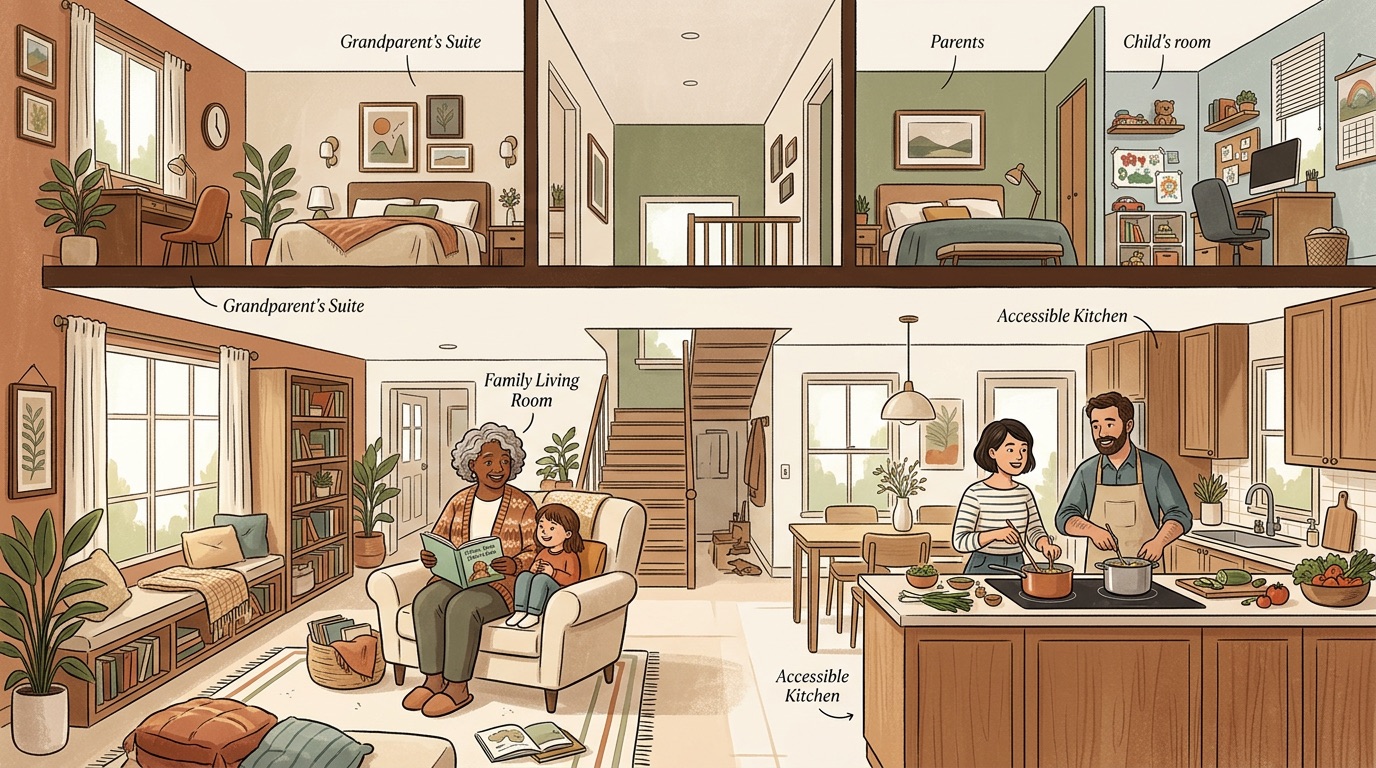
When your home needs to work for multiple generations, you're not just adding space. You're creating a living arrangement that honors everyone's independence while building in the support that makes aging in place possible. The best multigenerational homes feel intentional, not makeshift. Most families approach this backwards. They wait until there's a crisis, then scramble to convert a basement or add a quick bedroom. Starting with a plan gives you better options and better outcomes. This guide walks through the practical decisions that make multigenerational living work: where to put the additional living space, how to maintain privacy, and which modifications matter most for long-term safety and comfort.
About costs and timeline: Modification costs vary by complexity and location. Start with the most essential changes first and plan for professional installation of structural modifications.
1
Understanding Your Options
In-law suite or accessory dwelling unit (ADU)
Understanding Your Options
A separate living space with its own entrance, kitchen, and bathroom. Can be attached to the main house or a standalone structure on the property. Provides the most independence and privacy.
Understanding Your Options visual guide
2
Budget-Friendly Modifications That Make the Biggest Impact
Create a first-floor bedroom and bathroom
$3,000-8,000 for basic conversion
Convert a dining room, den, or large living area into a bedroom. Add a small bathroom or improve access to an existing half-bath. This eliminates stairs for daily living.
Install a stair lift
$3,000-5,000 for straight stairs
If the main bedroom stays upstairs, a stair lift maintains access without a major room conversion. Works best when installed before it's urgently needed.
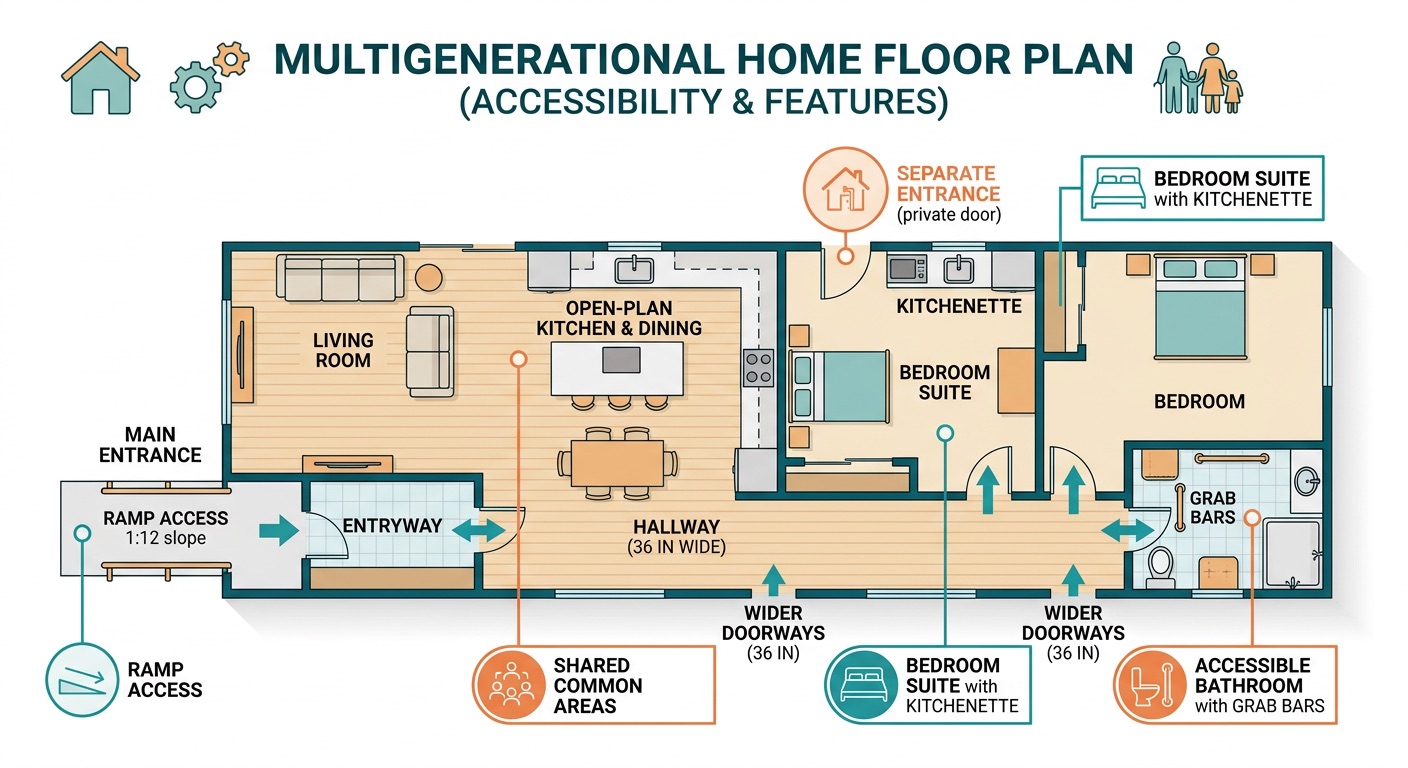
Widen doorways to 36 inches
$200-500 per doorway for DIY, $500-1,200 with professional installation
Standard doorways are 30-32 inches. Widening to 36 inches accommodates walkers and wheelchairs. Focus on the bedroom, bathroom, and main living areas first.
Add grab bars and improve lighting
$300-800 for materials
Install grab bars in bathrooms, along hallways, and near exterior doors. Replace dim bulbs with bright LED lights (800+ lumens). Add motion-sensor lights for nighttime navigation.
Create a kitchenette in the additional living space
$1,500-4,000
A small refrigerator, microwave, coffee maker, and sink provide independence for light meal preparation. Include a small table or counter for eating.
Install a separate entrance
$2,000-6,000
Even a simple exterior door to the additional living space creates independence and privacy. Include a small covered area and good lighting.
Budget-Friendly Modifications That Make the Biggest Impact visual guide
3
Next Steps
Next Steps visual guide
Key Tips
Start with the most important modifications first based on your current needs.
Consider both immediate safety and future accessibility when making changes.
Get multiple quotes from qualified contractors for major modifications.
Check with your insurance about coverage for medically necessary modifications.