A survival guide for doing two impossible jobs at once
You're doing two full-time jobs. One pays you, one doesn't, and both are essential. If you feel like you're failing at everything, you're trying to do something that genuinely can't be done perfectly. This guide will give you specific ways to make an impossible situation slightly more manageable.
The reality check you need: Working full-time while caregiving means you're managing approximately 80 hours of responsibility in a 40-hour week. The math doesn't work. Something has to give, and recognizing that is arithmetic, not failure.
1
Create Communication Boundaries at Work
Tell your manager what's happening
Communication Strategy
Use specific language: "I'm caring for my mother who has dementia. I may need to take calls during the day or leave suddenly for emergencies." Most managers respond better to concrete information than vague requests for flexibility.
Set up an informative auto-reply
Email Management
Include your cell phone number and when you'll respond to non-urgent messages. "I typically respond to emails within 24 hours. For urgent matters, call my cell at [number]."
Block 30 minutes daily as unavailable
Schedule Protection
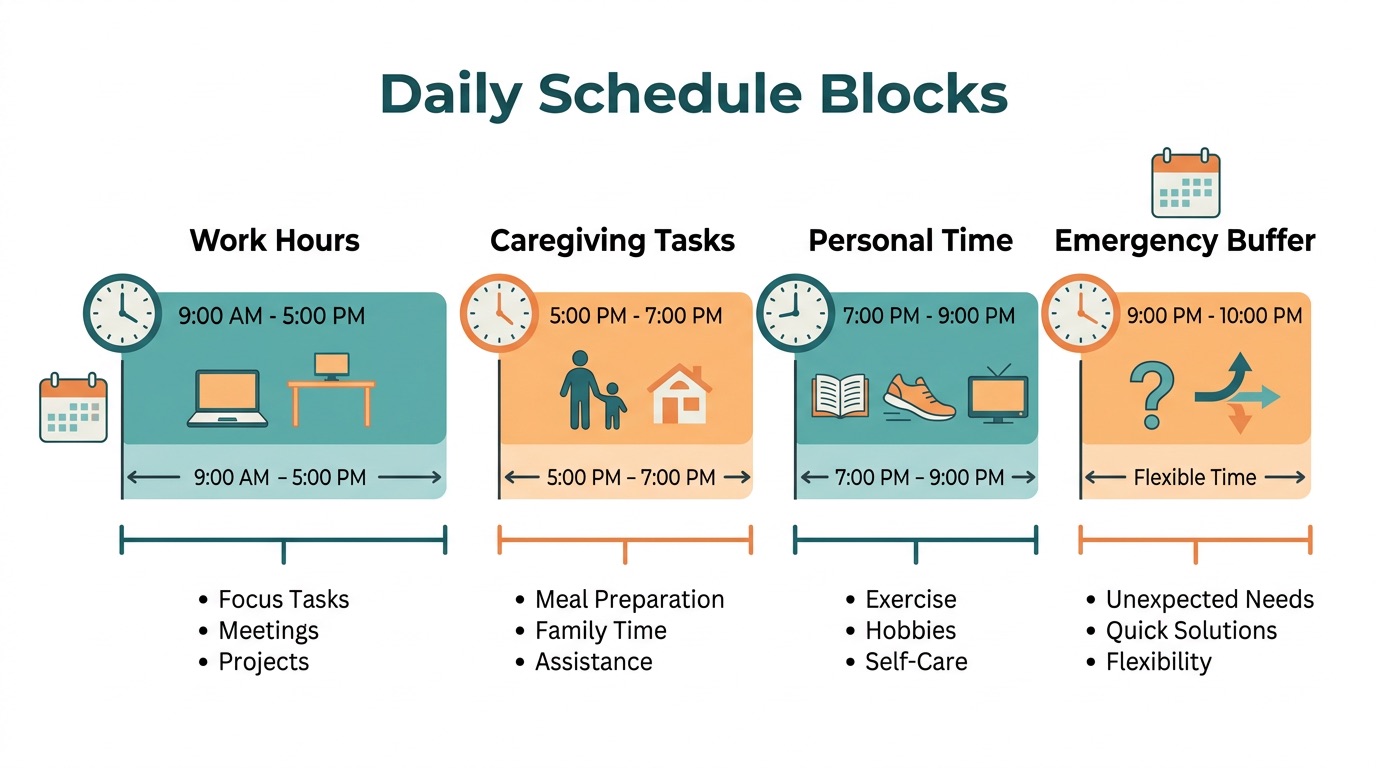
Use this time for caregiver tasks: calling doctors, scheduling appointments, or just breathing. Protect this time like any other meeting.
Workplace support options for caregiving employeesBalancing work schedules with caregiving demands
2
Streamline Caregiver Tasks
Consolidate all appointments with the same medical system
Healthcare Coordination
Many health systems now offer same-day multiple appointments. One trip replaces four. Call and ask if your parent can see multiple specialists in one visit.
Set up automatic prescription refills and delivery
Medication Management
Most pharmacies offer this free service. One less thing to remember means more mental space for everything else.
Create a shared information system
Family Coordination
Use a Google Doc or app like Caregiving.com to track medications, appointments, and important information. Share it with siblings or other family members. When someone asks "What did the doctor say?" you have one place to direct them.
Effective time management strategies for working caregivers
3
Handle the Sibling Problem
Address the imbalance directly
Family Communication
Send a group email or text: "Mom needs help with grocery shopping on Saturdays and doctor appointments on weekdays. Who can take which tasks?" Be clear about what needs doing.
Give specific options, never open-ended requests
Task Assignment
"Can you take the Saturday grocery run or handle the Wednesday physical therapy appointments?" works better than "Can you help more?" People respond better to concrete choices.
Assign remote tasks to distant siblings
Geographic Solutions
If siblings live far away, ask them to handle tasks that can be done remotely: researching care options, managing insurance paperwork, or scheduling appointments by phone.
Building family support networks for shared caregiving
4
Protect Your Health
Combine eating with caregiver tasks
Time Efficiency
Eat lunch at your desk while handling one caregiver task. Return a call to your parent's doctor while eating a sandwich. This approach beats skipping lunch entirely.
Keep emergency fuel everywhere
Nutrition Planning
Keep protein bars or nuts in your car and office. When you're running between work and caregiving, you need fuel that doesn't require stopping.
Set a 9 PM cutoff alarm
Mental Health
After 9 PM, no caregiver research, no calling about appointments, no worrying about tomorrow's problems. Give your brain a cutoff time and stick to it.
Multitasking strategies for working caregivers
5
When Work Performance Starts Slipping
Document your accomplishments more frequently
Performance Management
When you're stretched thin, it's easy to forget what you've achieved. Keep a running list of completed projects and positive feedback.
Focus energy on your most visible work
Priority Management
If you have three projects and limited energy, put the extra effort into the one your boss cares about most. Strategic focus beats trying to excel at everything.
Ask for temporary reduction, not leave
Workplace Negotiation
"I need to step back from the Johnson account for the next three months while my father recovers from surgery" is often more feasible than taking unpaid leave.
Balancing professional and caregiving responsibilities
Recognizing Real Burnout vs. Normal Exhaustion
Normal exhaustion: You're tired but can still make decisions. You feel overwhelmed but maintain hope. You still enjoy small things occasionally.
Burnout: You can't make simple decisions. You feel numb instead of sad or frustrated. You've stopped doing things you used to enjoy. You're getting sick more often or having physical symptoms like headaches or stomach problems.
If it's burnout, you need immediate help. This might mean hiring temporary care for your parent, taking a week off work, or asking family to step in while you recover.
Pick the single most stressful recurring task in your caregiving routine. Grocery shopping, medication management, transportation to appointments. Research one way to outsource or simplify that task this week. Fix one thing first, then fix the next thing.