Navigating one of the hardest conversations with grace and love
This conversation ranks among the hardest a family will have. Your parent faces the loss of something that represents independence, identity, and control over their own life. You're trying to prevent a phone call no one wants to get. There are no villains in this story. Just people who love each other, trying to navigate an impossible situation with grace.
Before you begin: This conversation works best when you have specific examples of concerning incidents, research on local transportation alternatives, and a plan for how you can help fill the gaps. Coming prepared shows respect for their situation and yours.
1
Document Your Concerns First
Write down specific incidents that worry you
"I'm concerned about your driving" feels like an attack. "Last Tuesday you mentioned getting confused about which exit to take, and yesterday you said the car next to you came out of nowhere" gives you both something concrete to discuss.
Include dates, locations, and circumstances
This gives you real examples instead of vague worries. Note if incidents happened at night, in bad weather, or on unfamiliar roads.
Research transportation alternatives beforehand
Know what ride services, senior shuttles, volunteer driver programs, and public transportation exist in your area before you start this conversation.
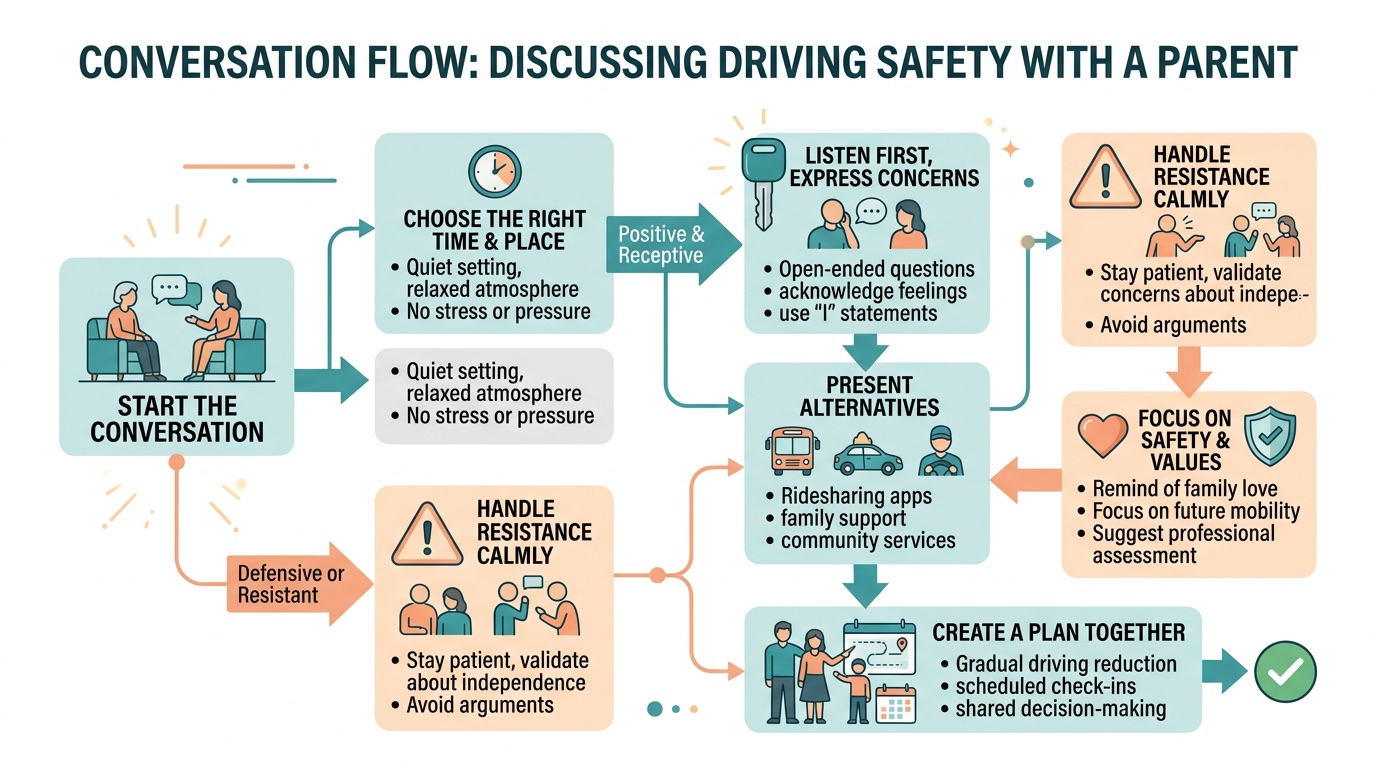
A roadmap for structuring this difficult conversation
2
How to Start the Conversation
Choose the right time and place
Have this conversation when you're both rested and without time pressure. Choose a private space where your parent feels comfortable and can express emotions freely.
Start with your feelings about their safety
Open with something like: "I've been worrying about your safety, and I wanted to talk through some things I've noticed." This frames the conversation around your concern for them rather than criticism of their abilities.
Share specific observations without judgment
Present the incidents you documented as observations rather than accusations. "I noticed you seemed unsure about the route to Sarah's house last week" works better than "Your memory is getting worse."
Ask questions and listen
"How did that feel for you?" or "Have you noticed that happening more often?" Give them space to share their own concerns and experiences.
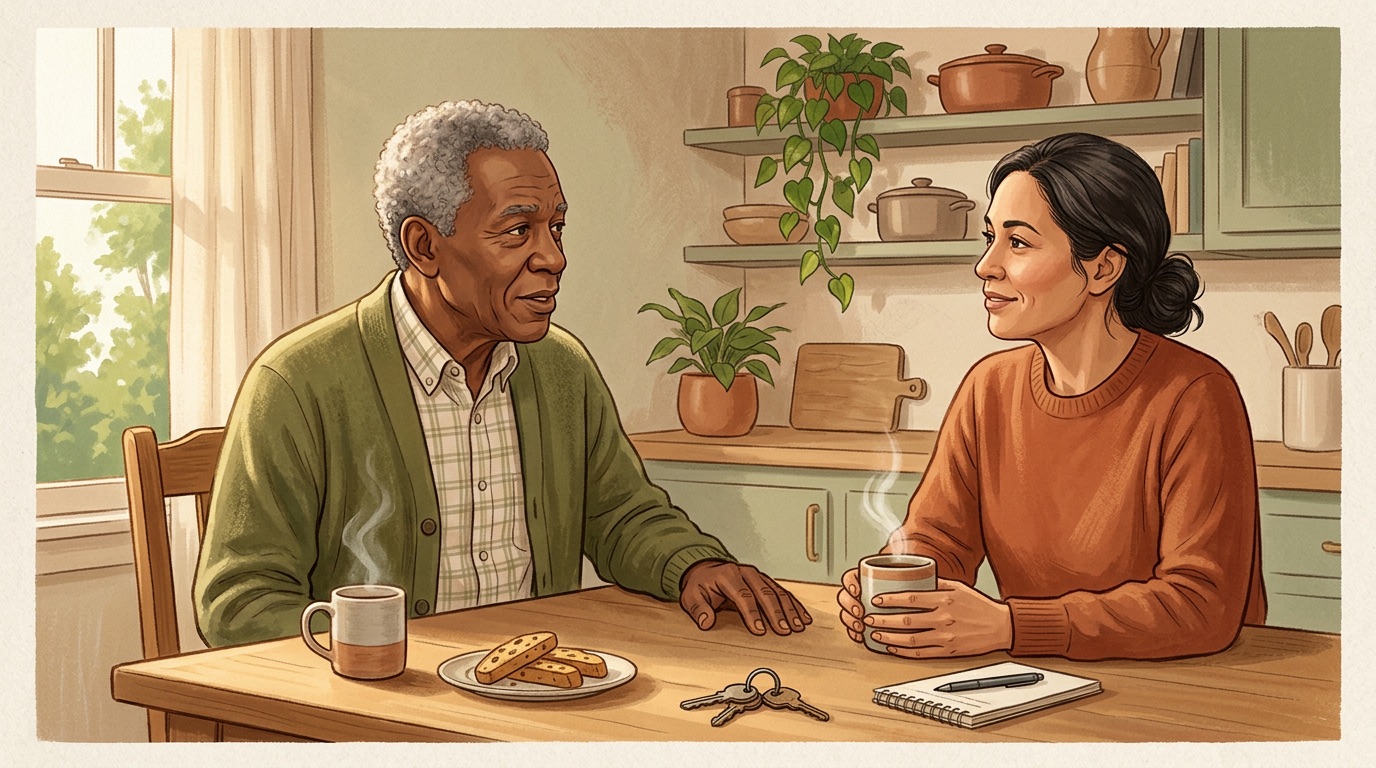
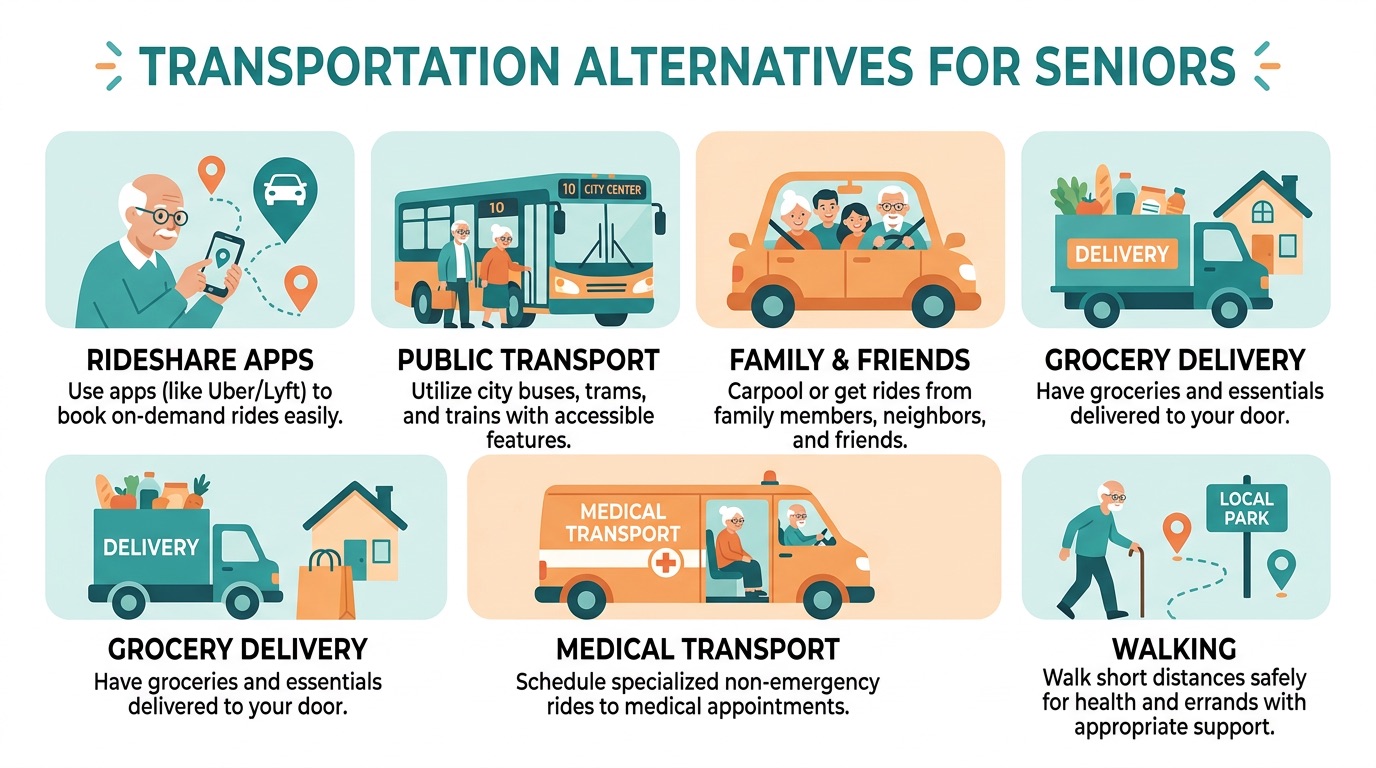
Creating a safe space for honest conversationTransportation options to research before the conversation
3
Listen to Their Fears Directly
Understand what driving represents to them
Your parent may express anger, but underneath that anger is usually fear. Fear of losing independence. Fear of being a burden. Fear of losing their identity as someone who can take care of themselves.
Acknowledge these fears directly
"I understand that driving represents your independence, and I want to help you maintain that in different ways." Create space for them to voice these concerns completely.
Don't take defensiveness personally
If they shut down the conversation or insist they're fine, remember they're protecting something precious to them. Stay calm and restate your concerns.
Suggest professional assessment
"Would you be willing to take a driving assessment with an occupational therapist? It might give us both peace of mind." Professional evaluation removes you from the position of judge.
4
Explore Solutions Together
Consider gradual restrictions first
Can they limit driving to certain times of day or familiar routes? Maybe they can still drive to the grocery store but avoid the highway. Partial restrictions can be easier to accept than complete cessation.
Present transportation alternatives specifically
Ride services, senior shuttles, volunteer driver programs, and family help can all be part of the solution. Having concrete options makes the conversation less frightening.
Involve their doctor
Suggest a conversation with their physician about driving safety. Many parents will accept guidance from a medical professional more readily than from their adult children.
Create a transition timeline
If your parent agrees that changes need to happen, work together on a timeline. Start with the most challenging driving situations like night driving or highway driving and work toward a complete transition.
5
Set Up Support Systems
Arrange alternative transportation before they stop driving
Set up grocery delivery accounts, arrange regular check-ins, and coordinate with other family members about providing rides. The more seamlessly their needs can be met without driving, the less devastating this transition will feel.
Follow through consistently on your commitments
If you promised to take them to their weekly card game, keep that commitment. If you said you'd help them learn to use a ride service app, follow through. Your reliability during this transition affects how much they trust the new arrangements.
Involve adult siblings early
If you have brothers or sisters, get everyone on the same page before talking to your parent. Mixed messages from different children create confusion and conflict.
Consider professional help for rural families
If your parent lives in an area with no public transportation, giving up driving is genuinely devastating. You need robust alternative plans before asking them to stop.
Making It Work
Start the conversation before an accident or near-miss occurs. By then, emotions are too high and options may be more limited.
Focus on specific skills or situations instead of making it about age. "You're too old to drive" makes it about something they cannot control.
Only offer to drive them places if you can realistically do it. Be honest about what support you can provide.
Consider involving a professional driving instructor or occupational therapist who specializes in senior driving. They can provide an objective evaluation and recommend modifications or alternatives.
Remember that often the fear is about losing connection to friends, activities, and community rather than just transportation. Address this directly in your planning.
Free Resources
AARP Driver Safety Program offers online and in-person refresher courses designed for drivers 50+ and may qualify for insurance discounts
Area Agency on Aging provides information about senior transportation options in your community (search by zip code)