CAPS certification guide and contractor vetting process
Finding the right contractor for aging-in-place renovations means finding someone who understands both the technical requirements and the personal side of making your home work better as you age. The gold standard is a contractor with CAPS certification (Certified Aging-in-Place Specialist).
What you'll need: Computer with internet access, measuring tape, project photos, and your budget range. Plan to spend time verifying licenses and checking references for your safety and peace of mind.
1
Understanding CAPS Certification
What CAPS certification means
National Association of Home Builders program
CAPS (Certified Aging-in-Place Specialist) contractors have completed training on the physical, design, and emotional aspects of aging-in-place modifications. They understand safety requirements and attractive design.
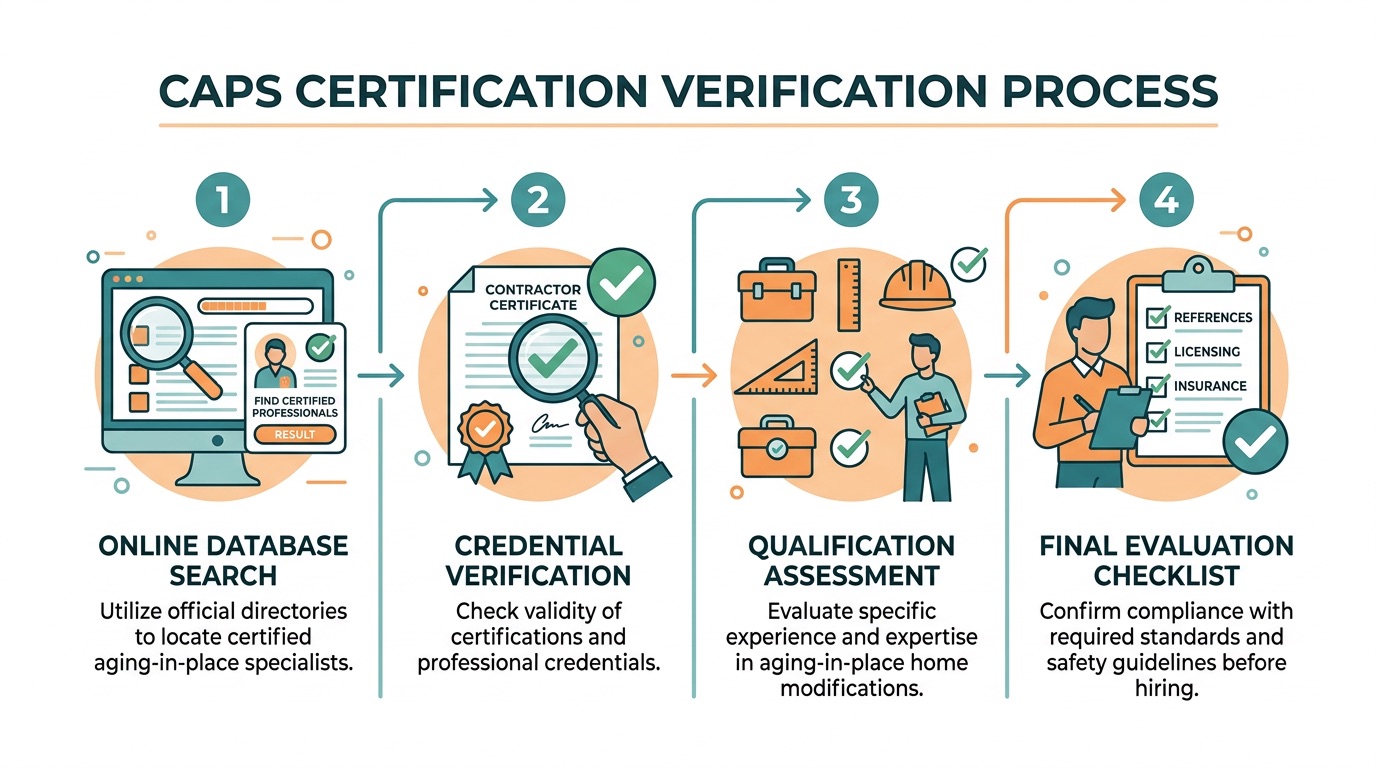
How to verify CAPS certification through the NAHB directory
CAPS vs general contractors
Specialized knowledge
CAPS contractors understand the difference between a standard grab bar installation and one that will actually support someone's weight safely. They know how to modify spaces while maintaining attractive appearance.
Start with the official directory
Visit nahb.org
Search their CAPS professional directory by zip code. Set search radius to 50 miles initially. Download contact information for 5-8 contractors in your area.
2
Expanding Your Search Beyond CAPS
Occupational therapist referrals
Hospital and rehab center recommendations
Call local hospitals or rehabilitation centers and ask which contractors their occupational therapists recommend for home modifications.
Area Agency on Aging resources
Local contractor lists
Your local AAA maintains lists of contractors who specialize in aging-in-place work. Find yours at eldercare.acl.gov.
Bathroom and kitchen showrooms
Accessible fixture specialists
Showrooms that display accessible fixtures often work with contractors who specialize in these installations.
3
Verification and Vetting Process
Verify licenses and insurance first
State licensing board websites
Before contacting any contractor, verify their license through your state's licensing board website. Confirm they carry both general liability insurance and workers' compensation coverage.
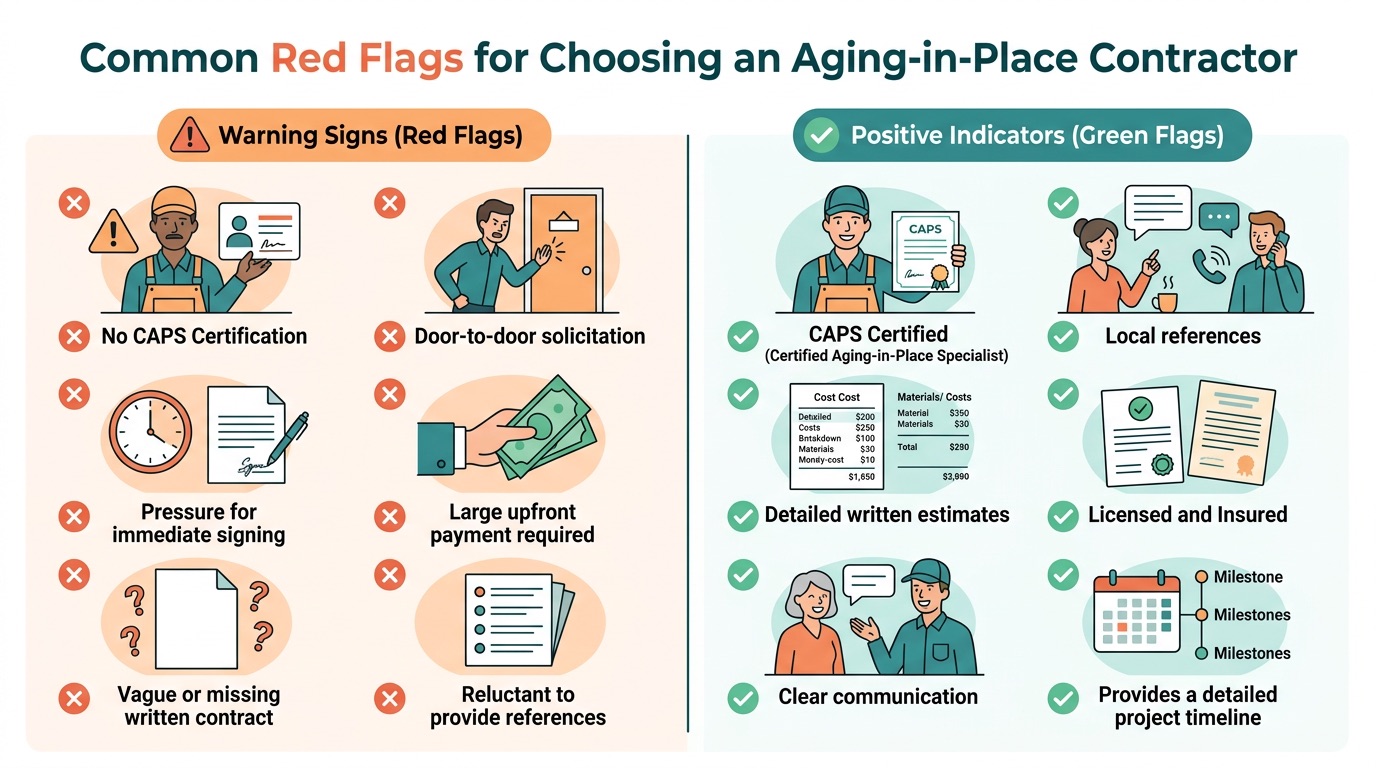
Professional consultation at your homeWarning signs vs positive indicators
Initial contact questions
Key screening questions
Ask what percentage of their work involves aging-in-place modifications, request three recent references, confirm availability for your timeline, and ask about their consultation process.
Schedule home consultations
Meet with 3-4 contractors
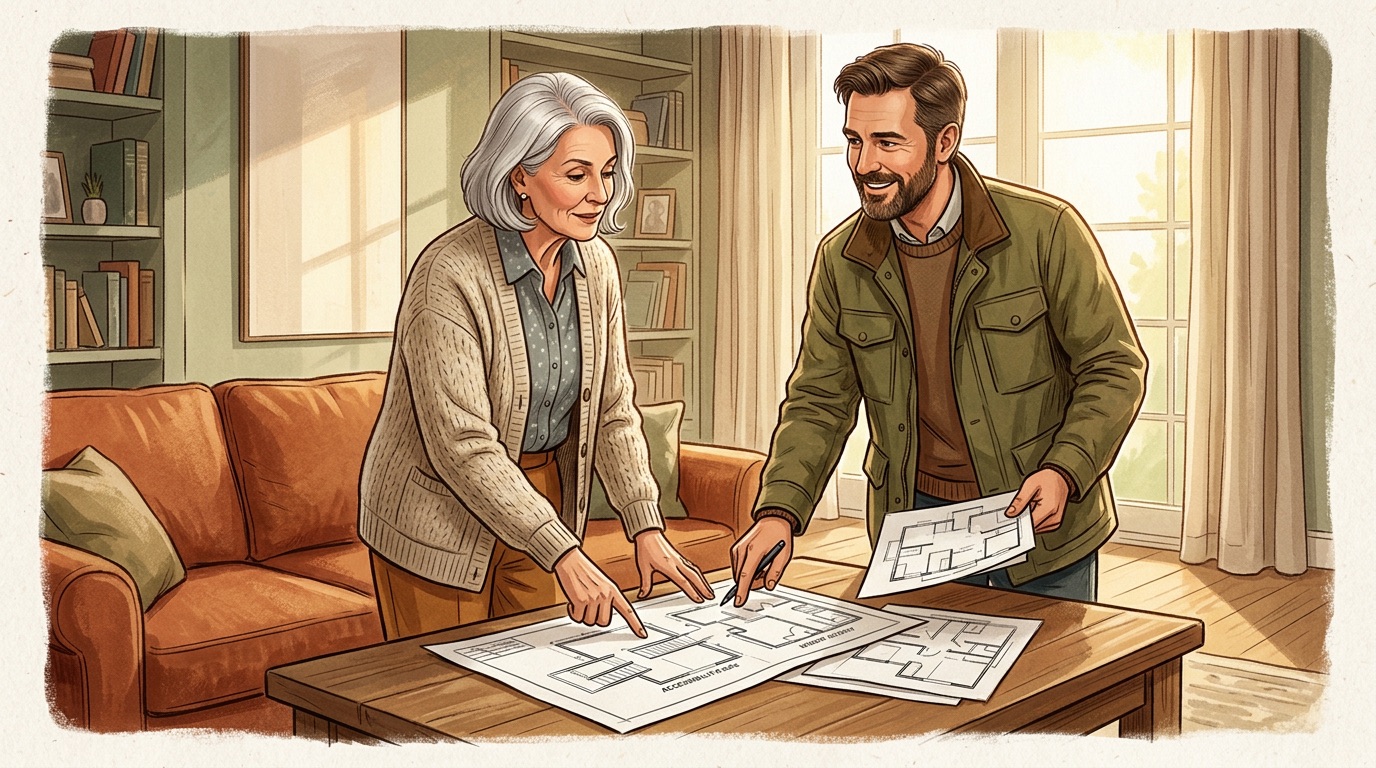
Good contractors will spend time understanding how you use each space and what challenges you experience. They should measure carefully, take notes, and discuss both immediate and future needs.
Ask experience questions
Verify specialization
How many aging-in-place projects have you completed this year? Can you show photos of similar projects? What's the most common mistake in DIY accessibility modifications?
4
Contracts and Project Management
Check references thoroughly
Call at least two references
Ask about completion time, budget adherence, how unexpected issues were handled, and whether they would hire the contractor again. Ask about cleanup and project management quality.
Compare detailed bids
Specific materials and timeline
Bids should include specific materials and brands, labor costs by task, timeline with milestones, permit costs, and cleanup responsibilities. Be suspicious of significantly high or low bids without explanation.
Review contract carefully
Protect your interests
Contracts should specify exact materials, start and completion dates, payment schedule with reasonable upfront amounts, change order procedures, and cleanup responsibilities.
Plan for project management
Communication expectations
Establish daily check-in times, notification procedures for delays, photo updates for family, and protocols for accessing your home.
Common Mistakes to Avoid
Don't hire based on price alone. The cheapest contractor often cuts corners on structural work that keeps modifications safe long-term.
Always verify CAPS certification claims through the NAHB directory. Some contractors claim training without completing certification.
Don't skip the permit process. Proper permits ensure work meets code requirements for safety and home resale value.
Involve family in contractor meetings if they're helping fund the project to avoid misunderstandings later.
Trust your instincts. If a contractor makes you uncomfortable or pressures quick decisions, keep looking.