First-Floor Living Conversion: Making Stairs Optional
Creating a comfortable, complete living space on one level
When stairs become a barrier instead of just steps, converting to first-floor living opens up your home again. This conversion creates a comfortable, complete living space on one level so you can stay in the home you love while maintaining access to upper floors when you choose.
Planning approach: Most conversions work best in phases, starting with the essentials and adding comfort features over time. Planning the whole project first allows you to tackle it in budget-friendly chunks that align with your timeline and needs.
1
Start with the Essentials: Sleep, Bathe, Eat
Convert an existing room to a bedroom
$200–800 · DIY friendly
The dining room, home office, or den can become a bedroom with space for a bed, dresser, and walking room. A standard double bed requires 10x10 room minimum, while a twin bed works in 8x10 space.
Add a bedroom where there was none before
$3,000–12,000 · Professional installation
Converting a garage, enclosed porch, or large utility room requires insulation, electrical outlets, heating/cooling access, and usually a window for emergency egress per local building codes.
Convert powder room to full bathroom
$8,000–15,000 · Professional required
With existing plumbing in place, adding a shower requires about 32x32 inches for corner stall or 36x48 inches for shower with built-in seat for comfortable movement.
Add new first-floor bathroom
$15,000–25,000 · Professional required
New plumbing lines are the biggest expense. Placing near existing plumbing like kitchen, laundry room, or utility sink reduces costs by minimizing pipe runs.
Kitchen accessibility modifications
$400–2,000 · Mixed DIY/professional
Lower one section of countertop to 32 inches high, move frequently used items to reachable heights, install pull-out shelves in lower cabinets, add under-cabinet lighting.
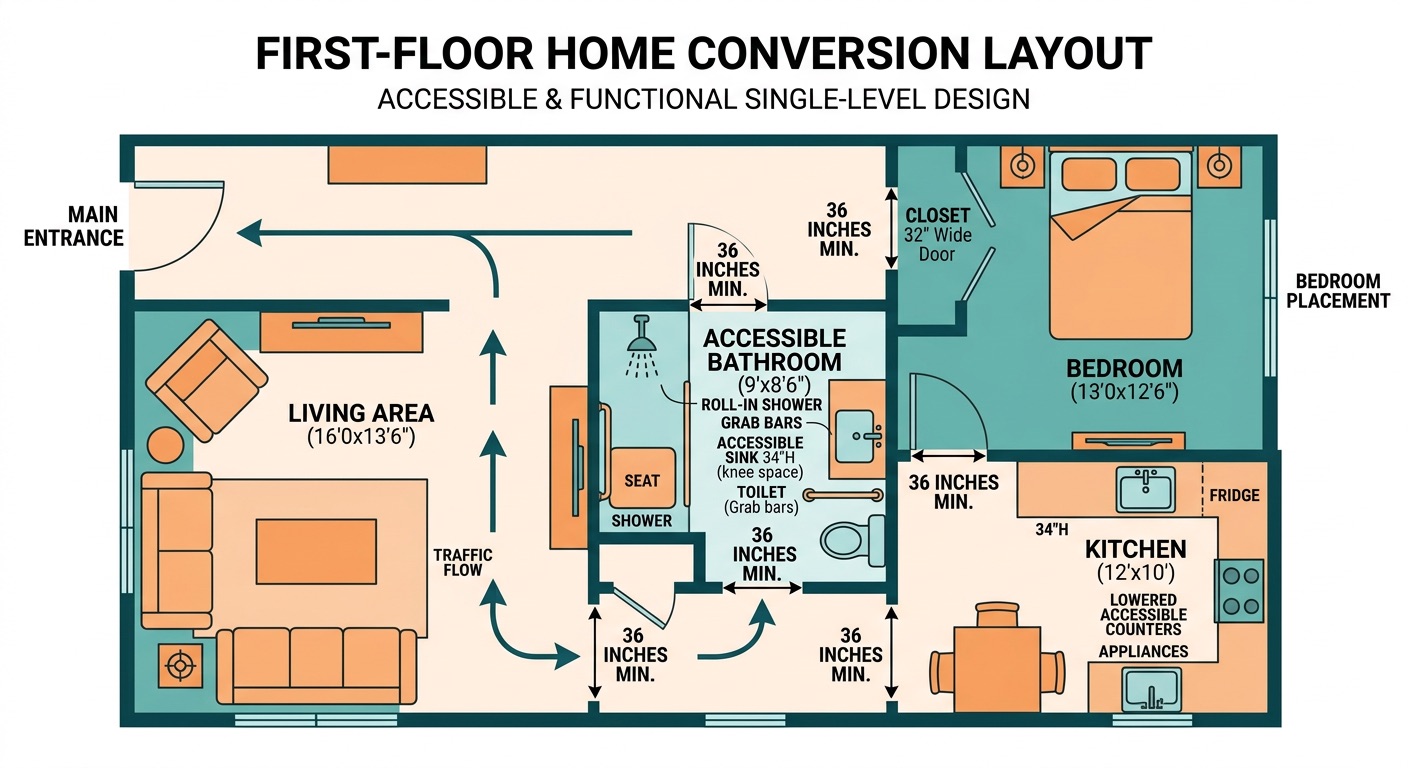
Essential layout considerations for first-floor living conversionsWorking with CAPS-certified contractors for accessibility planning
2
Phase Two: Comfort and Convenience
Move laundry to first floor
$1,200–3,000 · Professional installation
Eliminate basement or upstairs laundry trips. Requires water supply lines, drain, electrical outlets, and ventilation for dryer exhaust in mudroom, closet, or garage space.
First-floor closet space
$300–1,500 · Mixed DIY/professional
Bedroom closet organizer system maximizes small spaces. Freestanding wardrobes work when no closet exists in converted room or when additional storage is needed.
Accessible storage systems
$100–500 · DIY friendly
Install shelving between waist and shoulder height. Lower closet rods to 54 inches high. Add pull-down closet rods for items you want to hang higher up but still access.
Intercom system for floor communication
$60–300 · DIY friendly
Modern versions connect through WiFi and work through smartphones or dedicated units. Allows communication between floors when family members use upstairs areas.
3
Making the Conversion Feel Like Home
Create privacy with room dividers
$80–400 · DIY friendly
Folding screens or curtain dividers create visual separation if your new bedroom is a converted living space. Helps the space feel like a private bedroom rather than a bed in the living room.
Manage sound between spaces
$50–300 · DIY friendly
Rugs, curtains, and soft furnishings absorb sound between your bedroom and active areas. White noise machine or small fan provides consistent background sound for better sleep.
Set up morning routine station
$30–150 · DIY friendly
Coffee station near your bedroom with small table, coffee maker, mugs, and supplies means you avoid walking to kitchen first thing each morning if that was your routine.
Create comfortable seating area
$100–500 · DIY friendly
Reading and relaxation space with good lighting for daily activities. Recliner with side table and lamp, or small loveseat positioned near window with natural daytime light.
4
Budget Planning Guide
Essential conversion (Sleep, Bathe, Eat Access)
$9,300–28,500 total
Convert existing room to bedroom ($500–1,500), add first-floor bathroom ($8,000–25,000), kitchen modifications ($800–2,000). Core functionality for independent living.
New bedroom addition ($15,000–35,000), new bathroom addition ($15,000–25,000), kitchen accessibility upgrades ($2,000–5,000). Complete ground-up approach.
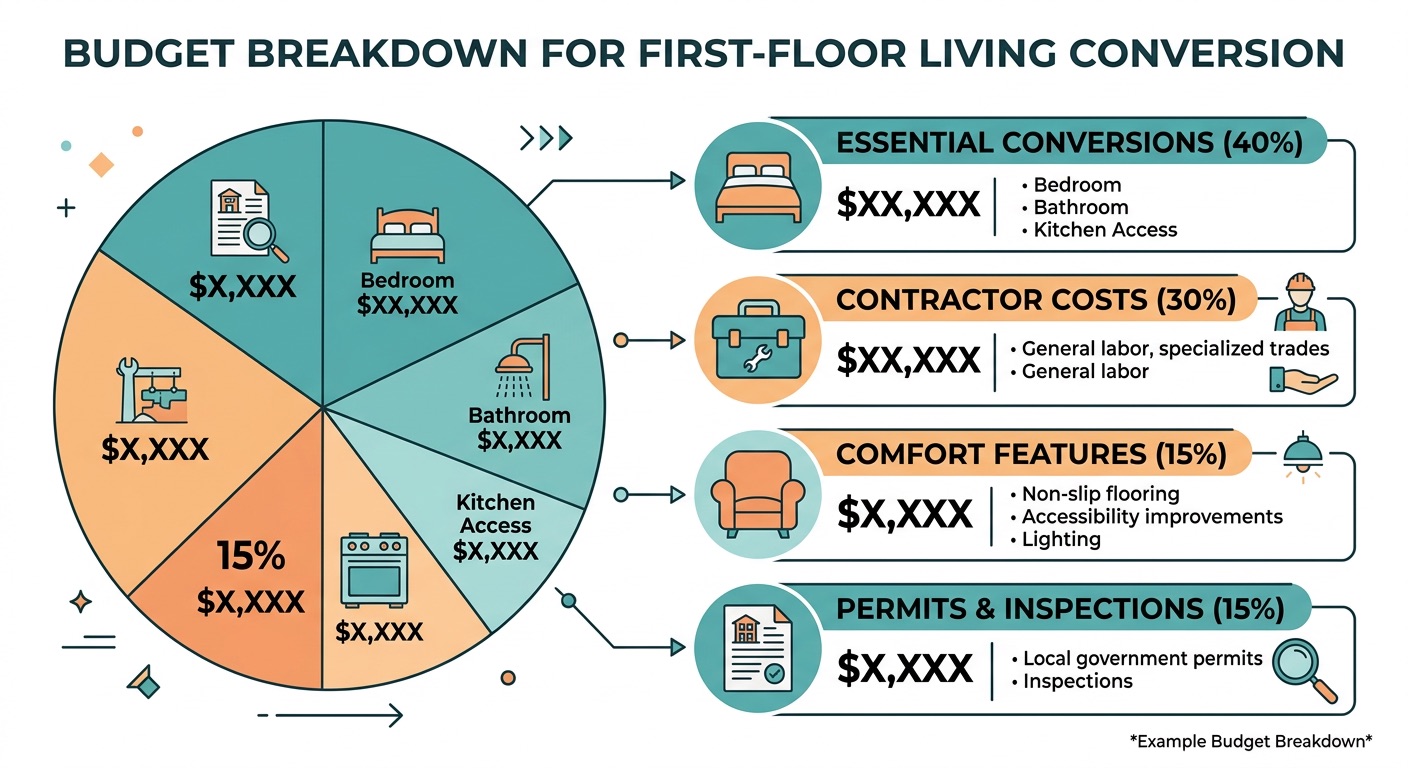
Phased budget planning approach for first-floor conversions
5
Finding the Right Contractor
Look for CAPS certification
Certified Aging-in-Place Specialist
These contractors understand specific needs of aging-in-place renovations and accessibility requirements through the National Association of Home Builders certification program.
Get three quotes from experienced contractors
Due diligence process
Ask specifically about experience with accessibility modifications and first-floor conversions completed in past two years. Request references from recent aging-in-place projects.
Plan for phases that make sense
Cost management strategy
Most contractors can design the whole project but complete it in stages as budget allows. Essential work like bedroom and bathroom first, convenience features later.
Timeline expectations
3–16 weeks depending on scope
Planning phase takes 2-4 weeks. Essential conversion requires 3-8 weeks. Full conversion takes 8-16 weeks. Phased approach can extend 6 months to 2 years.
When to Start Planning
The best time to plan a first-floor conversion is before you need it urgently. When you're still comfortable using stairs, you can take time to research contractors, save money, and design the space thoughtfully.
If stairs have become difficult after a health event, focus on the essentials first with temporary solutions as needed. A basic bedroom and bathroom conversion can often be completed in 4-6 weeks.
The goal is creating a space where you can live comfortably and safely on one floor while maintaining the option to use the rest of your home when you're able and want to do so.
Consider timing for better rates. Contractors often offer better rates during slower seasons like late fall and winter when demand for outdoor projects decreases.
Free Resources
AARP HomeFit Guide (free online assessment tool for aging-in-place modifications)
Area Agency on Aging (local agencies provide free home safety assessments and modification grants)