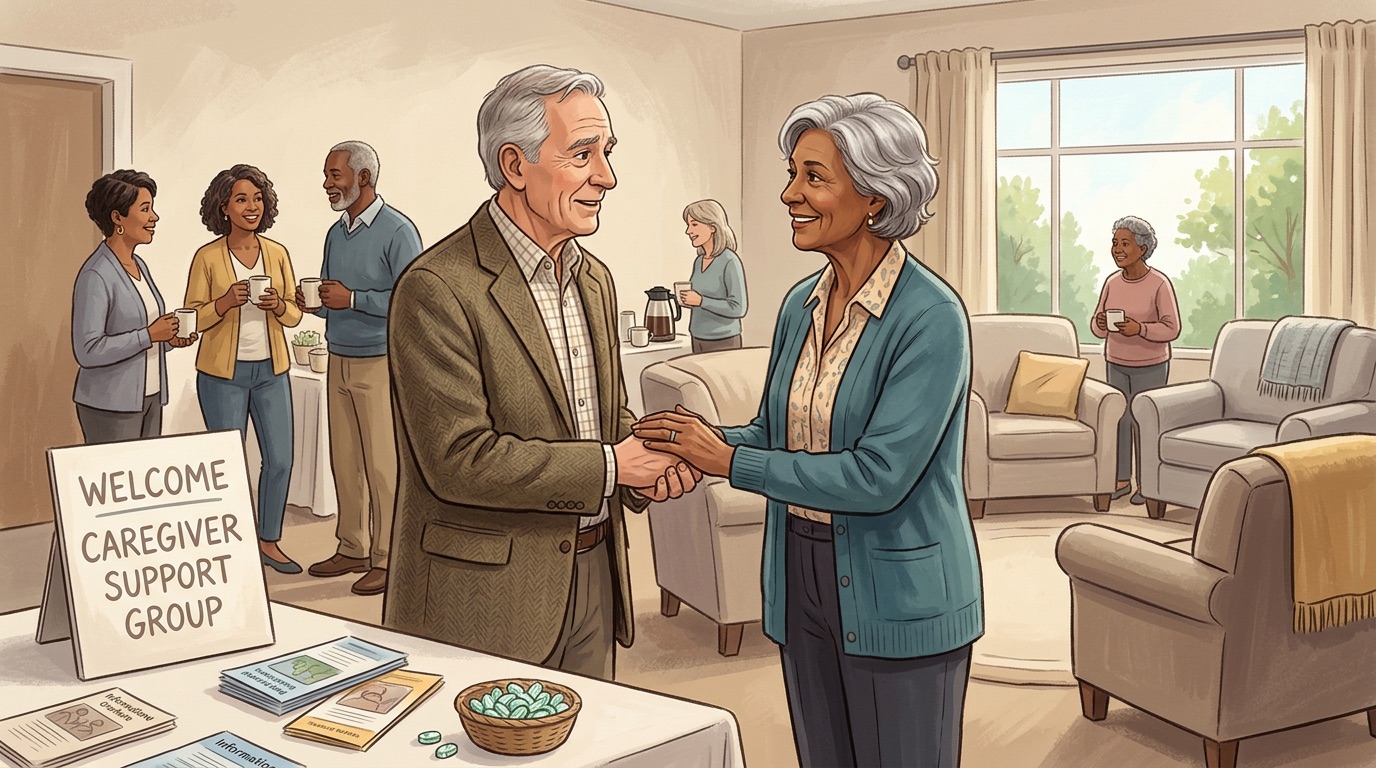
Finding Your People Caregiver Support Groups That Actually Help
Practical modifications for safety and independence
You're managing medications, coordinating doctor visits, handling insurance calls, and somehow keeping your own life from completely falling apart. Meanwhile, everyone asks how your parent is doing. Nobody asks about you. Caregiver support groups exist because this situation is genuinely hard, and you shouldn't have to figure it out alone. The right group gives you practical advice from people who understand exactly what you're dealing with, plus permission to admit that some days you feel like you're drowning. This guide covers how to find groups that fit your schedule and situation, what to expect in your first meeting, and how to tell if a group is actually helping or just adding another commitment to your week.
About costs and timeline: Modification costs vary by complexity and location. Start with the most essential changes first and plan for professional installation of structural modifications.
1
Online vs. Local Groups: What Works When
Online groups work well when:
Online resource
- Your schedule is unpredictable. - You're caring for someone at home and can't leave easily. - You live in a rural area with limited local options. - You prefer to ease into sharing personal information. - You want access to a larger pool of experiences and advice.
Local groups work well when:
Online resource
- You need to get out of the house regularly. - You want face-to-face connection. - You prefer speaking over typing. - You want to build relationships that might extend beyond the group. - You're looking for local resource recommendations. Many caregivers find that a combination works best. Online for quick questions and daily support, local for deeper connections and comprehensive resource sharing.
Online vs. Local Groups: What Works When visual guide
2
How to Find Groups That Fit
Start with these reliable sources:
Action step
**AARP** maintains a database of local caregiver resources, including support groups. Search by your zip code at aarp.org/caregiving. **Your local Area Agency on Aging** knows every caregiver resource in your county. Call them directly. They often host groups or can tell you which hospitals, community centers, and churches run meetings. **The Alzheimer's Association** runs groups nationwide, and you don't need an Alzheimer's diagnosis to attend many of them. Their general caregiver groups welcome anyone dealing with aging and memory concerns. **Hospitals and medical centers** often host groups, especially larger systems with geriatric programs. Call the social work department and ask what they offer. **Faith communities** frequently run caregiver groups, and many welcome non-members. Even if you're not religious, these groups often have practical, experienced members and good connections to local resources.
For online groups:
Action step
- **Caring.com** has active forums organized by topic. - **AgingCare.com** offers both forums and scheduled video meetings. - **Facebook groups** like "Caregivers of Aging Parents" have thousands of members sharing real-time advice. - **AARP's online community** has caregiver-specific discussion boards.
How to Find Groups That Fit visual guide
3
Starting Your Own Group
Simple starting steps:
Starting Your Own Group
- Post in local Facebook groups or Nextdoor asking if anyone is interested. - Ask your parent's doctors, physical therapists, or other providers to mention it to other caregivers. - Contact your local Area Agency on Aging about hosting or promoting a new group. - Start with meeting monthly at a public location like a library community room. - Keep the first few meetings simple: introductions, sharing current challenges, and exchanging resources. Many groups that start informally eventually connect with organizations like AARP or local hospitals for resources and meeting space, but you don't need official sponsorship to begin.
Starting Your Own Group visual guide
4
Free Resources
National Organizations:
Free resource
- **AARP Caregiving Resource Center**: aarp.org/caregiving - Local group database, online resources, and caregiver guides. - **Family Caregiver Alliance**: caregiver.org - State-by-state resource directories and support group listings. - **Alzheimer's Association**: alz.org - Support groups nationwide, plus 24/7 helpline at 1-800-272-3900. - **National Alliance for Caregiving**: caregiving.org - Research and resources for all types of caregivers.
Local Resources:
Free resource
- **Area Agency on Aging**: Search "Area Agency on Aging" plus your county name for local contact information. - **211**: Dial 2-1-1 from any phone for information about local support services, including caregiver groups. - **Local hospitals**: Call the social work or community education departments at hospitals near you. - **Faith communities**: Many churches, synagogues, and mosques run caregiver groups open to the community.
Online Communities:
Free resource
- **AgingCare.com**: Active forums and scheduled online meetings. - **Caring.com**: Discussion boards organized by caregiving topics. - **AARP Online Community**: Caregiver-specific discussion groups. - **Facebook**: Search "caregiver support" plus your city or state for local groups.
5
Your Next Step
Key Tips
Start with the most important modifications first based on your current needs.
Consider both immediate safety and future accessibility when making changes.
Get multiple quotes from qualified contractors for major modifications.
Check with your insurance about coverage for medically necessary modifications.