Aging in Place vs Assisted Living: A Real Cost Comparison
The numbers might surprise you
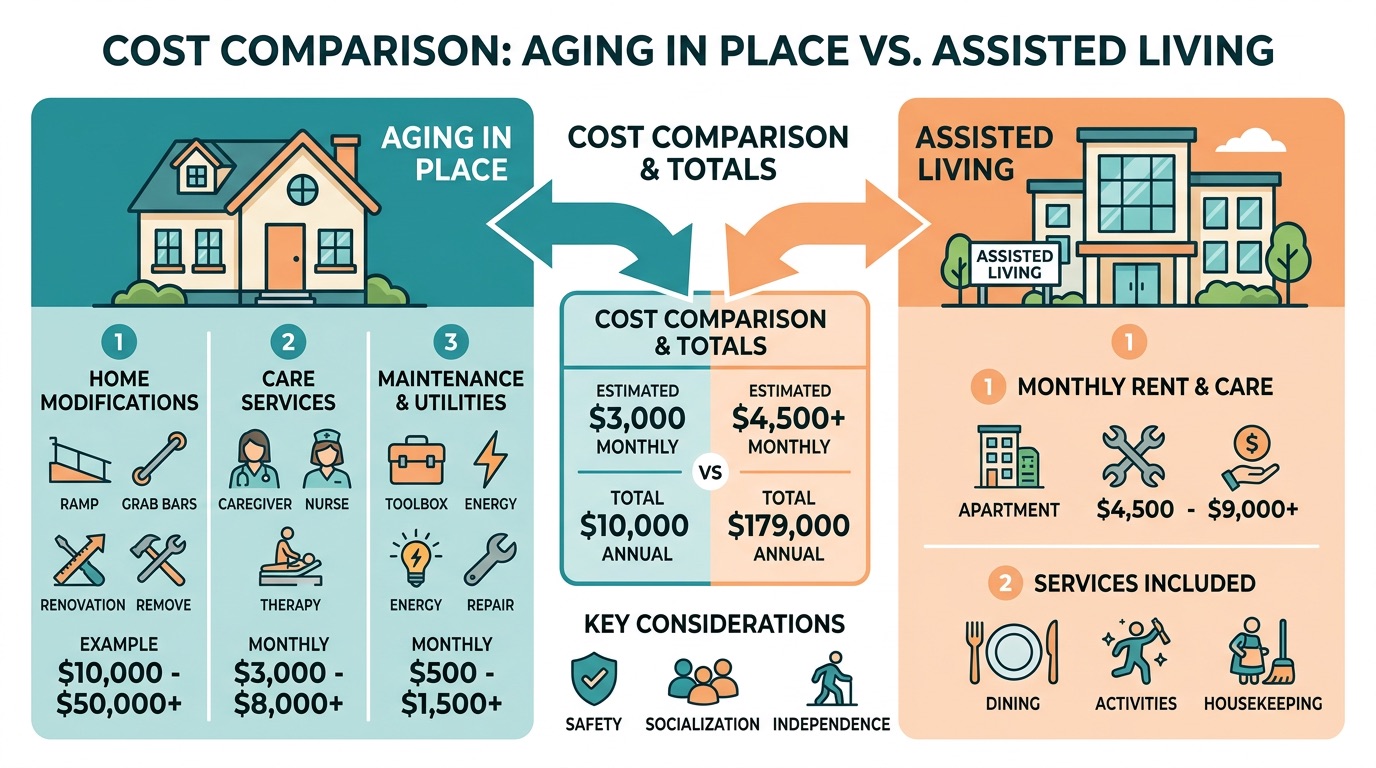
For many people, renovating their home to age in place costs significantly less than assisted living, even when you factor in ongoing home maintenance and care services. This comparison breaks down the real costs of both options so you can make the decision that works for your situation and budget.
Key finding: The average assisted living facility costs $4,500 per month nationally ($54,000 per year). Most aging-in-place renovations cost between $3,000 and $15,000 total. Even with additional home care services, many people spend less staying home than they would in assisted living.
1
Aging in Place: Costs and Considerations
Essential safety modifications
$3,000–$8,000 total
Bathroom grab bars and non-slip surfaces ($200–$800), improved lighting throughout house ($300–$1,200), stair railings ($150–$600), ramp or step modifications ($1,500–$4,000), kitchen accessibility updates ($500–$2,000).
Housekeeping services ($100–$400), yard maintenance ($80–$200), grocery delivery ($20–$50), part-time home care aide ($600–$2,000), medical alert system ($25–$70).
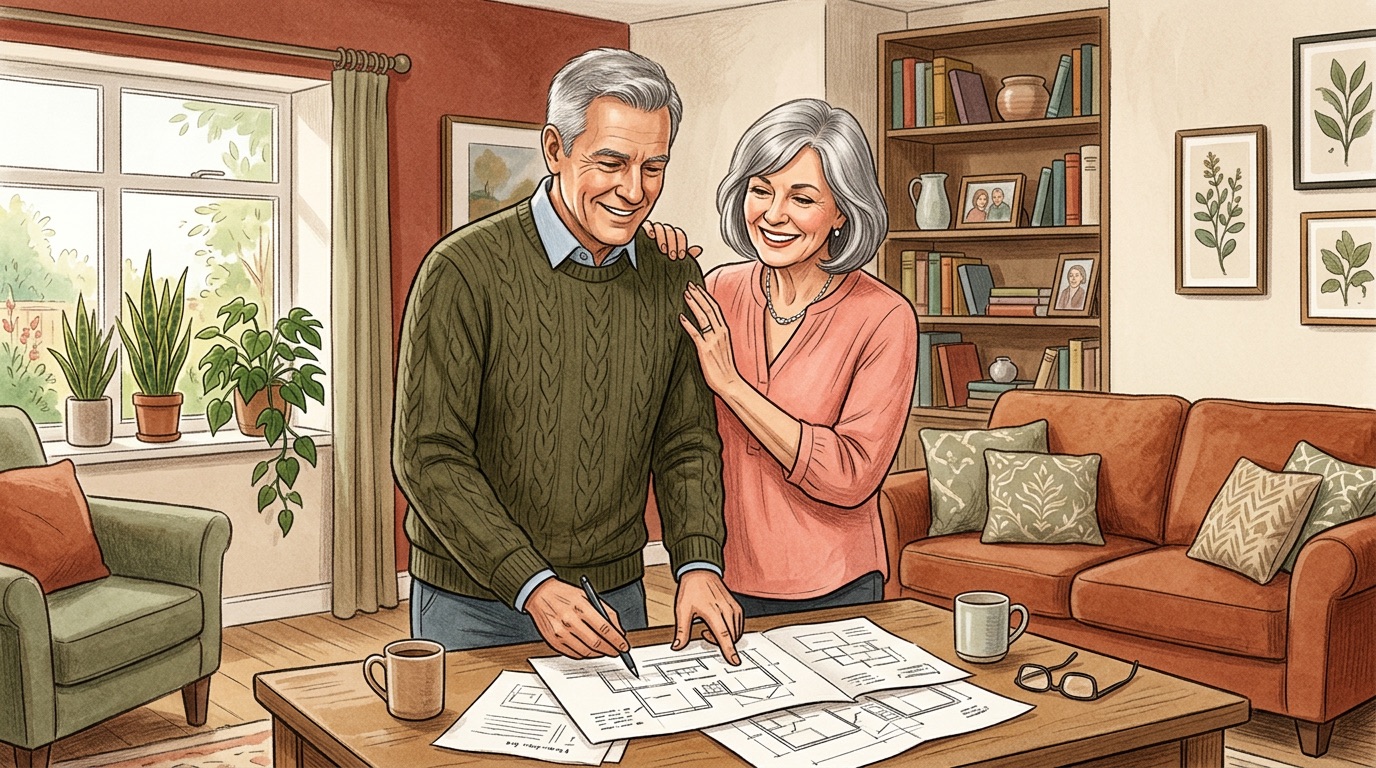
Planning the financial impact of aging in place vs assisted livingStrategic planning for home modifications and care needs
2
Assisted Living: Costs and Considerations
Base monthly fees
$3,500–$6,500/month
Studio apartment ($3,500–$4,800), one-bedroom apartment ($4,200–$6,500), shared room ($2,800–$4,200). Costs vary significantly by region and facility quality.
Additional care services
$500–$1,500/month extra
Medication management ($200–$500), personal care assistance ($300–$800), memory care upgrade ($1,000–$2,500), specialized dining needs ($150–$400).
One-time setup costs
$3,000–$10,000
Community fee if required ($1,000–$5,000), moving and setup costs ($2,000–$5,000). These costs come on top of monthly fees.
Built-in advantages
Included in base fee
Social activities and community connections, professional care coordination, 24-hour staff availability, maintenance-free living with housekeeping and meals, on-site health services and emergency response.
3
The Real Financial Comparison
Year 1 total costs
Aging in place: $14,000 vs Assisted living: $54,000
Aging in place: $38,000 vs Assisted living: $280,000
Aging in place: $8,000 (renovations) + $30,000 (five years of services). Assisted living: $280,000 (assuming 3% annual increases).
Year 10 cumulative costs
Aging in place: $80,000 vs Assisted living: $620,000
Aging in place: $15,000 (renovations + updates) + $65,000 (ten years of services). Assisted living: $620,000 (with annual increases and care level upgrades).
10-year cost comparison: aging in place vs assisted living
4
Making the Decision: Key Questions
About your home
Physical feasibility
Can your current home be modified to meet your future needs? Do you have equity available for renovations without compromising financial security? Is your neighborhood walkable with access to medical care and services?
About your support network
Care coordination
Do you have family or friends nearby who can help coordinate care? Are you comfortable managing multiple service providers? Do you have transportation options if you stop driving?
About your preferences
Lifestyle factors
Do you value independence and control over your daily routine? Are you comfortable with the responsibility of home maintenance? Do you prefer familiar surroundings or are you open to a new community?
About your health
Care requirements
Can you manage most daily activities independently or with minimal help? Do you have health conditions that require frequent monitoring? Are you at risk for falls or other safety concerns that require immediate response?
5
Budget-Friendly Ways to Start
Install grab bars in bathroom
$50–$200
Single most important safety modification. Start with one at the shower entry and add more as needed.
Improve lighting with LEDs and motion sensors
$100–$300
Upgrade bulbs throughout the house and add motion-sensor night lights for bathroom pathway safety.
Add non-slip surfaces
$50–$150
Apply non-slip strips to tubs, showers, and stairs. Simple but effective fall prevention.
Remove trip hazards and improve pathways
$0–$100
Clear clutter, secure loose rugs, and ensure clear paths between rooms. Often free or very low cost.
Set up medical alert system
$25–$70/month
Provides peace of mind and emergency response capability. Many systems require no upfront costs.
The Bottom Line
For most people, aging in place costs significantly less than assisted living over time. The upfront investment in home modifications typically pays for itself within the first year compared to assisted living monthly fees.
But the right choice depends on more than money. Consider your health trajectory, support network, and personal preferences. Some people thrive with the independence of aging in place. Others prefer the community and care coordination of assisted living.
You can always start with home modifications and move to assisted living later if your needs change. But once you sell your home for assisted living, returning home becomes much more difficult financially.
The key is planning ahead while you have options, rather than making decisions in a crisis when choices become limited.
Free Resources
AARP HomeFit Guide (free online assessment tool to identify home modification priorities)
Area Agency on Aging (local resources for home modification grants and contractor referrals)